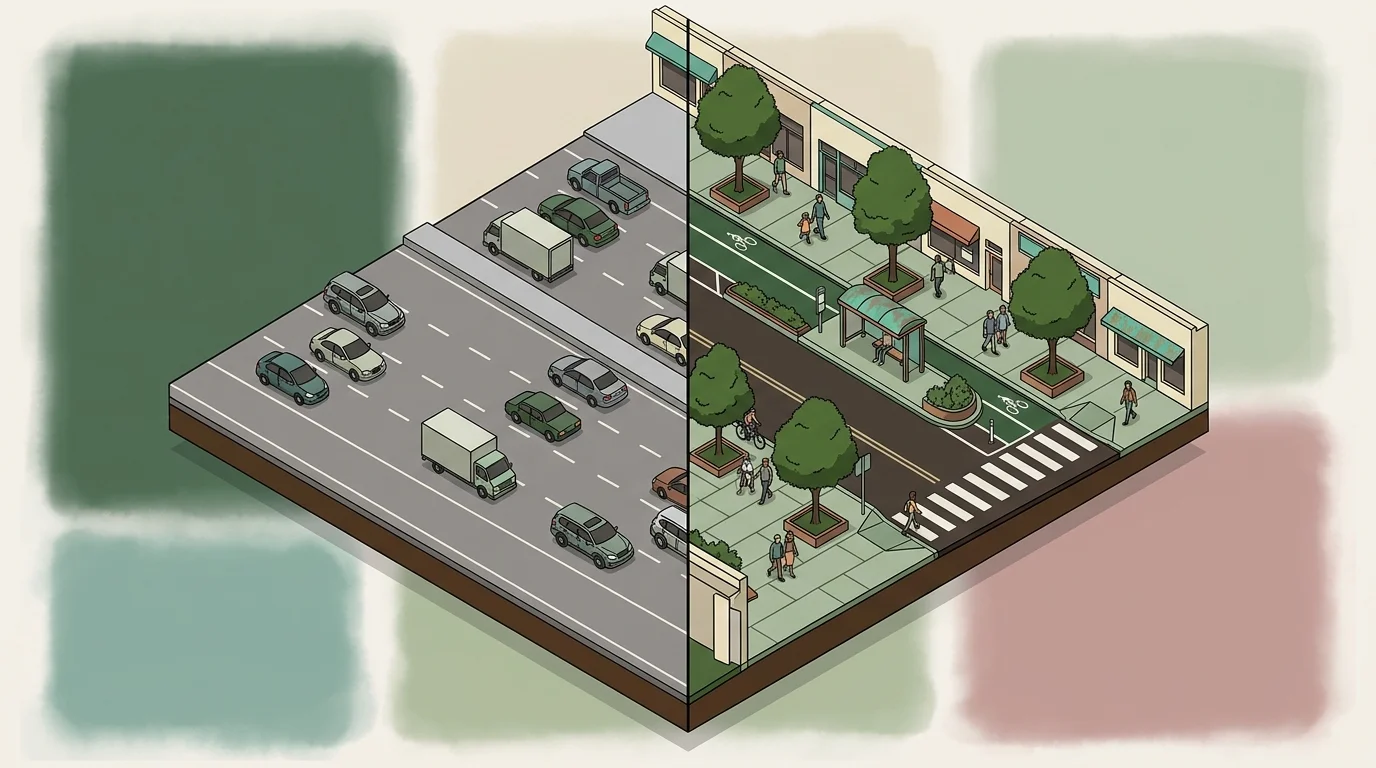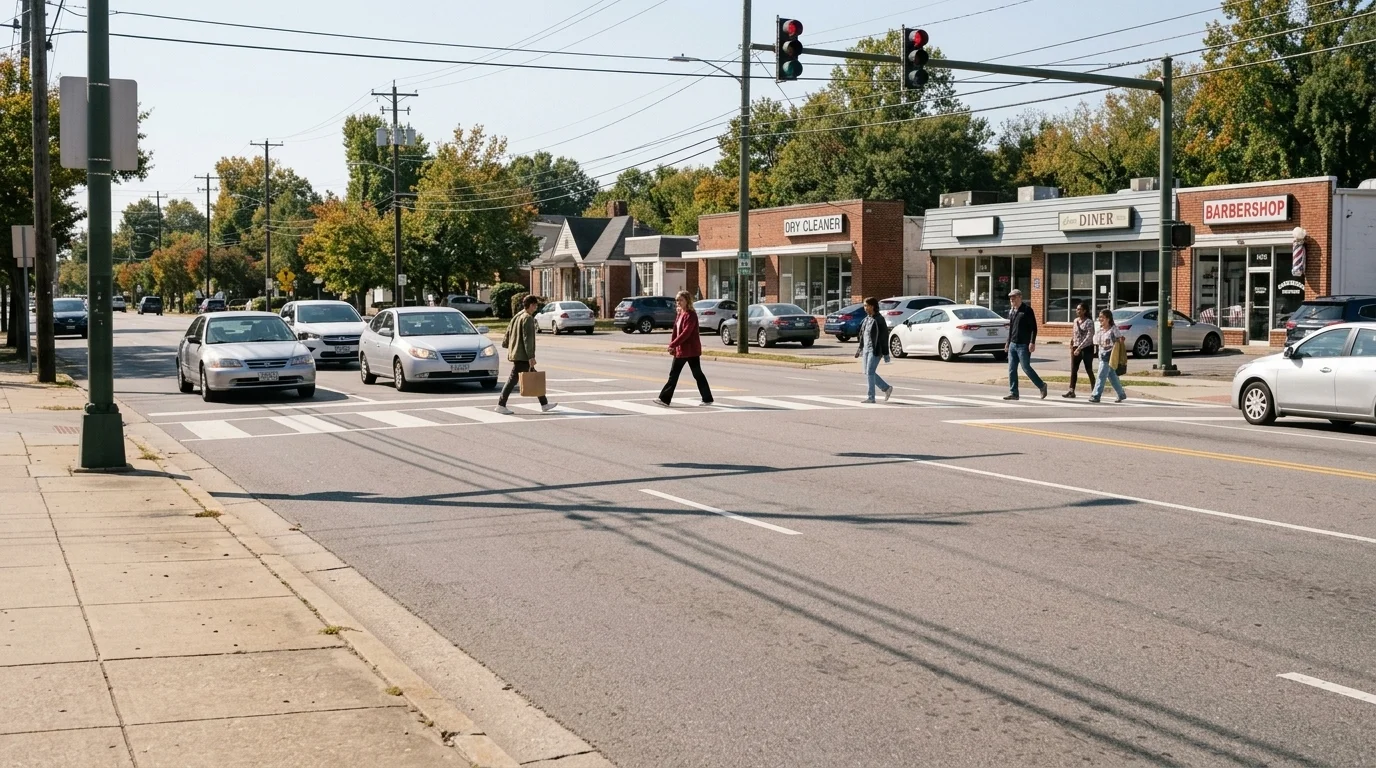
Henrico County, Virginia is moving to redesign Libbie Avenue, one of the Richmond region's most recognizable suburban corridors, by reducing its vehicle lanes in an effort to slow traffic and make the street safer for pedestrians and cyclists.
The project, known formally as the Libbie Avenue Road Diet, is seeking an engineering firm to develop plans for the corridor. Specific details including the full length of road involved, the budget and the exact mix of design changes have not been publicly released.
A road diet typically converts a four-lane road into two travel lanes plus a center turn lane, freeing up space for bike lanes, wider sidewalks or landscaped medians. The Federal Highway Administration endorsed the approach as a proven safety measure in 2012, citing crash reductions of 19 to 47 percent on converted corridors. The need has only grown since: U.S. pedestrian deaths hit a 40-year high of 7,522 in 2022, with larger vehicles and distracted driving among the factors cited.

Source: NationGraph.
Libbie Avenue cuts through some of Henrico's most walkable and commercially active neighborhoods, including the Libbie & Grove village district and Westhampton, where small businesses, restaurants and dense residential streets draw heavy foot traffic. Residents there have spent years raising concerns about vehicle speeds and cut-through volumes that clash with the corridor's pedestrian character.
The project won't be without debate. Nearby businesses will be watching closely for any changes to parking or access, and some drivers who rely on Libbie as a commuter route may push back on lane reductions. The City of Richmond has navigated similar tensions on its own road diet projects along Brook Road and Semmes Avenue, with outcomes that split public opinion.
Henrico adopted a Complete Streets policy in recent years and has steadily invested in bike and pedestrian infrastructure across its inner neighborhoods. Whether federal Safe Streets grant dollars are backing this project has not been confirmed. Hiring a design firm is the next step before any construction timeline is set.