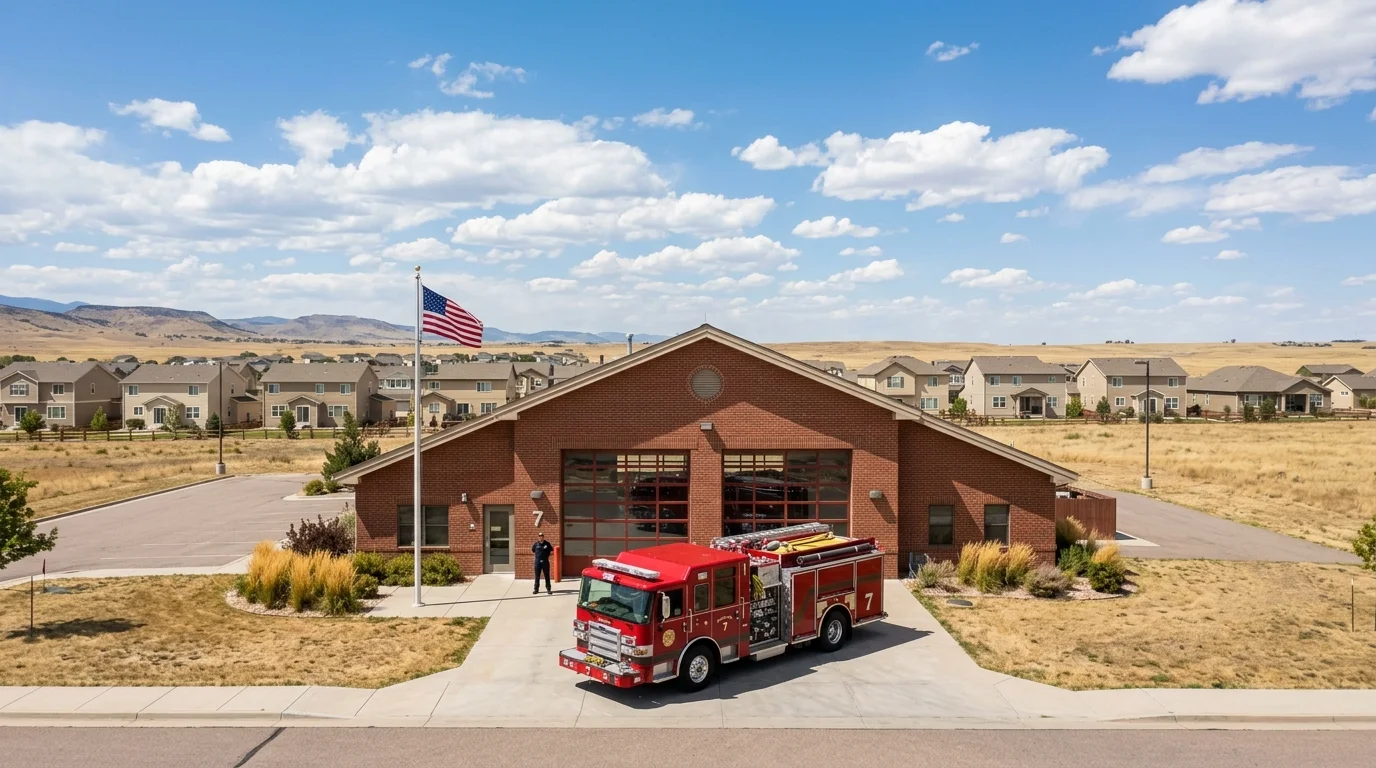
Fountain, Colorado is moving to build its first new fire station in years, a long-anticipated project as a decade of rapid residential growth has pushed the edges of this military-adjacent city well beyond the reach of its three existing firehouses.
The city's fire department currently runs Stations 1, 2 and 3. New subdivisions like Ventana and Cross Creek, built to house families connected to nearby Fort Carson, Peterson Space Force Base, and Schriever Space Force Base, have expanded the city's footprint in directions those stations weren't designed to serve. In a community of roughly 30,000 to 33,000 residents that has grown somewhere between 20 and 30 percent since 2010, that gap has real consequences: national fire safety standards call for a first-arriving engine within roughly four minutes of dispatch, and communities that miss that benchmark face higher insurance costs and growing public pressure.
Fountain also sits in a wildland-urban interface zone, where grass and brush along Fountain Creek and the surrounding prairie create fire risk that makes fast response times more than a bureaucratic metric.
The city has posted a rebid for Station #4's construction through BidNet Direct, with an updated solicitation reflecting changes made in September 2026. The revision points to a broader problem municipalities across the country have faced since 2021: construction costs for fire stations, running as high as $1,200 per square foot nationally, have forced many projects back to the drawing board after initial bids came in over budget. Whether Fountain's rebid reflects a similar cost crunch or a scope change hasn't been confirmed, but the pattern is familiar. Similar growth-driven projects have played out in communities like Nicholasville, Kentucky and Novi, Mich., where new rooftops consistently arrived before the fire stations needed to serve them.
Contractor selection will determine the final timeline for when residents in Fountain's newer neighborhoods can expect response times to improve.