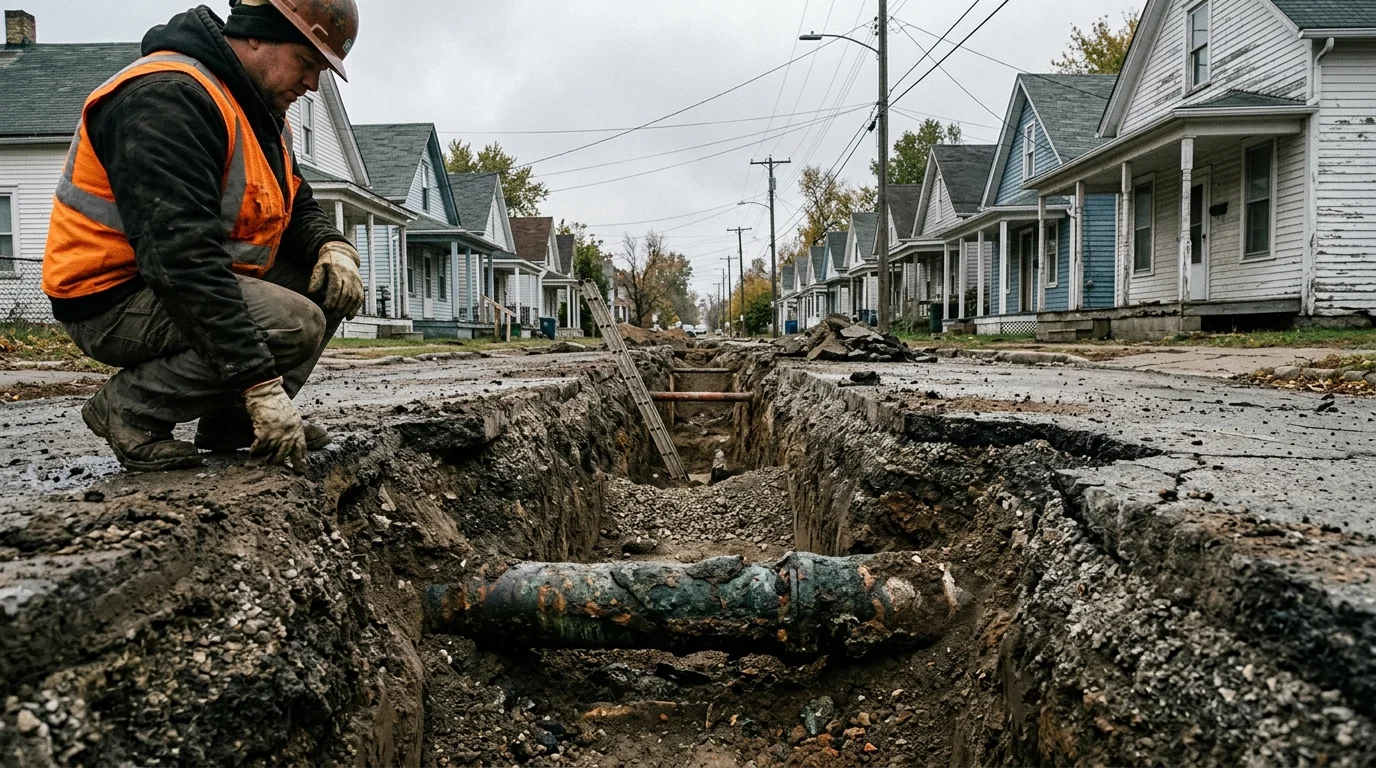
Bay City, Michigan is moving to replace lead service lines connecting water mains to homes across the city, drawing on state and federal funds to tackle aging pipes that have posed a contamination risk for decades.
The city's water system serves roughly 31,000 residents plus several surrounding townships, and much of its housing stock dates to the late 1800s and early 1900s, the era when lead service lines were standard. The full scope of the current project, including the number of lines targeted and the neighborhoods involved, is not disclosed in publicly available summary documents.
Funding flows through Michigan's Drinking Water State Revolving Fund (DWSRF), which combines federal EPA capitalization grants with state matching dollars. The DWSRF received a major boost from the 2021 Bipartisan Infrastructure Law, which directed $15 billion nationwide specifically toward lead service line removal. The bid has been posted on the Michigan Inter-governmental Trade Network.
The push comes roughly a decade after the Flint water crisis, which began in 2014 about 90 miles south of Bay City and exposed just how many American homes were still connected to the water main by lead pipes. Michigan responded in 2018 with one of the strictest lead pipe rules in the country, requiring utilities to replace every lead service line by around 2041 at public expense rather than homeowner expense. Then, in October 2024, the EPA finalized new Lead and Copper Rule Improvements that tightened the national replacement timeline to 10 years, adding urgency for cities still working through their inventories.
Bay City is not alone in racing to meet these overlapping deadlines. Nearby Saginaw has also begun tearing out lead pipes with federal help, and cities as far away as Trenton, New Jersey are now in their sixth phase of replacements. Like Bay City, many of these communities are post-industrial cities with shrinking tax bases that depend heavily on state and federal dollars to fund work their budgets alone cannot cover.
The federal infrastructure money that is making this project possible was appropriated through 2026, giving municipalities limited time to get contracts signed and shovels in the ground before that funding window narrows. How quickly Bay City can move from contractor selection to completed replacements will be a practical test of whether smaller industrial cities can clear all the hurdles in time.