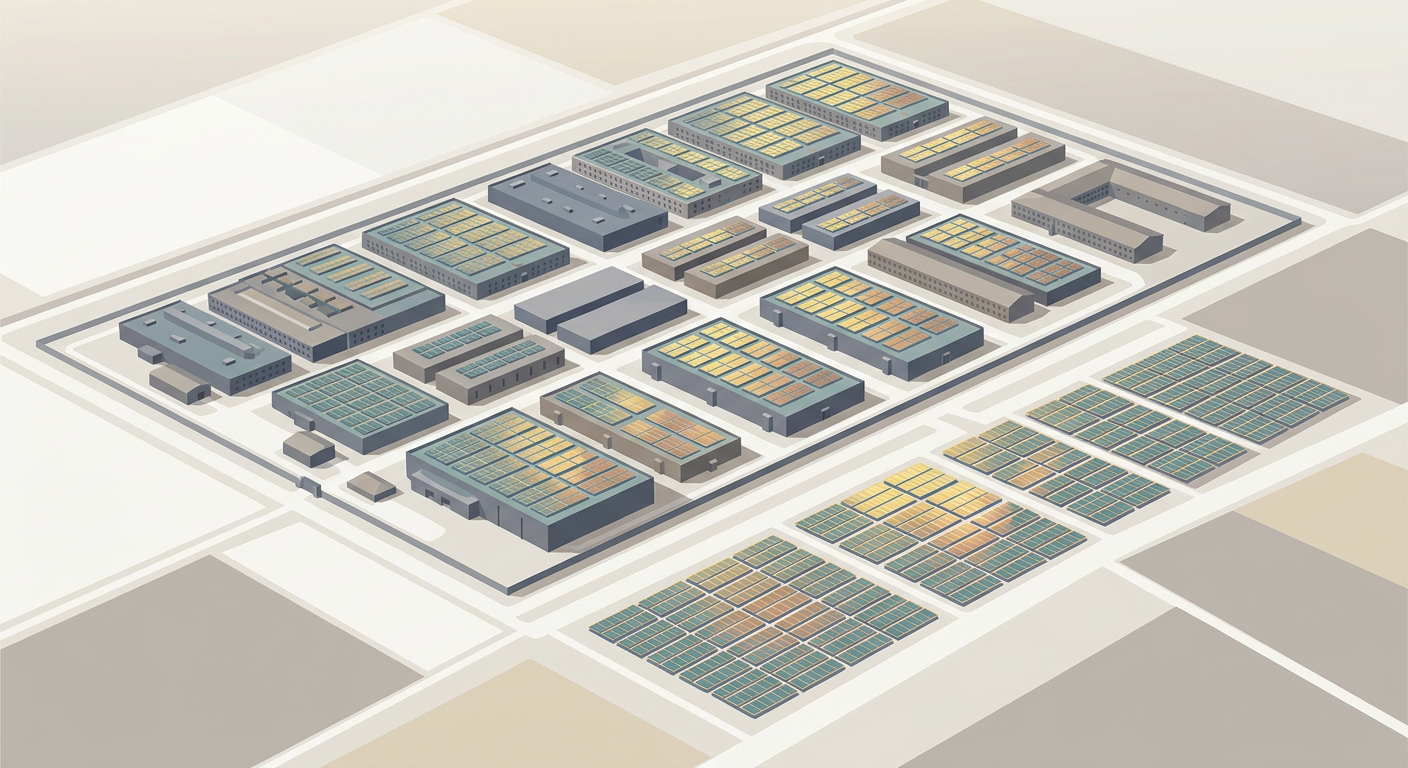
Georgia's prison system, one of the largest in the country, is making a major push into solar energy as it looks to rein in the enormous electricity bills that come with running dozens of facilities around the clock.
The Georgia Department of Corrections, which operates roughly 34 state prisons and houses approximately 47,000 inmates, is now seeking companies to install solar panels at its facilities as part of what the agency is calling its Solar Energy Initiative. The department's annual corrections budget tops $1 billion, and energy costs represent one of the biggest and most difficult-to-control line items: prisons run 24 hours a day, powering everything from lighting and HVAC to security systems and surveillance equipment.
The initiative arrives at a moment when the economics of solar have become hard to ignore, even for a state with no renewable energy mandate on the books. The cost of solar panels has dropped roughly 90% since 2010, and Georgia's sunny climate makes it one of the better-situated states for solar generation. The state already ranks among the top 10 nationally for installed solar capacity, a rise driven largely by utility-scale projects and corporate demand rather than environmental policy.
A key financial catalyst is the federal Inflation Reduction Act of 2022, which for the first time allowed government entities to claim the 30% federal Investment Tax Credit as a direct payment. Before that change, tax-exempt agencies like state corrections departments were locked out of the incentive. The new provision has prompted states across the country, including California, New York, Maryland, and Illinois, to target prisons for solar installations. The facilities are ideal candidates: they sit on large tracts of state-owned land, have massive and predictable energy demand, and face little neighborhood opposition.
Georgia's move fits a pattern under Governor Brian Kemp's administration, which has framed solar expansion as a matter of economic pragmatism rather than climate policy. The state has no renewable portfolio standard requiring clean energy adoption, making the DOC's initiative a voluntary, cost-driven decision. With Georgia's electrical grid under growing strain from a wave of industrial expansion, including major manufacturing plants from Hyundai and Rivian, reducing the state government's own consumption carries added practical value.
The department has not disclosed which facilities will get panels, how many megawatts of capacity it is targeting, or the project's total budget. Those details are expected to emerge as the procurement process advances. Over a typical 20-to-25-year panel lifespan, even a modest offset of the DOC's energy consumption could translate into millions of dollars in savings for Georgia taxpayers.