Colorado issued 22 electric vehicle procurement contracts in the last 30 days against a 12-month average of fewer than 3 per month, an eightfold spike that wasn't organic. Twenty-one of those 22 RFPs dropped on a single day, October 25, 2026, confirming what the timestamps make obvious: a coordinated state procurement batch, timed to the hour.
Two days later, on October 27, the Colorado Energy Office opened the next round of its DCFC Plazas grant program, the competitive mechanism through which federal NEVI dollars flow to fast-charging infrastructure across the state. The sequencing was not a coincidence.
The state is building the bureaucratic muscle to spend faster. And the reason it needs that muscle now is that the federal money has finally, fully arrived.
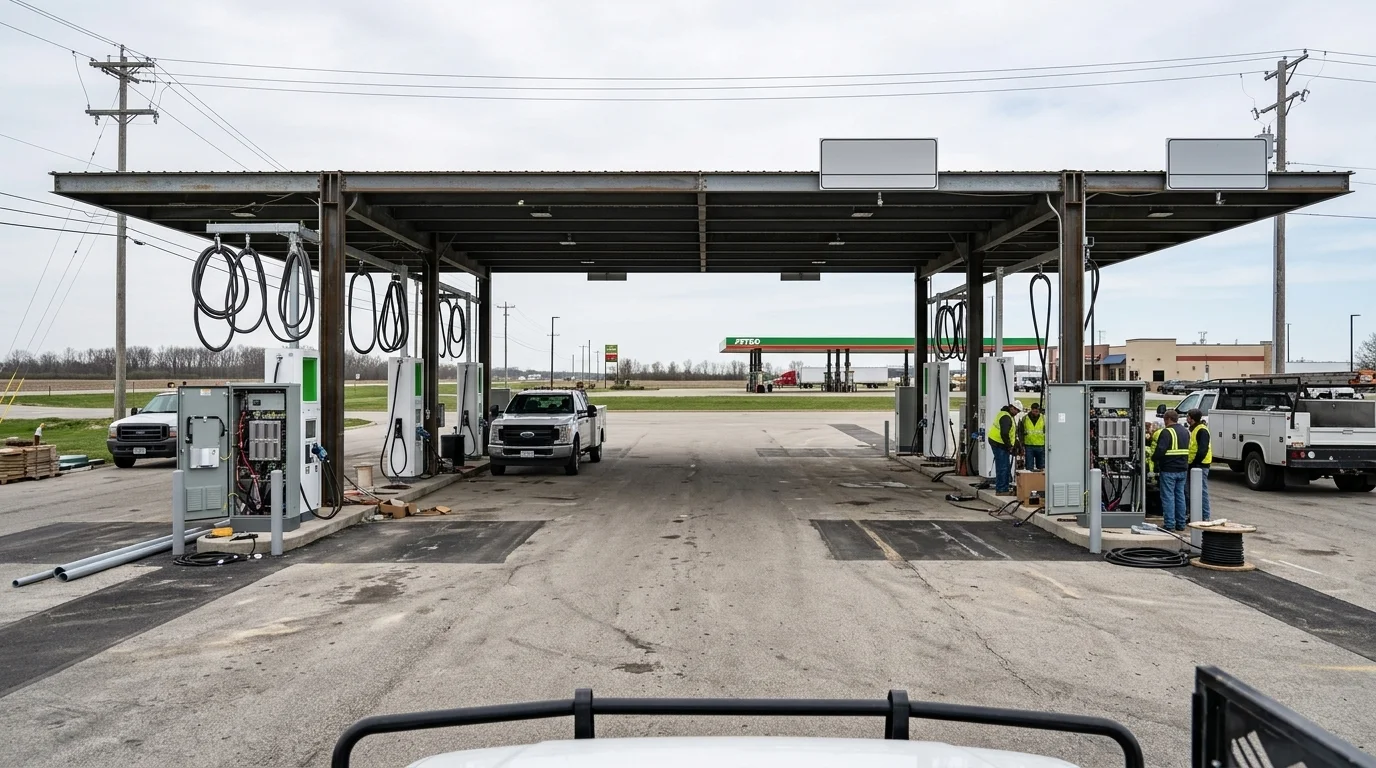
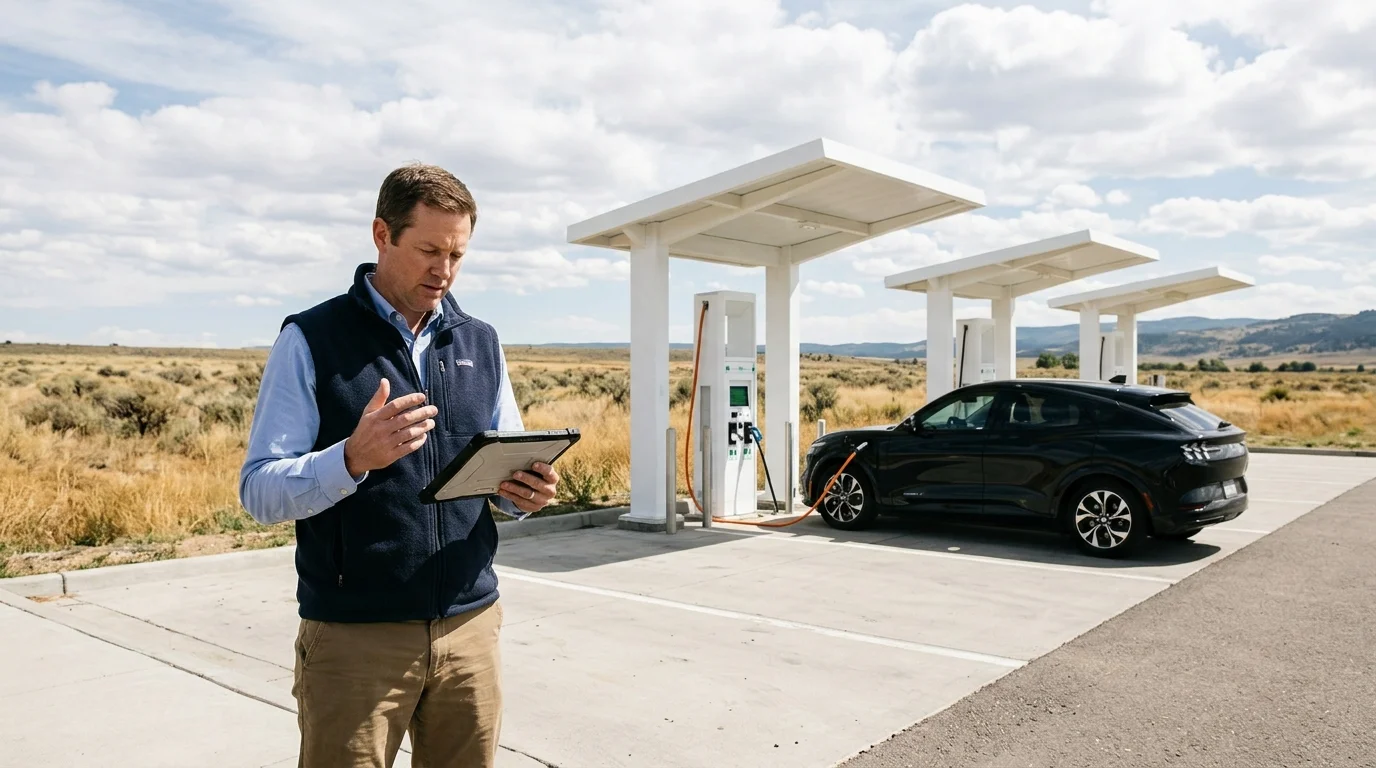
In September 2026, the Polis Administration secured federal approval for Colorado's final $12 million NEVI tranche, completing a five-year, $56.5 million allocation under the Infrastructure Investment and Jobs Act. That same month, the Colorado Energy Office and CDOT awarded $23.2 million in DCFC Plazas grants to fund 270 fast-charging ports at 35 sites across the state. As of August 2026, 17 NEVI-funded locations were already open and 33 more were under development, putting Colorado within reach of the FHWA's "Fully Built Out" threshold, a designation that would unlock NEVI dollars for community charging projects beyond the designated highway corridors.
All of that hardware spending requires a human layer to actually move. That is what the October 25 batch was buying.
Ten of the 22 RFPs came from the Colorado Energy Office alone, all under the Recharge Colorado umbrella: regional coaching contracts carved by geography (Northern Colorado, Southwest, West Central, Denver Metro West, East Central), plus a Fleet Advisor, an Equity Advisor, a general Coach position, a Multifamily Housing request for information, and an Affordable Public Charging Pilot Coordinator. Recharge Colorado provides on-the-ground advisory services, helping local governments, fleet operators, and housing providers navigate grant applications and procurement, and the state appears to be rebuilding or expanding that network at the precise moment the next grant round opened. The two programs are funded separately: federal NEVI dollars and state Community Access Enterprise appropriations cover the charging hardware, while state appropriations fund the coaching layer. Same administering agency, same beneficiary pool, distinct mechanisms.
The Department of Corrections added three RFPs of its own: solar-powered mobile EV charging stations and Class 7/8 electric trucks, signaling that state fleet electrification is running in parallel with the infrastructure buildout. Boulder, Chaffee County, CDOT, CDPHE, and two Department of Personnel and Administration offices rounded out the batch.
Colorado's EV policy environment has also grown significantly more complex in 2026, which may explain why the coaching network needs rebuilding. Governor Polis signed SB 26-003 in June 2026, the first EV battery end-of-life management law in the Western Hemisphere, extending producer responsibility requirements to propulsion batteries. HB25-1267 took effect July 1, establishing the state's first retail EV charging standards covering transparency and interoperability. With roughly 211,000 plug-in vehicles now registered in Colorado, the administrative and compliance surface area for fleet managers and local governments has expanded considerably. Regional coaches help translate those requirements into local action.
For residents and local officials, the practical implication is that the next DCFC Plazas grant round is open now, the coaches who help applicants navigate it are being hired now, and Colorado's corridor charging network is close enough to completion that future rounds may prioritize neighborhood and community sites over highway corridors. A jurisdiction that hasn't yet engaged with Recharge Colorado's regional advisors will want to do so before this application window closes.
The signal to watch is whether Colorado crosses the FHWA "Fully Built Out" threshold before the next federal reporting cycle. If it does, the geographic scope of eligible NEVI projects expands, and the demand on the coaching network grows accordingly. The state appears to have timed this procurement batch to be ready for exactly that moment.