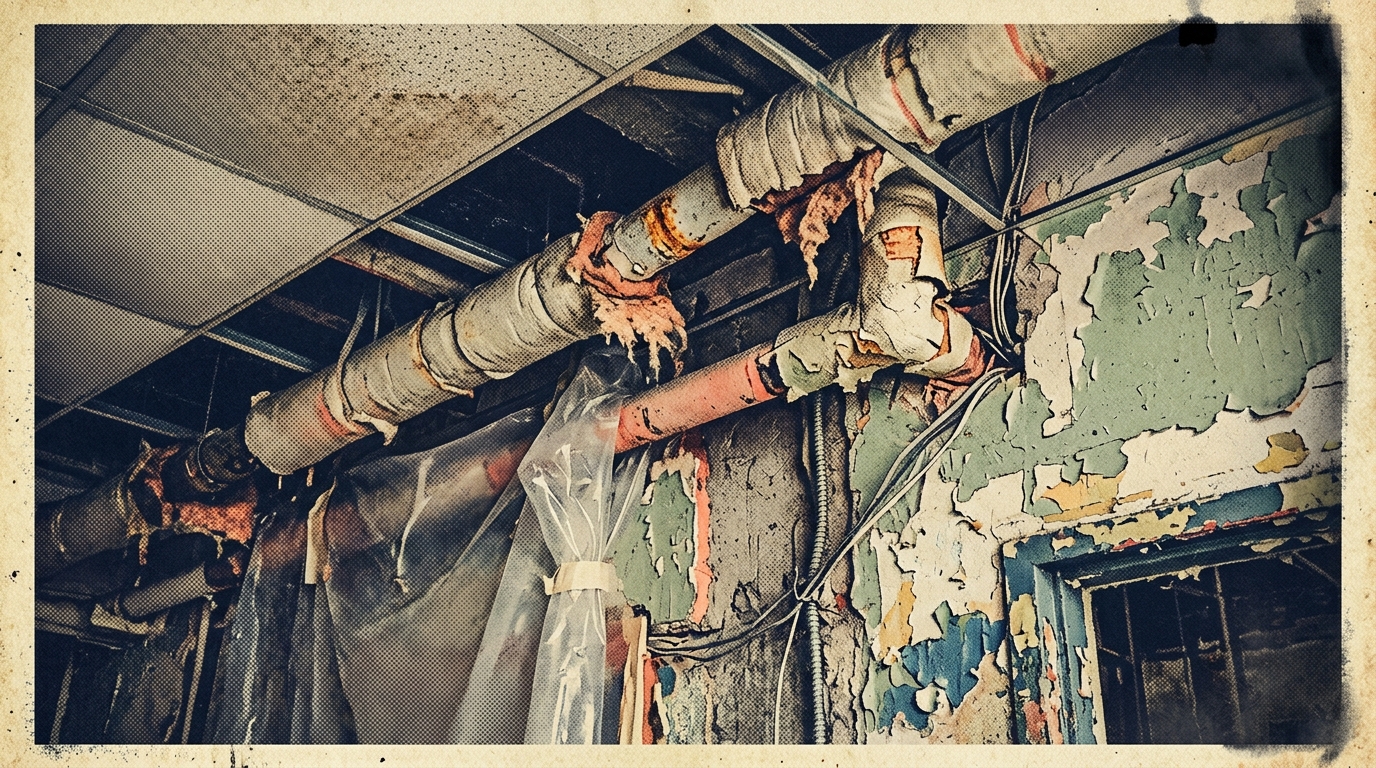
Before anyone at New York City College of Technology can upgrade a single classroom or install a new ventilation system on the 6th floor of its Pearl Building in downtown Brooklyn, workers first have to remove toxic material that was standard in construction decades ago.
City Tech, part of the City University of New York system, is moving forward with a renovation of the Pearl Building's sixth floor that includes asbestos abatement as a prerequisite to any modernization work. The project is being managed through the Dormitory Authority of the State of New York, which handles capital construction for CUNY and other public institutions, indicating the work is funded through New York State's capital budget.
The situation reflects a problem that spans all 25 CUNY campuses: hundreds of buildings constructed or renovated during the mid-20th century, when asbestos was routinely used in insulation, floor tiles, ceiling panels, and pipe wrapping. You can't upgrade a room without first dealing with what's already in the walls.
City Tech, located at 300 Jay Street in the MetroTech Center area of Brooklyn, enrolls roughly 15,000 to 17,000 students, most of them from working-class, immigrant, and communities of color across the borough. The college specializes in hands-on programs in engineering technology, health professions, computer science, and architecture, fields where outdated facilities aren't just inconvenient but actively limit what students can learn.
The broader infrastructure challenge at CUNY is significant. A 2023 New York State Comptroller audit flagged the system's deferred maintenance backlog, which advocates have estimated in the tens of billions of dollars. That's the price tag for keeping up with the needs of nearly 230,000 degree-seeking students across New York City. Faculty unions and student advocates have spent years pushing Albany for more capital funding, arguing CUNY receives far less per-student investment than comparable systems nationally.
Governor Hochul and the state legislature have increased CUNY capital funding in recent budget cycles, and projects like the Pearl Building renovation are part of that incremental progress. But asbestos abatement requirements, combined with New York City's stringent Department of Environmental Protection regulations and some of the highest construction costs in the country, mean each dollar stretches less far than elsewhere.
Contractor selection for the Pearl Building project is now underway.