Chelan County, Washington has lived through some of the worst wildfires in state history. Now the local conservation district is hiring someone to convince its ranchers, orchardists, and rural homeowners to deliberately light their own land on fire before nature does it for them.
Cascadia Conservation District is seeking a contractor to run a prescribed fire education and outreach program aimed at private landowners across the county. The effort, funded by the Washington State Conservation Commission and the Washington Department of Natural Resources, marks an ambitious local push to expand controlled burning on private land in a region where the practice has long lagged behind other parts of the country.
The stakes are hard to overstate. Chelan County sits in north-central Washington where ponderosa pine and shrub-steppe ecosystems historically burned every five to 25 years in low-intensity fires that cleared out undergrowth. A century of aggressive fire suppression has left those forests choked with fuel. The county has paid for it repeatedly: the 2014 Carlton Complex burned 256,000 acres on its northern border, the 2015 Wolverine and Chelan Complex fires tore through the region, and smoke seasons have become a near-annual fixture. Insurance markets have tightened, and the wildland-urban interface keeps expanding as buyers from western Washington move east.
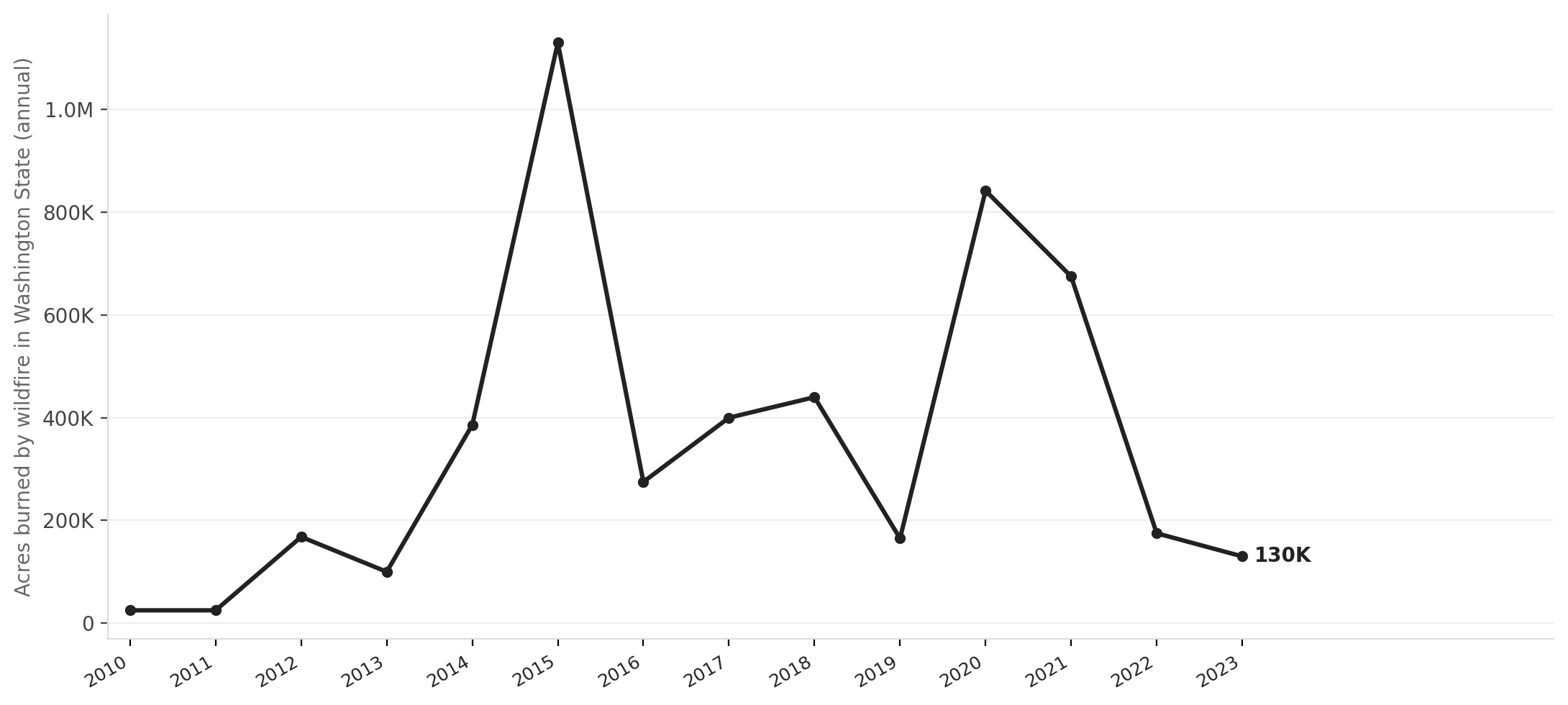
Source: NationGraph.
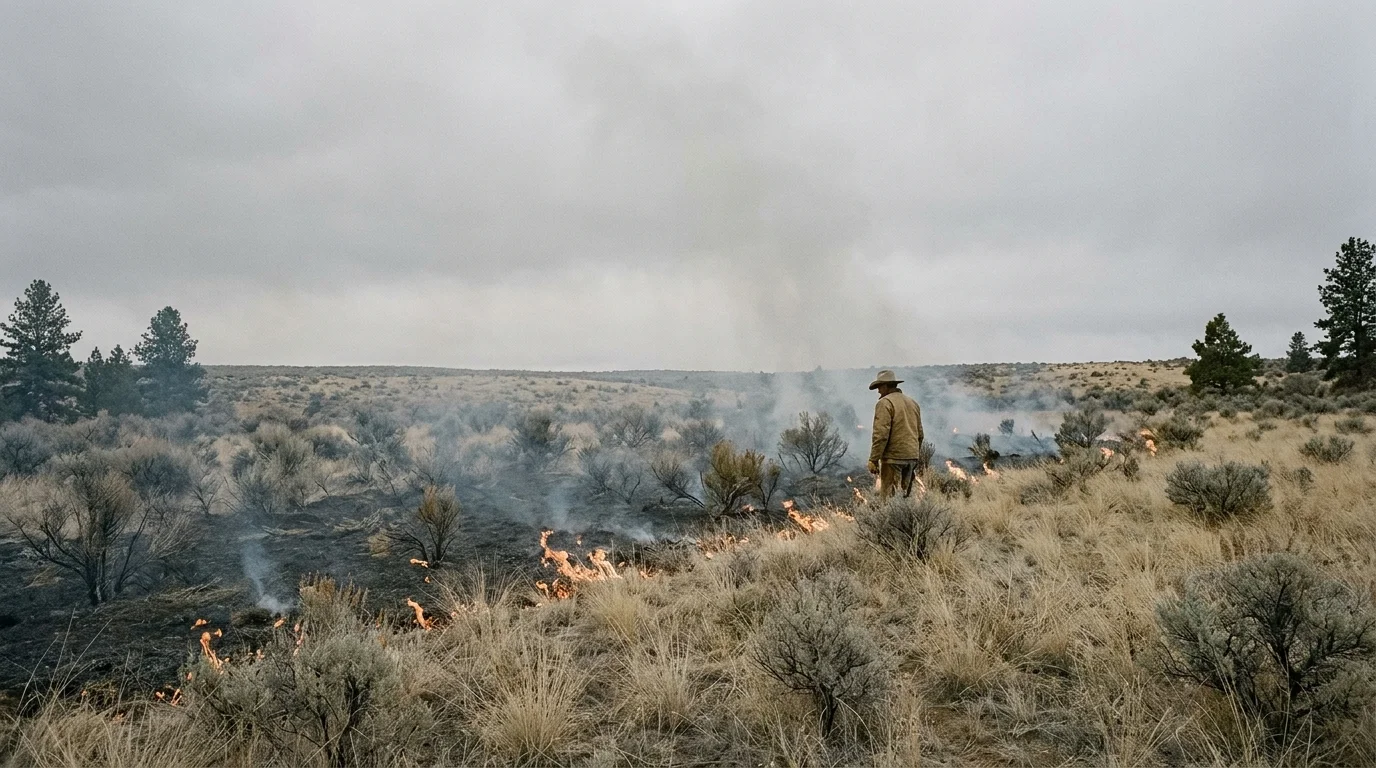
Prescribed fire, burning land intentionally under controlled conditions, is the scientifically endorsed method for reducing that fuel load. But getting private landowners to embrace it is its own challenge, particularly in a county that tends to be skeptical of state-driven environmental mandates. That's precisely why Cascadia, a local and non-regulatory entity, is leading the effort rather than DNR itself. The goal is to build trust one conversation at a time: with the apple grower whose orchard backs up to the forest, the rancher whose grazing land hasn't seen a natural fire in decades, the family that moved from Seattle and has no framework for understanding why burning their property could protect it.
Washington has committed significant resources to this shift. A 2021 state law dedicated $125 million per biennium to wildfire prevention and forest health, and DNR's 20-Year Forest Health Strategic Plan set a target of treating 1.25 million acres of unhealthy forest by 2037. The state launched a Certified Prescribed Burn Manager program in 2022. The Cascadia program is the on-the-ground execution of that broader strategy.
Public skepticism remains a real obstacle. The 2022 Hermits Peak fire in New Mexico, which started as a U.S. Forest Service prescribed burn and became that state's largest recorded fire, has given many landowners reason for hesitation. Any effective outreach effort will need to address that fear directly.
Cascadia has posted a request for qualifications for the contract. Interviews are scheduled for the week of June 3, with contractor selection anticipated June 7 and work beginning mid-month.