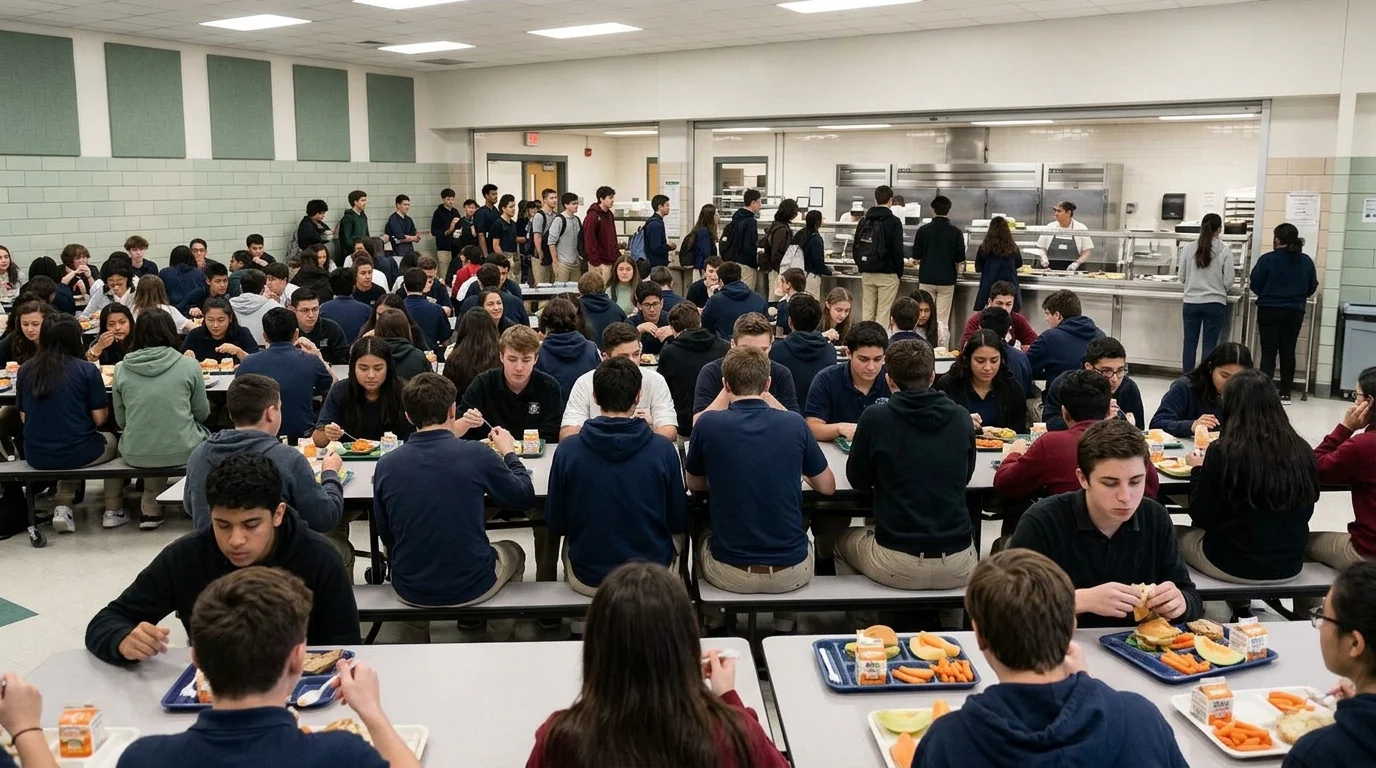
Warren County High School in McMinnville, Tennessee is getting a bigger cafeteria, a sign of how quickly this rural county's student population has grown and how hard its single high school is feeling the pressure.
The county has posted a request for contractors to carry out the expansion, though no budget figure or construction timeline has been made public. Because Warren County High School is the only comprehensive high school serving the entire county's roughly 42,000 to 44,000 residents, there's no second campus to absorb overflow. Every high school student in Warren County eats in the same cafeteria.
When a cafeteria runs short of seats, the workaround is more lunch shifts. Schools squeezed for space sometimes run four or five separate lunch periods, which cuts into classroom time, strains scheduling, and complicates supervision. Federal meal participation has also risen since the pandemic era, when Congress temporarily made school lunches free for all students. Even after those waivers expired in 2022, more students were eating school meals than before, meaning cafeterias are feeding more kids daily than they were originally designed to handle.
Warren County's enrollment growth is tied in part to its identity as Tennessee's nursery capital. The McMinnville area is home to a dense concentration of plant nurseries, an industry that has brought substantial Hispanic and Latino workforce migration to the county over the past two decades. That demographic shift has directly affected school enrollment, making Warren County Schools one of the more diverse districts in rural Tennessee. Broader migration into mid-size Tennessee communities, drawn by lower costs compared to Nashville about 80 miles to the northwest, has added to that growth.
Funding the project falls almost entirely on local taxpayers. Unlike many states, Tennessee does not maintain a dedicated school construction fund, leaving counties to finance capital projects through bonds or property tax revenue. For a county with a median household income below the state average, that's a meaningful fiscal commitment, one likely approved by the Warren County Commission and competing against other local needs like roads and public safety.
The project cost and construction schedule have not been disclosed in the public posting, leaving key questions open about the scope and timeline of the work.