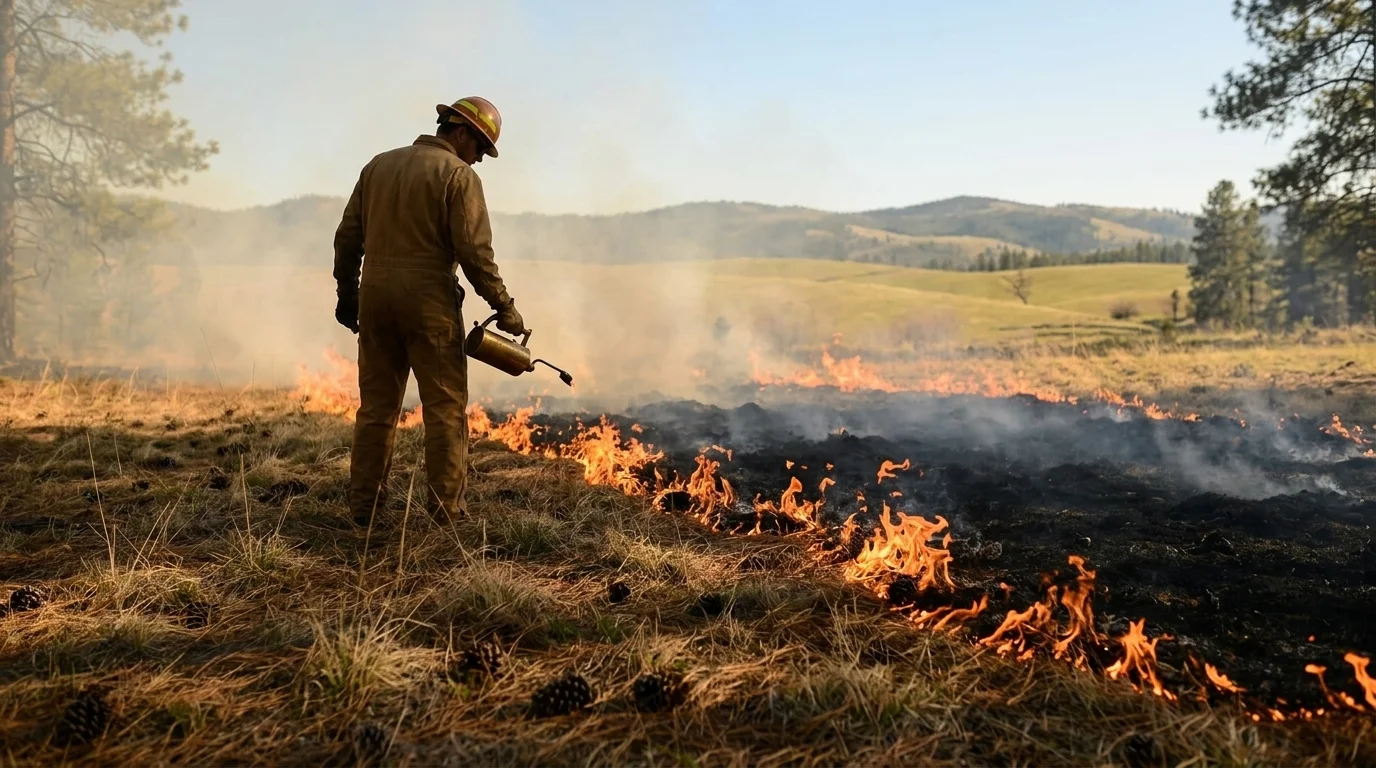
Chelan County, Washington has burned repeatedly over the past decade, with some of the largest wildfires in state history tearing through its valleys, orchards, and wildland neighborhoods. Now a local agency is trying a counterintuitive approach: teaching landowners to fight fire with fire.
The Cascadia Conservation District, a locally governed unit of state government that works directly with farmers and rural landowners, is hiring an outreach and education contractor to build support for prescribed burning on private lands across the county. The work is funded by the Washington State Conservation Commission and the Washington Department of Natural Resources.
The challenge is as much cultural as it is ecological. Chelan County has a strong private-property tradition, and many landowners have been wary of government-led interventions on their land. But a decade of evacuations around Lake Chelan, Leavenworth and the Entiat Valley, combined with rising insurance premiums and non-renewals in fire-prone areas, has shifted the calculus for some. The program aims to reach those who remain skeptical, using trusted local voices rather than state agency officials.
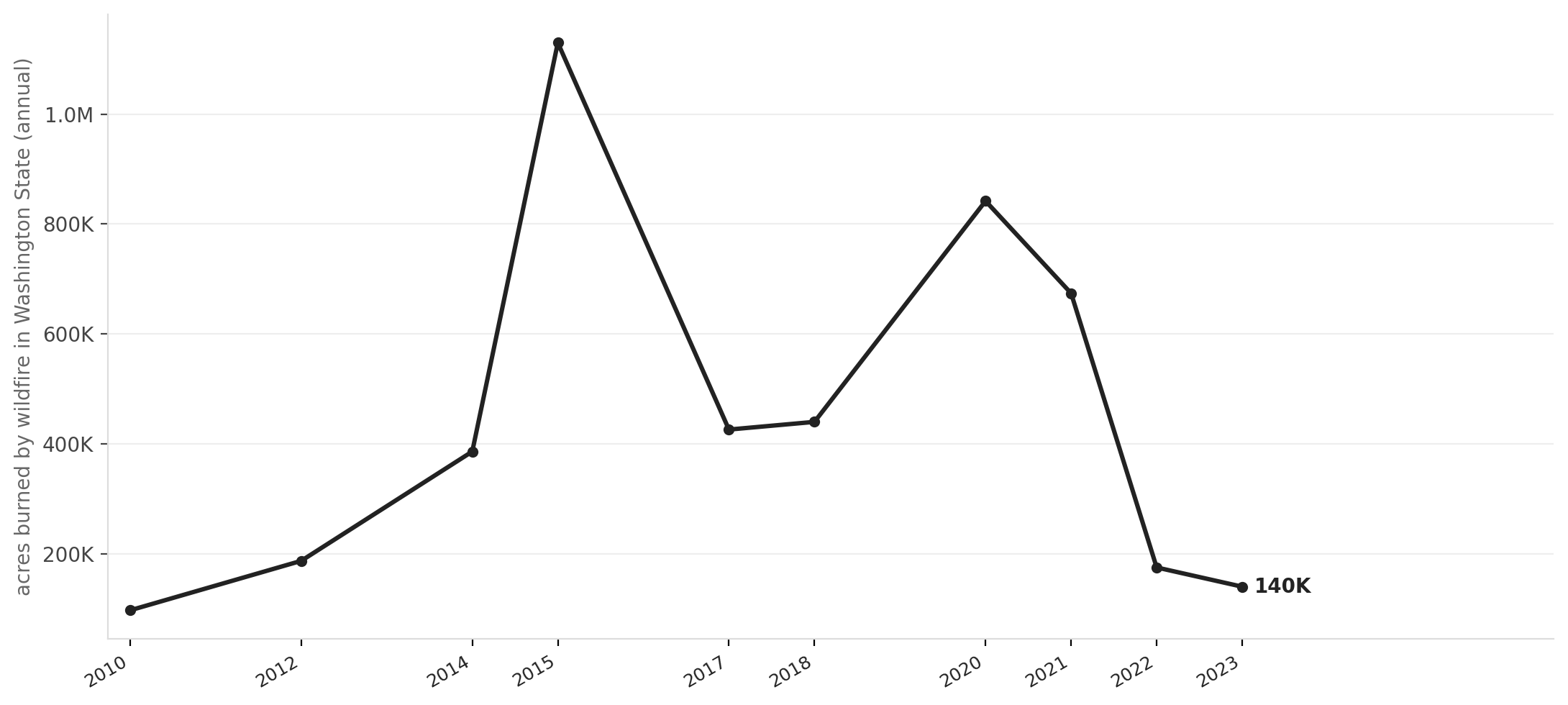
Source: NationGraph.
The science behind the effort is well-established. Federal and state agencies spent most of the 20th century suppressing every wildfire they could, allowing fuels to accumulate in forests that historically burned every five to 25 years. That buildup is now a primary driver of the catastrophic fires that have come to define summers in eastern Washington. The DNR's own 20-year forest health plan calls for treating 1.25 million acres in eastern Washington, and roughly half of the at-risk land there is privately owned. Public-land treatments alone cannot reduce the risk at landscape scale.
Washington has been building the legal and institutional framework for more prescribed burning since 2017, including a burn manager certification program and a landmark 2021 wildfire resilience package that directed $125 million toward forest health and community preparedness. The Cascadia Conservation District's new program is part of that broader push, with a specific focus on bridging private land into larger cross-boundary burn projects that also include adjacent public lands.
The request for qualifications is posted by Cascadia Conservation District, with contractor selection expected by June 7 and work beginning mid-June.