Six California institutions issued EV charging RFPs for the first time in over a year during the 30-day window ending mid-August 2026, and they did it during the lowest-volume month for such solicitations in more than a year. That combination is not a coincidence. It is a procurement backlog finally clearing.
The cities of Riverside, Palmdale, and San Dimas, along with the San Mateo County Transit District, are among those returning to market after going quiet on EV charging procurement throughout much of 2025. The silence was not a sign of fading interest. It was a response to the freeze on $5 billion in federal NEVI formula funding, which stalled after a Trump administration pause and a subsequent Government Accountability Office ruling. With no legal clarity on when or whether the money would flow, local governments had little reason to issue RFPs they couldn't fund.
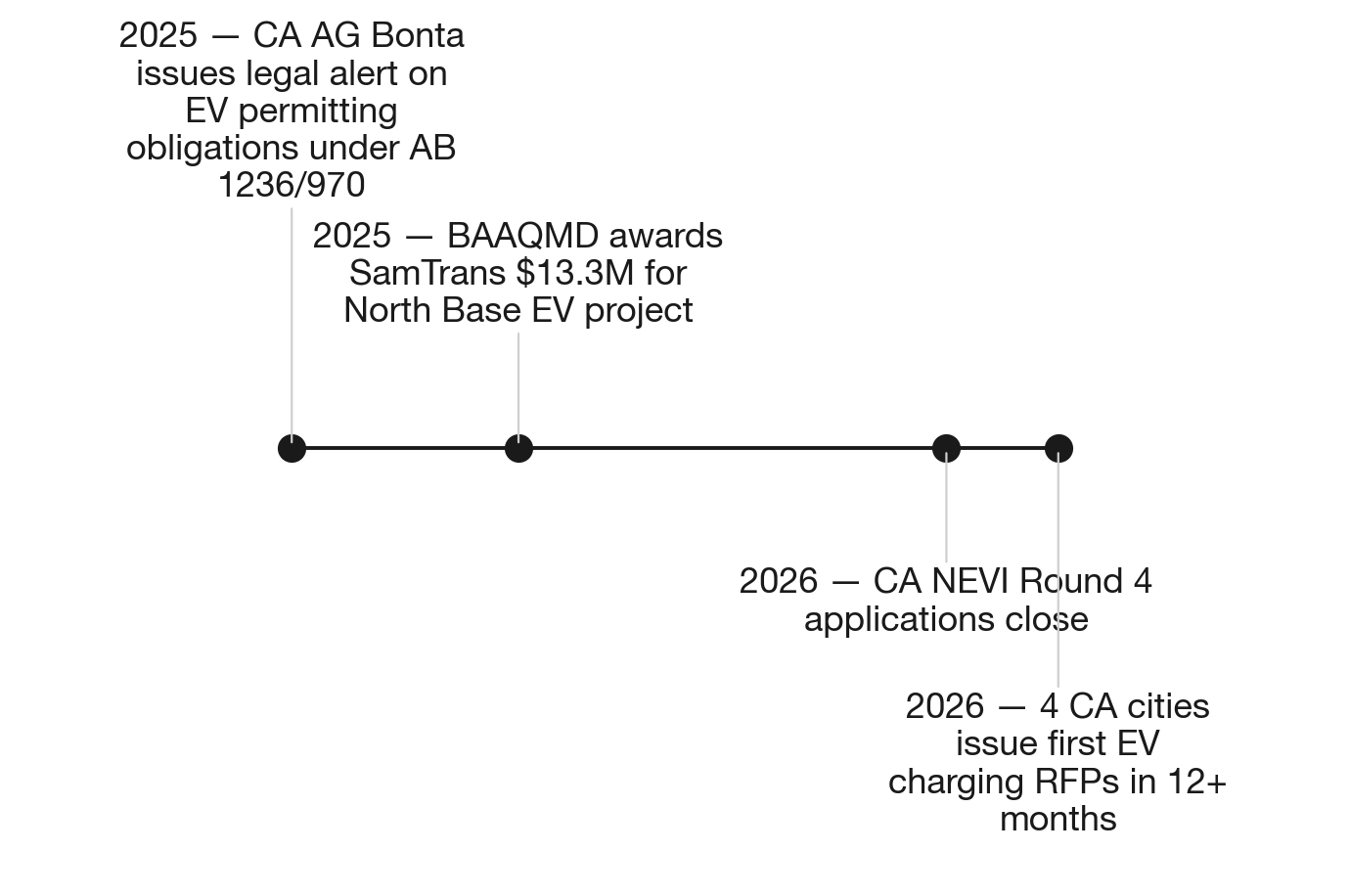
That changed on August 11, 2025, when the Federal Highway Administration issued Interim Final Guidance lifting the freeze and restarting the NEVI program. California's Rounds 4 and 5 solicitations had application deadlines of May 28 and June 18, 2026, respectively. Award recipients now face standard procurement timelines that put vendor selection squarely in July and August. The current burst of first-time RFPs is not a seasonal uptick, it is the direct output of a compressed award-to-procurement pipeline.
Source: NationGraph.
California holds the largest single-state NEVI allocation in the country: $384 million over five fiscal years, covering FY2022 through FY2026. With 29.1 percent of new car sales electric in Q3 2025 and more than 2.5 million cumulative zero-emission vehicles on state roads as of December 2025, the infrastructure gap is real. The freeze meant a year-plus delay between funding availability and actual ground-level procurement. The cities now entering the market for the first time are precisely those that were waiting for legal certainty before committing staff time and resources to a solicitation.
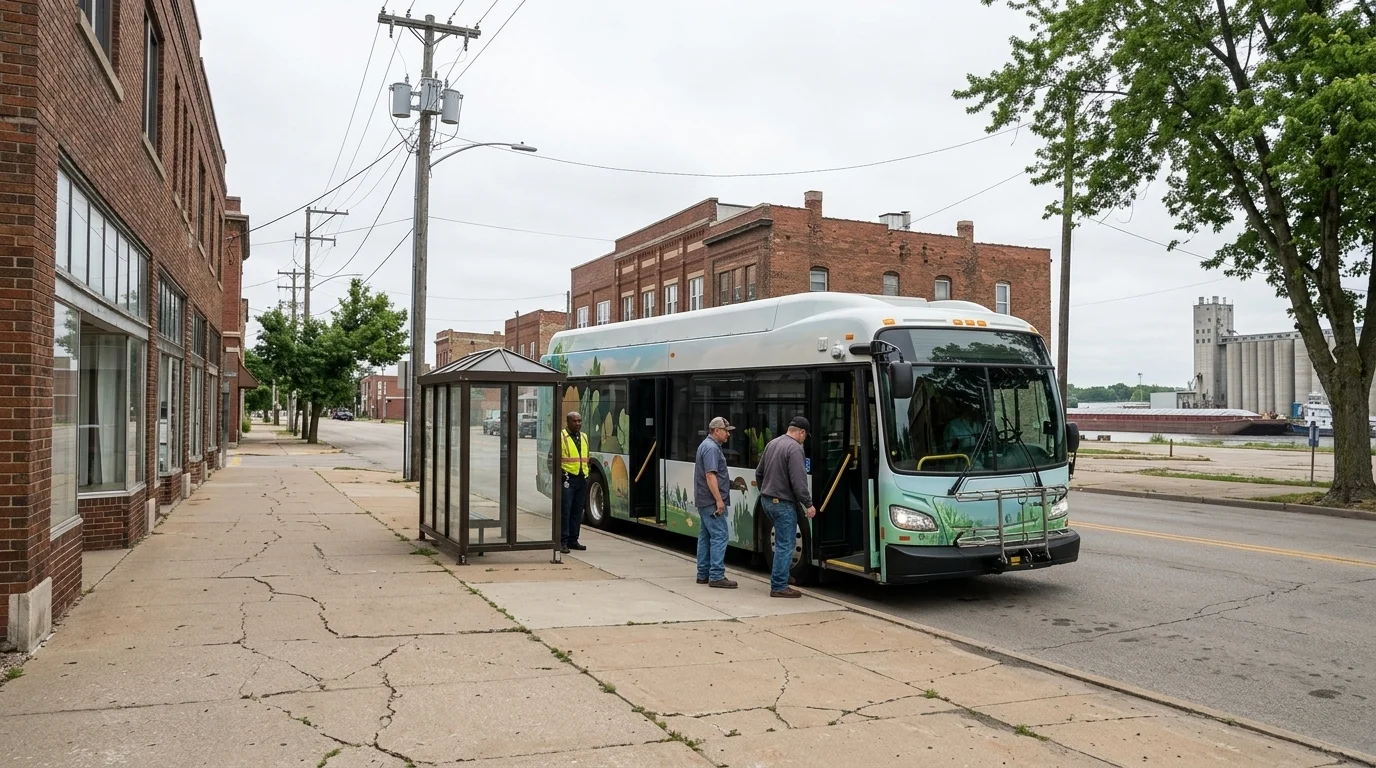
The most substantive new solicitation comes from Riverside, which issued a full-stack RFP on July 15 covering infrastructure design, project management, and construction management services, with an update filed August 5. Riverside's re-entry is notable partly because the city has been building toward fleet electrification: it added its first electric buses to its paratransit fleet earlier this year, signaling an institutional commitment that predates this procurement cycle.
At the transit end, the San Mateo County Transit District's North Base EV Charging Project carries the clearest funding chain. SamTrans is backing 37 pantograph chargers with 1.7 megawatts of combined capacity at its San Carlos facility, funded by a $13.3 million Bay Area Air Quality Management District grant awarded in August 2025. The district's board approved a $13.9 million increase to its FY2026 capital budget to absorb the grant, giving this particular project a defined funding source independent of NEVI award timing.
Institutional pressure from Sacramento has reinforced the urgency. In March 2025, California Attorney General Rob Bonta issued a legal alert reminding local jurisdictions of their obligations under AB 1236 and AB 970 to streamline EV charging station permitting. The alert was not merely advisory: it signaled that municipalities dragging their feet on EV permitting compliance faced legal exposure, adding a compliance dimension to what had previously been a purely budgetary calculation. And as of January 1, 2026, California's updated building code requires EV chargers in most new overnight parking spaces, generating parallel infrastructure demand that is pushing municipalities to develop vendor relationships regardless of federal funding status.
For residents and businesses in these jurisdictions, the practical near-term effect is accelerated permitting and installation timelines. Municipalities that complete vendor selection this fall will be positioned to break ground on public charging infrastructure in early 2027. For Riverside and the Inland Empire, where charging infrastructure density still lags coastal metro areas, the timing matters.
The signal to watch in the next 60 to 90 days is whether the current six institutions are followed by a second wave. The NEVI award-to-procurement timeline suggests that any California locality that received a Round 4 or Round 5 award but has not yet entered the market is running behind. Governor Newsom's proposed $200 million ZEV incentive program in the FY2026-27 budget would layer state funding on top of federal awards, but only for jurisdictions that have already moved through procurement. Municipalities that wait risk missing both the federal window and the state backstop.