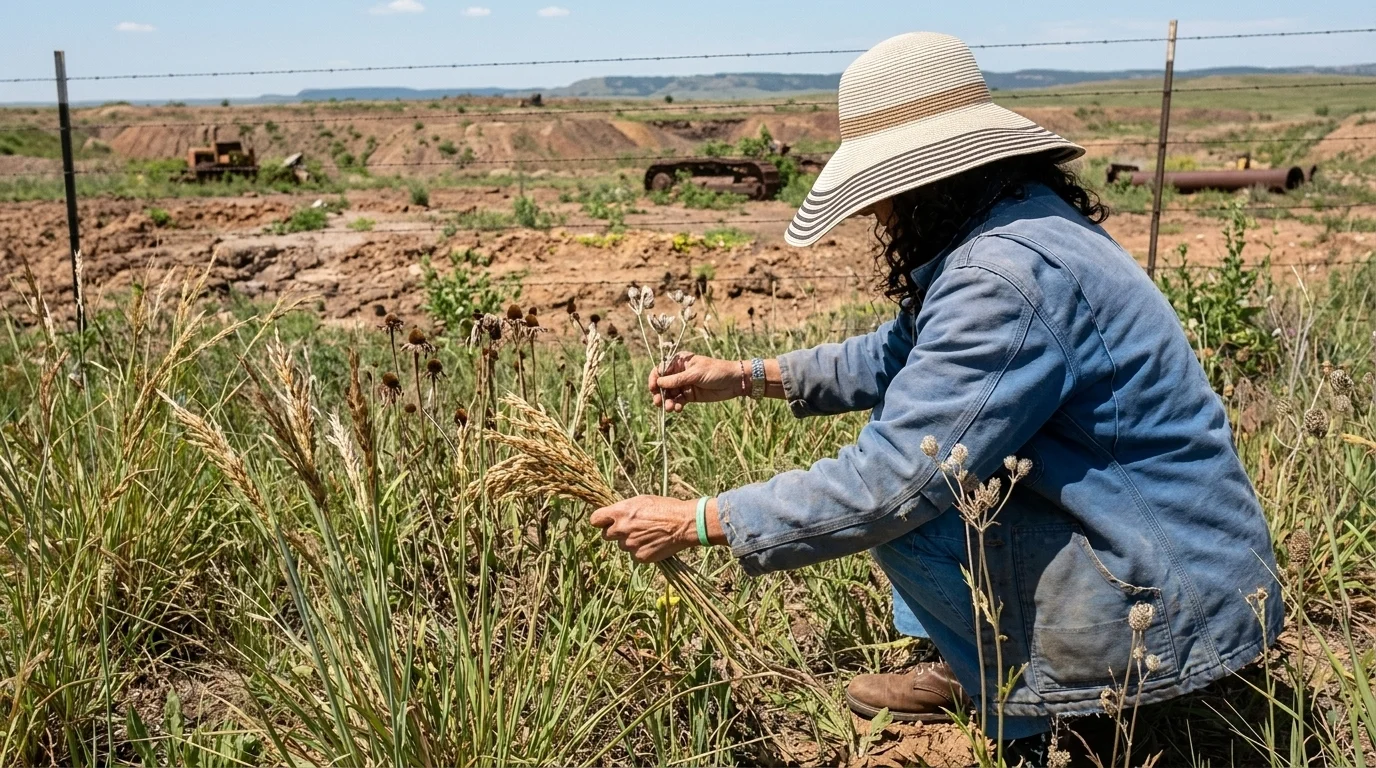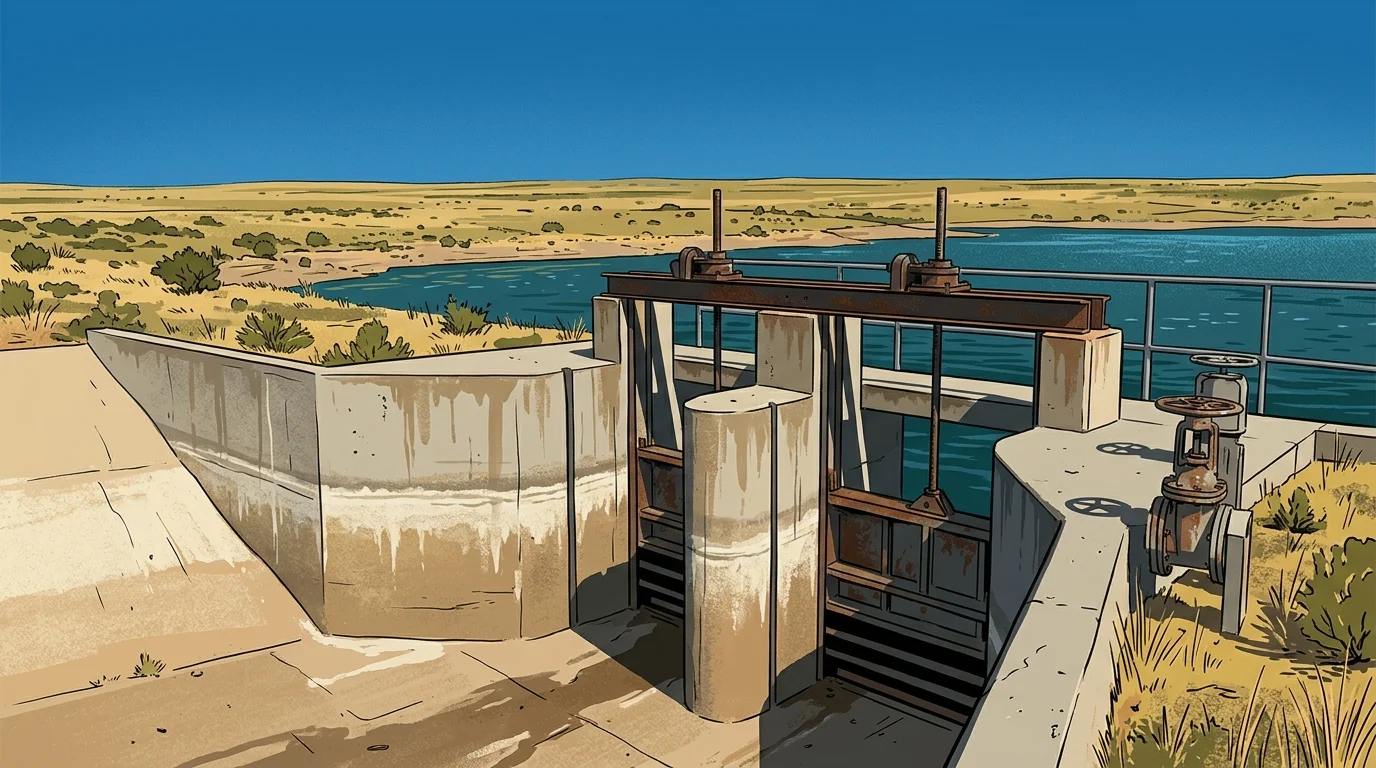
Communities in eastern New Mexico are racing against a clock that has been ticking for decades: the Ogallala Aquifer, the sole water source for Clovis, Portales, Cannon Air Force Base, and much of the High Plains, is being pumped out faster than it refills. The state is now moving to fix one of the last physical obstacles between those communities and a reliable alternative supply.
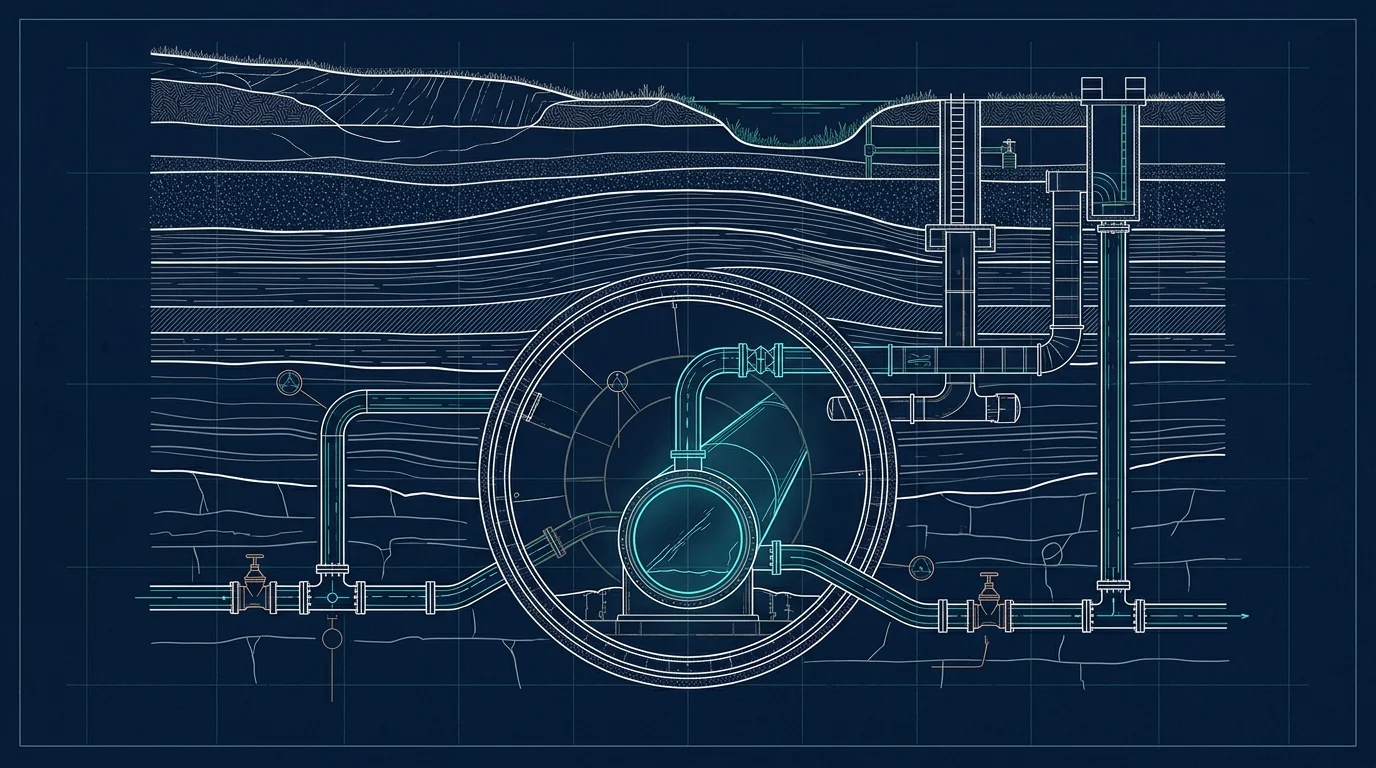
New Mexico is hiring a contractor to overhaul the outlet works at Ute Dam, a 1963 structure on the Canadian River in Quay County that impounds Ute Reservoir. The state posted the project as a competitive sealed proposal with negotiation through the Interstate Stream Commission, the agency that owns and operates the dam. The competitive sealed-proposal structure, rather than a standard low-bid invitation, signals the technical complexity involved. Outlet works are the gates, valves and conduits that control how water is released from a reservoir; on a mid-20th-century dam now over 60 years old, they are the components most likely to fail and most critical to replace.
The stakes go well beyond dam safety. Ute Reservoir is the intended source for the Eastern New Mexico Rural Water System (ENMRWS), a pipeline authorized by Congress in 2009 that would carry water roughly 150 miles to Clovis (population 38,000), Portales (12,000), Cannon Air Force Base, and surrounding towns. Without modernized outlet works capable of reliably delivering water into that pipeline, the system cannot function. Functioning outlet works are also essential for emergency drawdown if the dam ever needs to be evacuated quickly, a concern that has grown nationally since the 2017 Oroville spillway crisis in California prompted broader scrutiny of aging western dams.
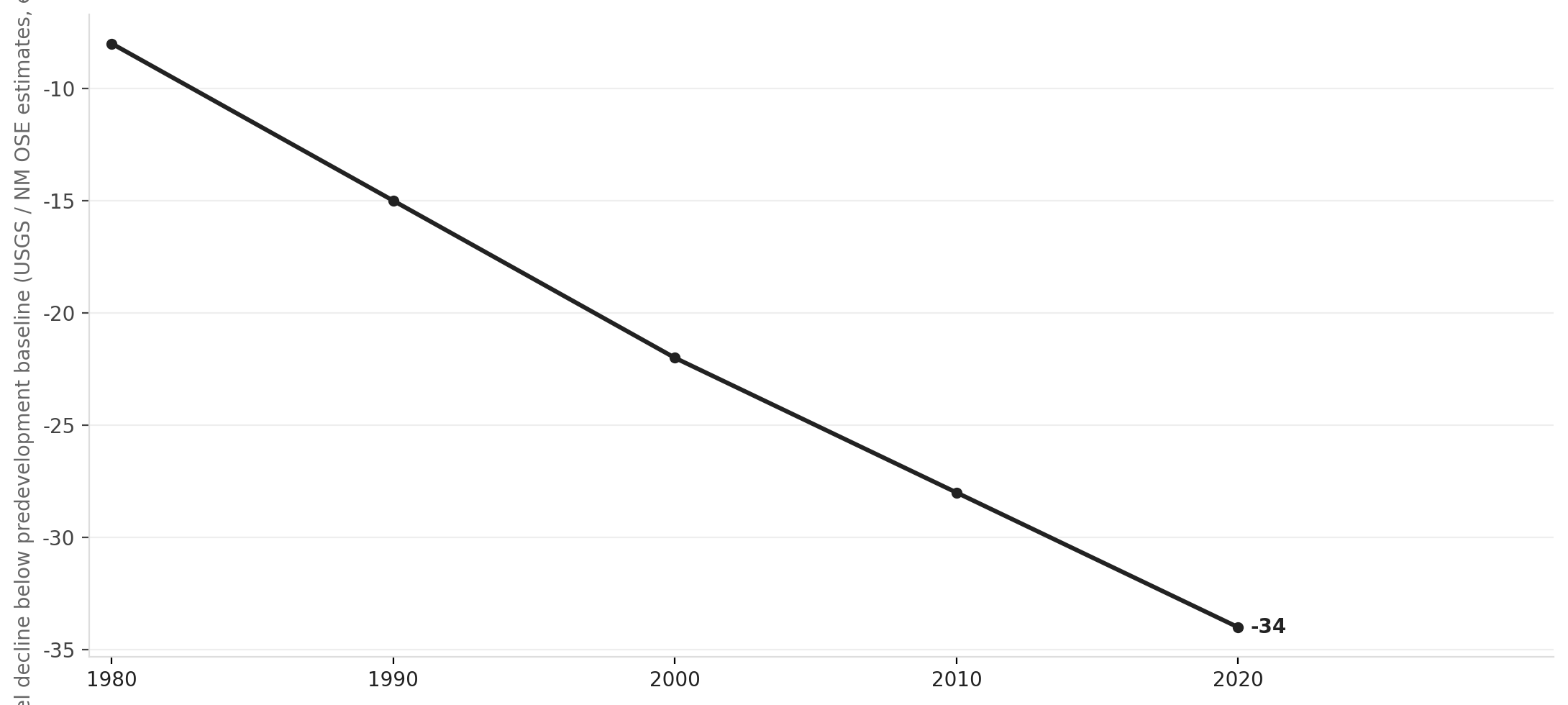
Source: NationGraph.
The Ogallala is depleting across the southern High Plains, and eastern New Mexico sits over its most stressed tip. Local officials in Clovis and Portales have warned for years that without a surface water alternative, the region faces a genuine municipal water crisis. The ENMRWS authorization includes up to 75 percent federal cost share through the Bureau of Reclamation, and the project received a significant additional funding boost through the 2021 Bipartisan Infrastructure Law, though construction on the full pipeline has moved slowly. Governor Michelle Lujan Grisham's 50-Year Water Action Plan, released in 2024, explicitly calls for resilience investments of this kind.
Climate has added urgency. The Canadian River basin has seen sustained drought and volatile runoff since 2000, causing Ute Reservoir levels to swing sharply and making the current outlet works increasingly unreliable for both water delivery and dam safety.
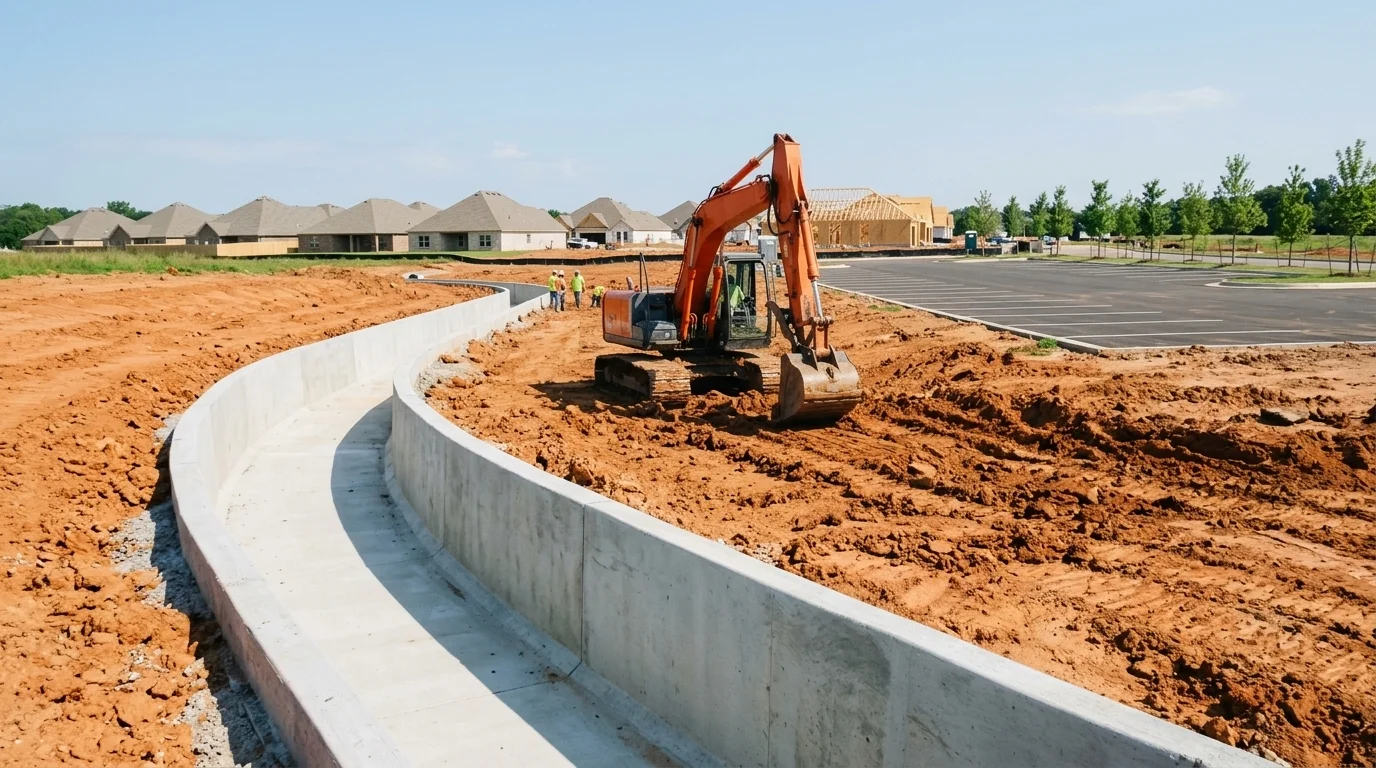
The outlet works modification is managed by the Interstate Stream Commission in coordination with the Office of the State Engineer and the Eastern New Mexico Water Utility Authority. Once a contractor is selected and construction is complete, the project will clear one of the final engineering prerequisites before water from Ute Reservoir can begin flowing to the communities that need it most.