Five opioid-related federal solicitations landed in Maryland in the last 30 days, against a baseline of fewer than one per month, a 6.7x surge generated entirely by a single event: SAMHSA's release of 15 grant programs totaling $281M on July 6, tied to President Trump's Great American Recovery Initiative. The timing is striking because Maryland, the state where SAMHSA is headquartered, is simultaneously at its most successful point in a decade and still being flagged by federal data as one of the country's highest-burden opioid states.
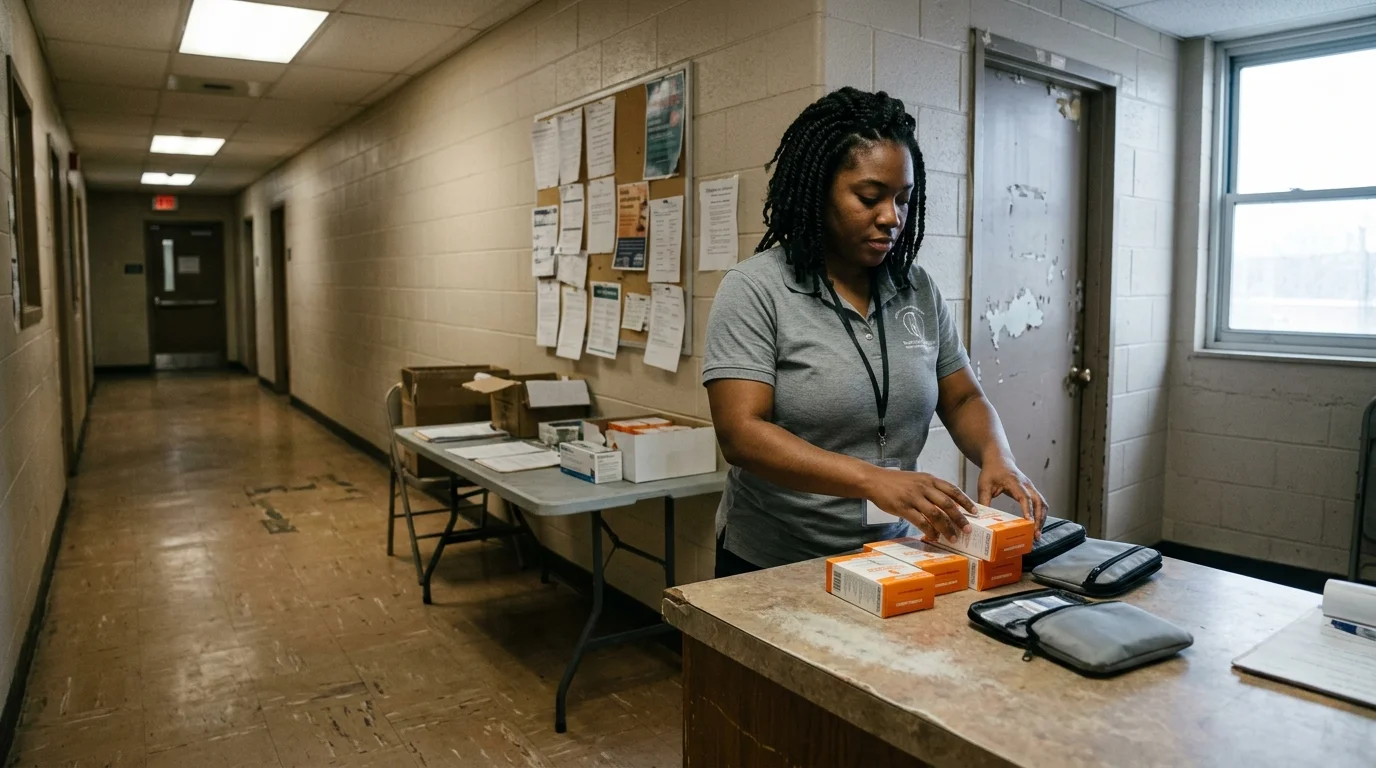
Governor Wes Moore announced in January 2026 that overdose deaths fell to 1,315 in 2025, a 26% drop from 2024, the fourth consecutive annual decline, and a 53% fall from the 2021 peak of 2,800. The state distributed a record 440,000 naloxone doses and 272,000 fentanyl test strips last year. By any measure, something has been working.
And yet the new federal money is being structured around a different diagnosis. All five of Maryland's RFPs originate from SAMHSA's Rockville headquarters: Comprehensive Opioid Recovery Centers (posted July 15), Emergency Department Alternatives to Opioids (July 2), MAT-Prescription Drug and Opioid Addiction (July 2), Tribal Opioid Response Grants (June 17), and Rural Opioid Technical Assistance Centers (June 17). The largest single program, the $68.2M MAT-PDOA grant, explicitly lists Maryland among 13 states with the highest age-adjusted opioid treatment admission rates and offers applicants a 10-point scoring bonus for serving those jurisdictions. Federal officials are treating Maryland as a priority state even as its death toll falls.
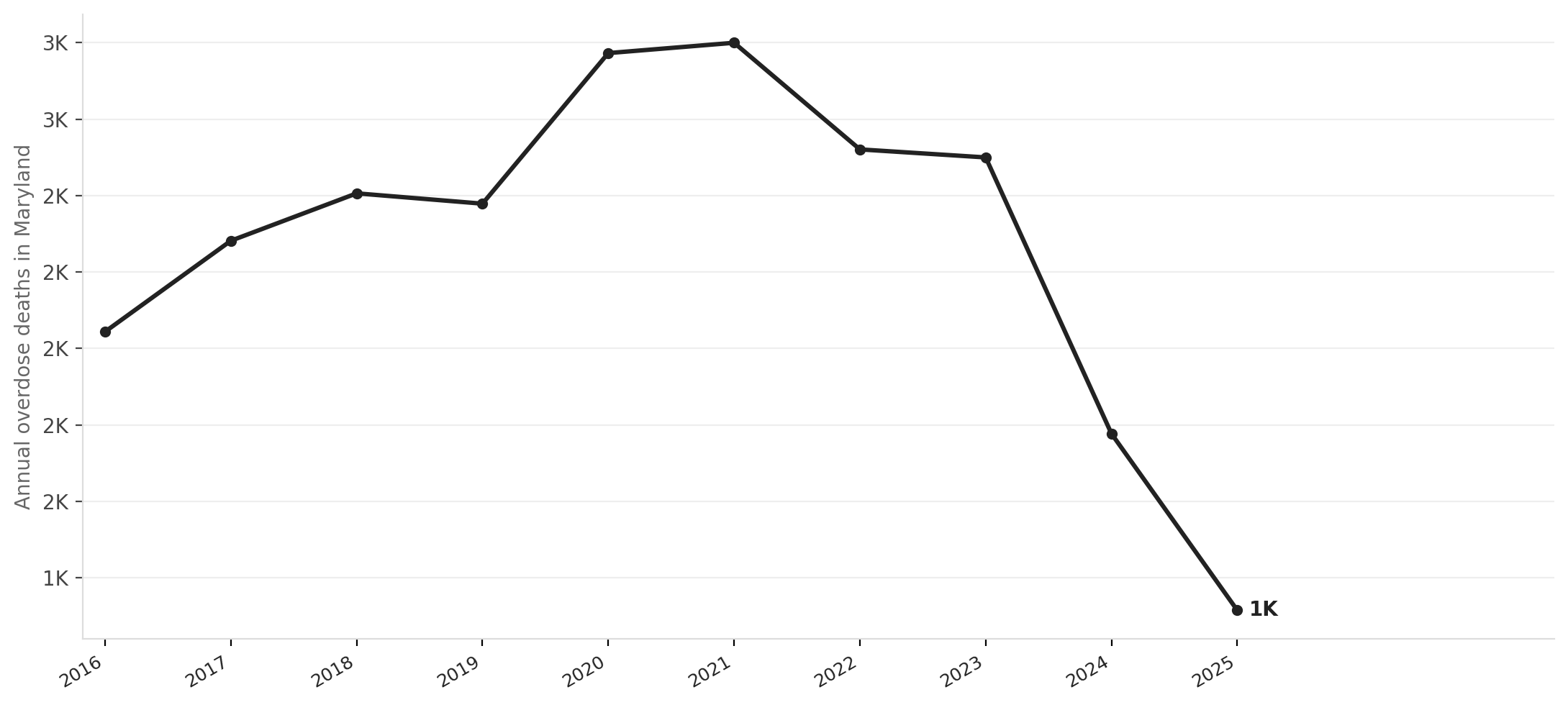
Source: NationGraph.
That paradox has a geographic explanation. Baltimore City's opioid overdose death rate stands at 103 per 100,000, the highest of any large U.S. city and nearly double the next-ranked cities. Statewide progress has been real and sustained; Baltimore's burden has not resolved at the same pace. The federal scoring criteria are reading the city's numbers even as Annapolis counts statewide wins.
The SAMHSA release is, by the agency's own description, the moment Trump's addiction executive order becomes concrete. Executive Order 14379, signed January 29 and co-chaired by HHS Secretary RFK Jr. and White House Senior Advisor Kathryn Burgum, directed SAMHSA to operationalize a new recovery framework. The January order was widely described as light on specifics; the July 6 NOFO release is the first time program structures and dollar figures have been attached to it. In February, the administration canceled and then reinstated roughly $2 billion in SAMHSA grants, an episode that left providers across the country uncertain about whether federal opioid commitments would hold. The July announcement is partly a signal that they will.
For Maryland, the practical stakes are substantial. The state already carries 87 active federal opioid grants totaling $346.4M obligated, with $187M still flowing. The flagship Maryland State Opioid Response IV grant, a $108M award to the Maryland Department of Health running through September 2027, has disbursed only $45.5M of its total commitment, leaving $62.5M still in the pipeline. The state also holds more than $245M in opioid settlement funds from the Purdue Pharma and Sackler family cases, of which only $34M has been expended. Maryland is not short of resources. The question is whether a new round of federal programs, designed under a White House framework that has signaled skepticism toward harm reduction approaches, will layer onto existing infrastructure or redirect it.
Special Secretary of Overdose Response Emily Keller has been the named official behind the state's coordinated response, including the naloxone distribution scale-up and the fentanyl test strip expansion that public health researchers credit as central to bending the death curve. The new federal NOFOs emphasize recovery centers and medication-assisted treatment, both evidence-based, but the broader GARI framework has drawn scrutiny for how it treats harm reduction programs that don't center abstinence. Maryland-based applicants, including Johns Hopkins, the University of Maryland health system, and community health organizations in Baltimore, will write proposals into that tension.
The compressed deadlines sharpen the pressure. Most of the five NOFOs are due by late July, meaning applications are being assembled right now. SAMHSA's Rockville address means Maryland institutions are geographically close to the agency but not exempt from the same competitive review as applicants in every other state. Adjacent states, DC, Pennsylvania, Virginia, Ohio, each posted one or two opioid RFPs in the same window, none approaching Maryland's concentration.
The next signal to watch is which Maryland entities actually win awards and under what program terms. If MAT-PDOA grants flow to Baltimore City providers already running medication-assisted treatment programs, the new federal money accelerates what is working. If the Comprehensive Opioid Recovery Center awards come with conditions that restrict harm reduction services, the state may find itself managing a conflict between federal grant requirements and the strategies that produced four consecutive years of declining deaths.