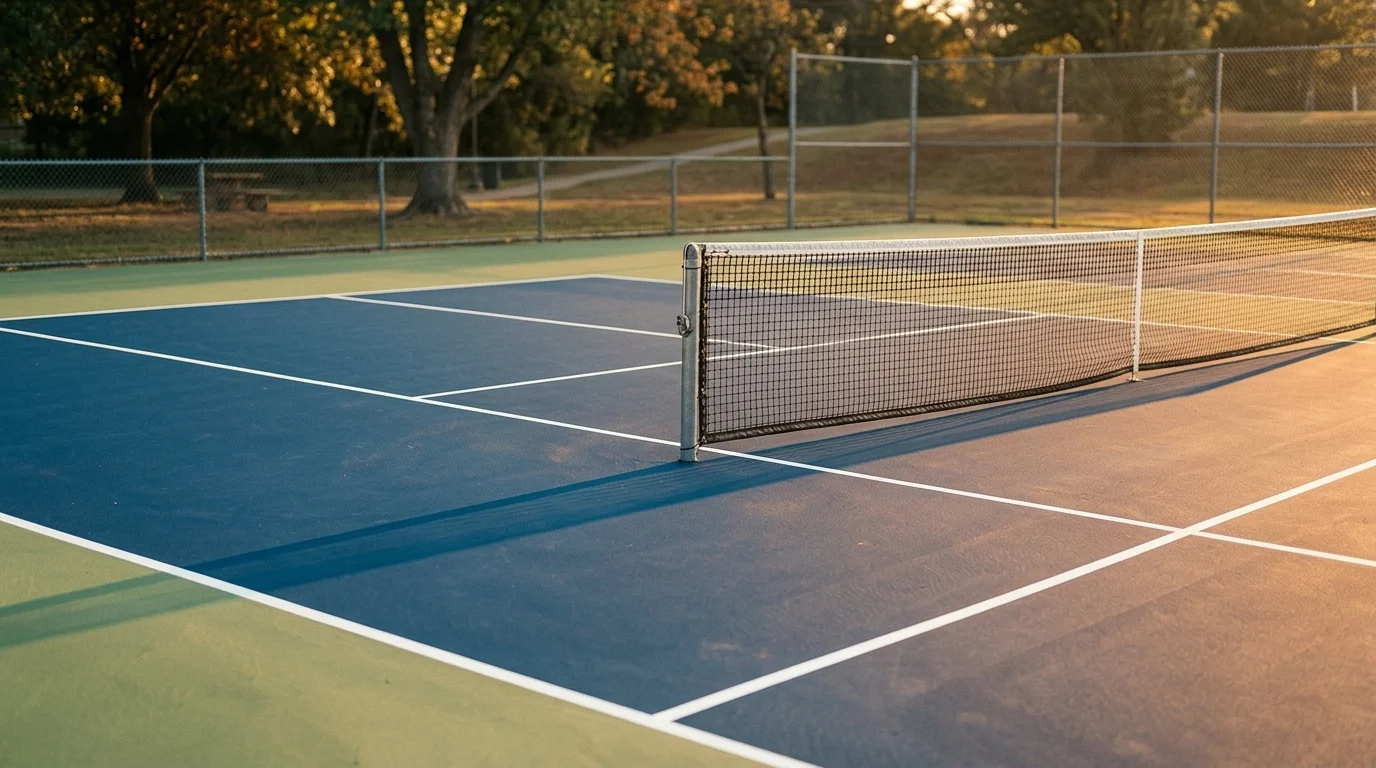
Fourteen North Carolina counties have issued pickleball-related construction solicitations in the last 30 days, 3.3 times the trailing 12-month monthly average of roughly four. That surge is not a sudden burst of new ambition. For several of the counties involved, these are the same projects that first went to bid in 2024 and failed to close. The money simply wasn't there. Now it is.
The unlock came in October 2025, when the NC Department of Natural and Cultural Resources announced that North Carolina's federal Land and Water Conservation Fund allocation had risen 37 percent year over year, from $7.8 million to $10.69 million for FY2025-26. According to a DNCR press release, when federal dollars are matched by state and local funds under the LWCF formula, the FY2024-25 cohort alone generated $56 million in total park investment statewide. Secretary Pamela B. Cashwell framed it as one of the largest such infusions in recent years. State Parks Director Brian Strong was more direct: "Grant funding is crucial to make more parks more accessible to more people."
Local park departments had heard that message before and had capital project lists ready. What they lacked was the match. LWCF works as a reimbursement program: a county identifies a project, secures local funding, completes construction, and draws down the federal share. When federal allocations are thin, the calculus on committing local bond dollars to speculative match positions gets harder. When the allocation jumps by a third, projects that had been sitting in a queue for one to three years become financially viable almost simultaneously.

Source: NationGraph.
The active solicitations span seven counties: Brunswick, Carteret, Dare, Johnston, Lincoln, Macon, and Pender. That geographic spread, from the Outer Banks to the foothills, is one signal that this is a statewide funding event rather than a single jurisdiction's buildout. Another signal is the re-advertisement pattern. Pender County's Hampstead Kiwanis Park project has re-entered procurement for at least the third time. Carteret County's courts resurfacing solicitation carries a 2024 original due date. Lincolnton's tennis-to-pickleball conversion is similarly a relaunch. These aren't communities discovering pickleball, they're communities that had already decided and are finally getting the bids accepted.
The federal money alone doesn't explain the timing. North Carolina also finalized its 2025-2030 Statewide Comprehensive Outdoor Recreation Plan this year. States are required to update that plan every five years to maintain LWCF eligibility, and the finalization effectively resets the grant clock. Local governments that had been in a planning gray zone while the state document was being written now have a fresh mandate and a clearer application pathway.
Legislative signals reinforced the move. NC HB249, filed in February 2025 with bipartisan support, appropriated funds to NC State University's Parks, Recreation and Tourism Management department for a Wake County pilot program explicitly designed to broaden pickleball participation. The bill cited the sport's public health benefits and its underrepresentation among communities of color. A nearly identical bill died in committee in 2023. The fact that it came back, with more co-sponsors and an effective date of July 1, 2025, tells county park directors that pickleball is no longer a niche line item, it's one their elected officials will recognize and defend in a budget hearing.
North Carolina is not alone in this. Georgia issued 51 pickleball-related RFPs in the same 30-day window, and Tennessee and Virginia show similar upticks. The LWCF federal formula distributes dollars to all 50 states, so a federal allocation increase has ripple effects across the Southeast simultaneously. The procurement wave in North Carolina looks like a regional phenomenon, synchronized by the same federal calendar.
For residents of the seven active counties, the practical consequence is that courts that were announced, then quietly postponed, are now moving toward a contractor selection. Pender County residents near Hampstead have been waiting for the Kiwanis Park improvements since at least 2023. Brunswick and Dare County projects represent coastal communities where retiree populations have driven pickleball demand faster than park capital budgets could respond.
Wake Forest, an early mover that passed a $24.4 million parks bond in 2022 and has since installed 32 courts, offers a preview of what scaled-up municipal investment looks like. The counties now in active procurement are earlier in that curve.
The next signal to watch is whether HB249 moves out of the House Appropriations Committee when the legislature returns to budget negotiations. If it passes, it would fund an NC State research program and a Wake County pilot that could produce utilization data, the kind of evidence that sustains future grant applications and keeps pickleball visible as a line item when the next LWCF cycle opens.