Palm Desert, California is moving to put autonomous drones in the air before ambulances and fire trucks even leave the station, betting that faster aerial eyes on the scene can save lives in a city where summer heat kills quickly and ground units can take five to eight minutes to arrive.
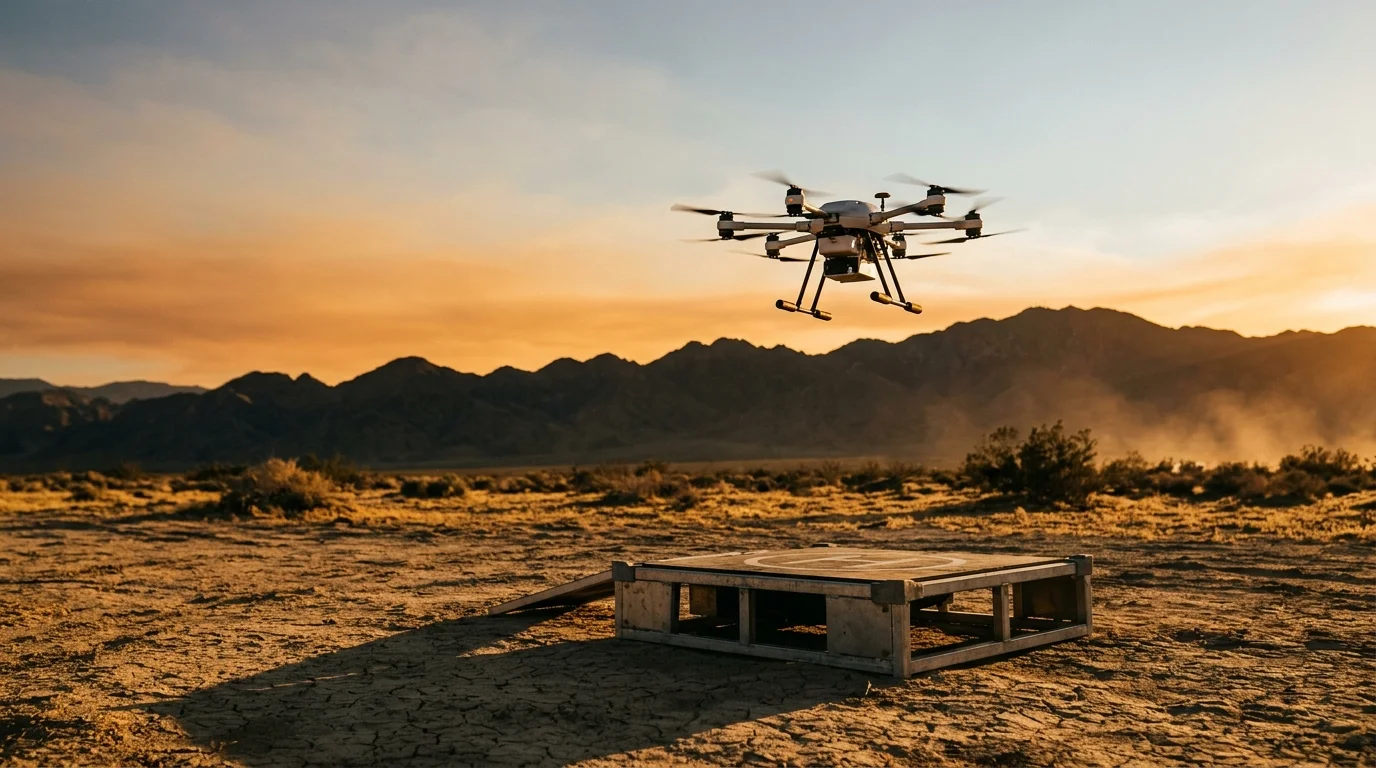
The city, home to roughly 53,000 permanent residents in the Coachella Valley, has posted a solicitation for a Drone as First Responder program. Under this model, a drone launches from a fixed pad within seconds of a 911 call and streams live video to dispatchers and approaching crews, typically arriving on scene in 60 to 90 seconds. That head start can help responders assess a medical call, spot a fire's exact location, or confirm whether a reported emergency is real before committing multiple ground units.
The stakes in Palm Desert are unusually high. The city's median age is among the highest in California, driven by a large retiree and winter snowbird population that already generates a heavy load of medical emergency calls. When temperatures exceed 115°F, as they routinely do in summer, a heat-related cardiac event or stroke becomes rapidly fatal without fast intervention. The city also sits at the edge of open desert and the Santa Rosa Mountains, creating wildland fire exposure and search-and-rescue demand that traditional response models weren't built for.
Palm Desert doesn't run its own police or fire departments, contracting instead with the Riverside County Sheriff and Cal Fire. A city-operated drone program would represent a notable step toward direct control over a public-safety capability and raises open questions about who will staff and oversee daily operations.
The city isn't starting from scratch conceptually. Drone-based emergency response has spread quickly across California, with agencies including the Riverside County Sheriff's Department and Cathedral City Police already operating drone units in the region. Nationally, programs in Chula Vista, Beverly Hills and Oklahoma City have handled thousands of calls and, their operators say, contributed to faster outcomes. Those programs have also drawn scrutiny from civil liberties groups over questions about flight-path data retention and warrantless overflights of private property, concerns that Palm Desert will likely need to address publicly as it moves forward.
The FAA's recent loosening of rules around beyond-visual-line-of-sight drone operations has made programs like this far easier to launch than even two years ago, removing what had been the single biggest regulatory barrier. Federal rules also now discourage public agencies from buying Chinese-made drones, narrowing the vendor field toward U.S. manufacturers.
The city has not publicly disclosed a budget or contract timeline for the program. Details on the number of drone stations, coverage area and operational model will likely emerge as the procurement process moves forward.