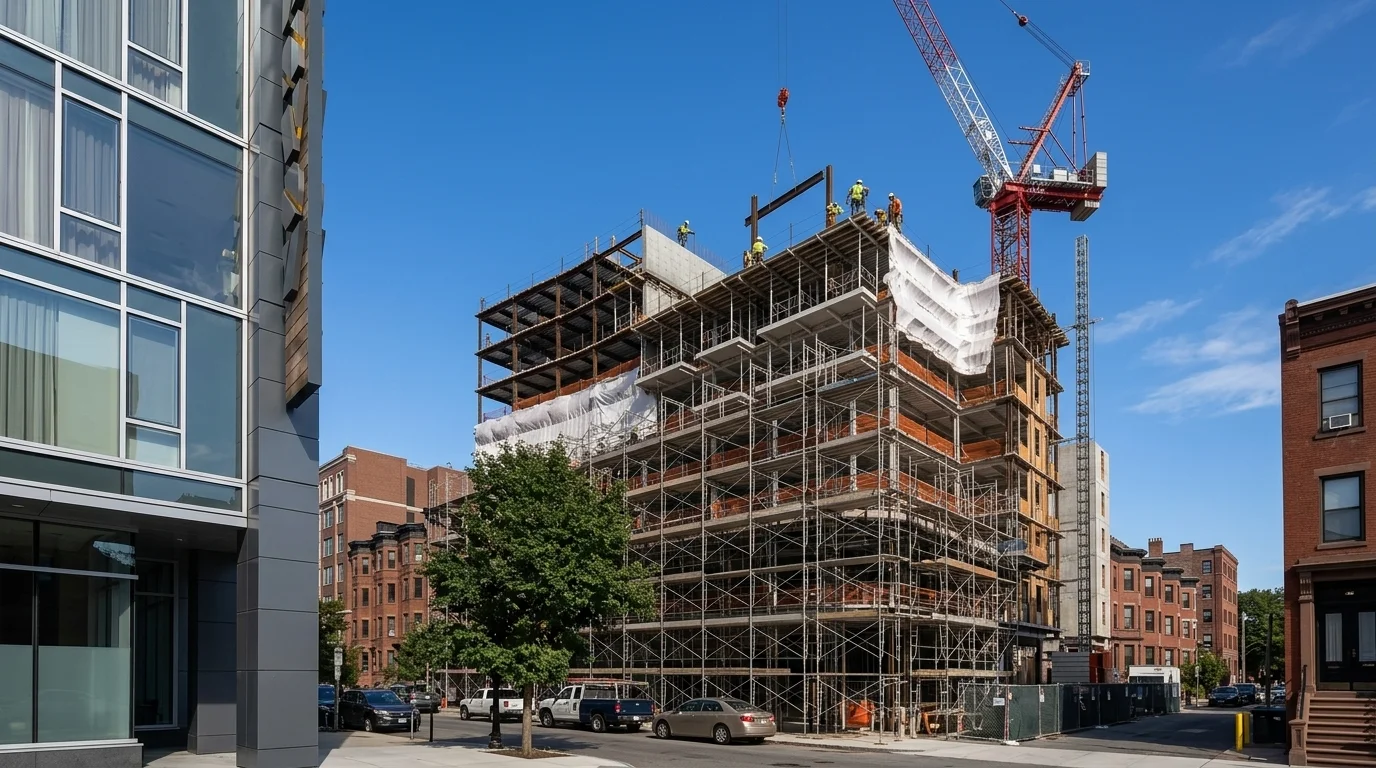
Boston's housing authority is doing something it has never done before: acting as a bank.
With private construction lending effectively frozen by high interest rates, the Boston Housing Authority is putting up to $35 million on the table as a direct lender and investor for mixed-income housing development across the city. The move is a striking departure for an agency historically focused on managing public housing for low-income residents, and it signals how seriously city leaders are treating a housing shortage that has pushed median one-bedroom rents to around $3,000 a month.
The fund targets three types of projects: privately owned mixed-income rentals, publicly owned mixed-income rentals and mixed-income homeownership developments. By offering financing at competitive rates, the BHA aims to close the gap that opened when the Federal Reserve raised interest rates from near-zero to over 5% in 2022 and 2023, making conventional construction loans too expensive for many projects to pencil out. Hundreds of permitted Boston developments stalled as a result.
The $35 million is BHA's portion of a broader $110 million Housing Accelerator Fund that Mayor Michelle Wu's administration previewed in early 2024. Wu, who has made housing production a signature priority since taking office in November 2021, has pushed a range of interventions: a property tax incentive for converting downtown offices to apartments, updated inclusionary zoning requiring 20% affordable units, and now a public financing vehicle to unstick a stalled pipeline. The BHA effort is a collaboration between the authority and the City of Boston.
Leading the shift is BHA CEO Kenzie Bok, a former city councilor appointed in 2023, who has positioned the authority as an active player in citywide housing production rather than a manager of last resort. Boston's housing crunch is severe: median home prices have roughly doubled over the past decade, and the region needs an estimated 200,000 additional units by 2030 to keep up with demand driven by growth in life sciences and tech.
Boston is a geographically small and densely built city, and production has long lagged job growth. Similar public financing vehicles have emerged in Chicago, Los Angeles, Seattle and New York as cities nationwide search for ways to unlock housing pipelines that private capital alone has failed to keep moving.
The BHA has posted the funding opportunity on its bid portal and is now accepting proposals from developers and construction firms. Loan terms, rates and amounts are negotiable, and the authority may roll construction financing into a permanent loan or investment product for projects that demonstrate strong community benefit.