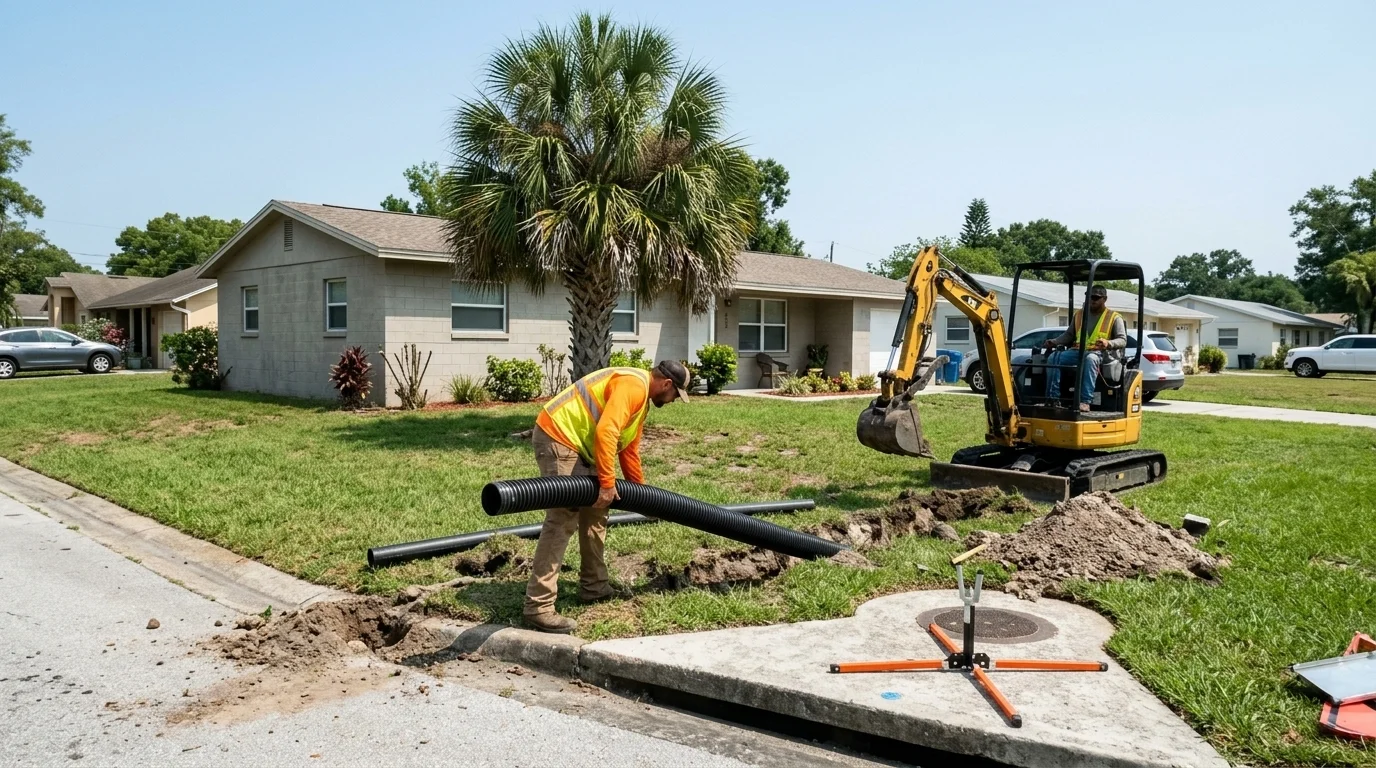
Baton Rouge, Louisiana, one of the most dangerous cities in the country for people on foot, is moving to fill a glaring gap in its pedestrian network: Goodwood Boulevard, a key east-west corridor through the heart of the city, is getting sidewalks and dedicated bike paths for the first time.
The parish is hiring engineers and contractors to build the improvements along Goodwood from Airline Highway on the west to Sharp Road on the east. The corridor cuts through a mix of residential neighborhoods, commercial strips, schools, and churches, and carries significant foot traffic to Capital Area Transit System bus stops, yet has no consistent sidewalks and no cycling infrastructure at all. The specific cost has not yet been publicly disclosed and will become clearer as bids are submitted through Louisiana's LaPAC procurement system.
The stakes are real. Louisiana ranks among the top five deadliest states for pedestrians per capita, with a fatality rate roughly double the national average in recent years. Airline Highway, the western anchor of this project, is widely considered one of the most dangerous roads in the state. Federal officials took notice in 2023, awarding Baton Rouge a $2.5 million Safe Streets for All planning grant in recognition of the city's pedestrian safety crisis.
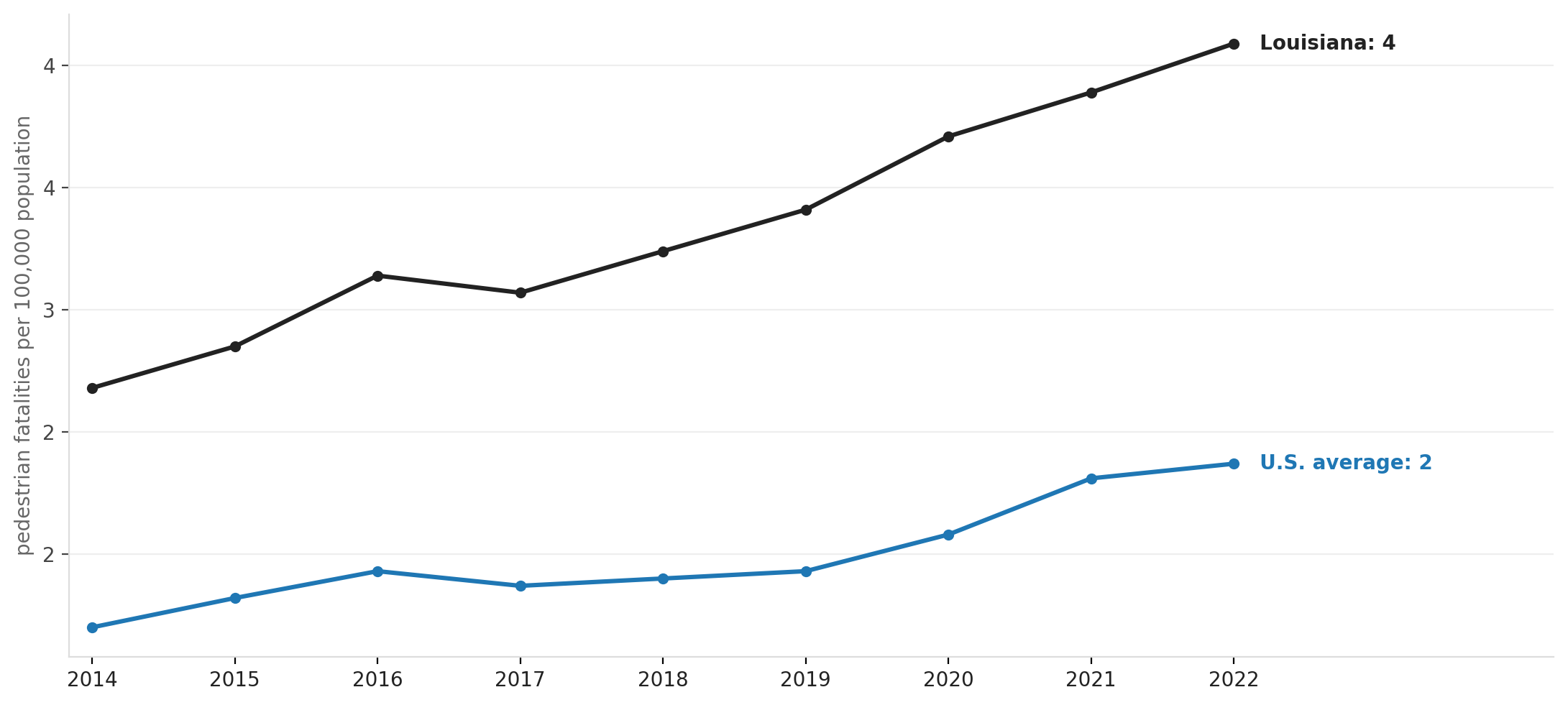
Source: NationGraph.
The Goodwood project draws from MOVEBR, the parish's $1 billion-plus transportation program funded by a half-cent sales tax that voters approved in November 2018. That vote came with explicit promises: yes, roads would be widened and repaved, but pedestrian and cycling safety upgrades were a central selling point. Nearly eight years later, advocacy groups including the Baton Rouge Bicycle Club and local complete streets coalition CONNECT have repeatedly argued that road capacity projects have moved faster than the sidewalk and bike path work voters were promised.
The corridor also raises equity questions. Neighborhoods along Goodwood include lower-income areas where residents are more likely to walk, bike, or rely on the bus than to drive, making the absence of safe pedestrian infrastructure a matter of access as much as safety.
How quickly this project moves from procurement to construction will be a test of whether MOVEBR's pedestrian commitments are accelerating, or still lagging behind.