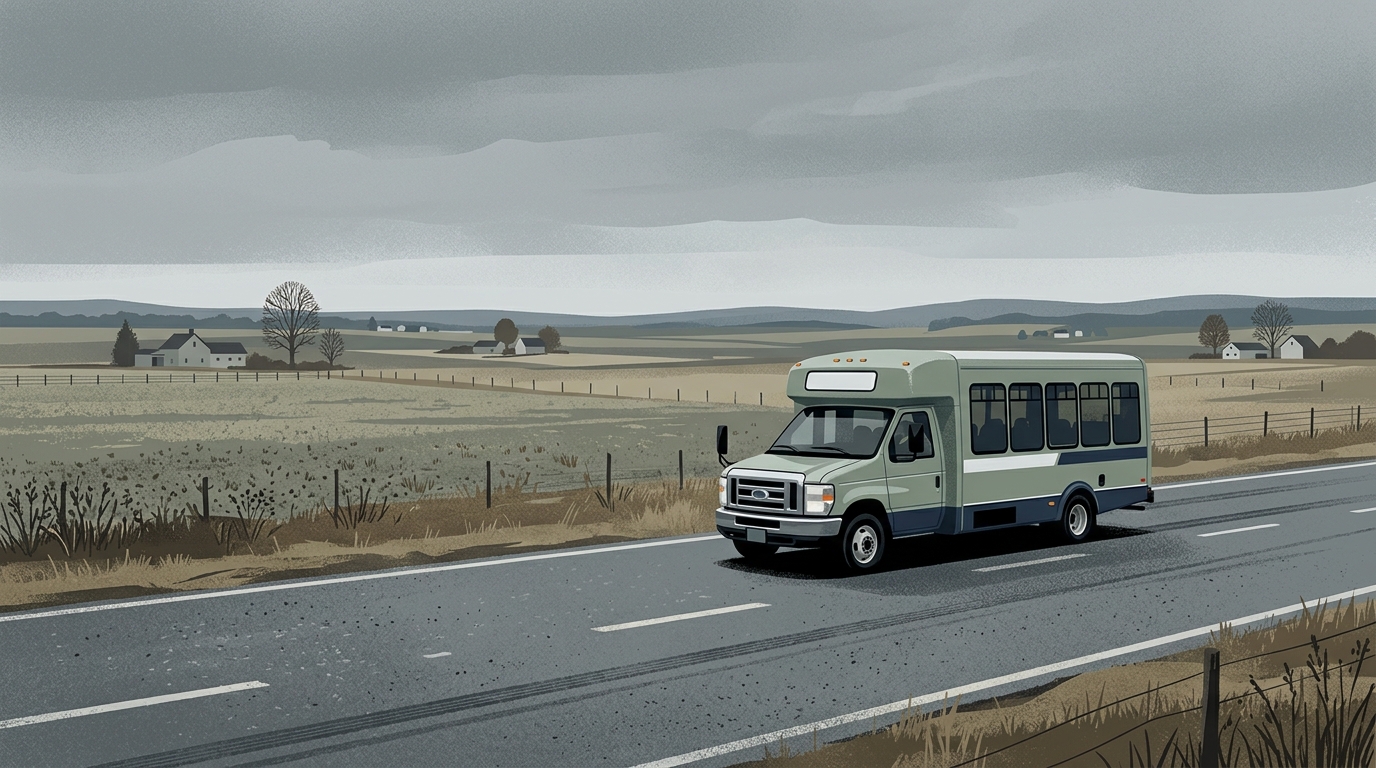
Transit riders in some of Maryland's most rural and low-income communities are getting seven new small buses, funded by a $677,520 federal grant flowing through the state's Maryland Transit Administration.
The money goes to two distinct parts of the state: the Lower Eastern Shore, covering Somerset, Wicomico, and Worcester counties, and three counties in central-western Maryland: Carroll, Frederick, and Washington. The Tri-County Council for the Lower Eastern Shore and Carroll and Frederick counties will each receive replacement fleet vehicles; Washington County gets a shop truck to support its transit maintenance operation.
The communities these buses serve have limited alternatives. Somerset County is Maryland's lowest-income county, with poverty rates roughly double the state average. Residents of the Eastern Shore tend to be older, more dispersed, and heavily car-dependent, making the Shore Transit system a genuine lifeline for medical appointments, work, and basic errands. Carroll, Frederick, and Washington counties lack the transit infrastructure of the Baltimore or Washington metro areas, and Washington County's Hagerstown has a significant population of transit-dependent riders.
The funding comes from the Federal Transit Administration's Section 5339 Buses and Bus Facilities program, which the 2021 Bipartisan Infrastructure Law significantly expanded. The FTA considers a small bus to have a useful life of roughly five to seven years or around 150,000 to 200,000 miles. Rural systems often run buses well past those thresholds because replacement cycles stretch longer when local tax bases are small. Overdue replacements mean more breakdowns and, for riders without other options, canceled trips.
The timing carries some uncertainty. This award falls near the end of the infrastructure law's five-year funding window, and Congress has not yet signaled it will reauthorize the program at comparable levels after 2026. Federal transit funding has also faced scrutiny in the current political environment, making the pipeline of future grants less predictable than it appeared when the law passed.
The buses still need to be procured, a process that has taken longer than expected at transit agencies nationwide due to supply chain backlogs that stretched vehicle delivery timelines well into 2024.