Federal transit grants newly started in Alaska have totaled $62.2 million in the last 90 days, more than double the $29.6 million awarded in the same window a year ago. The surge is not about buses or light rail. It is about the Alaska Marine Highway System, a fleet of aging vessels that serves as the only surface transportation link for dozens of communities with no road access, and a state budget that had already promised money it wasn't sure was coming.
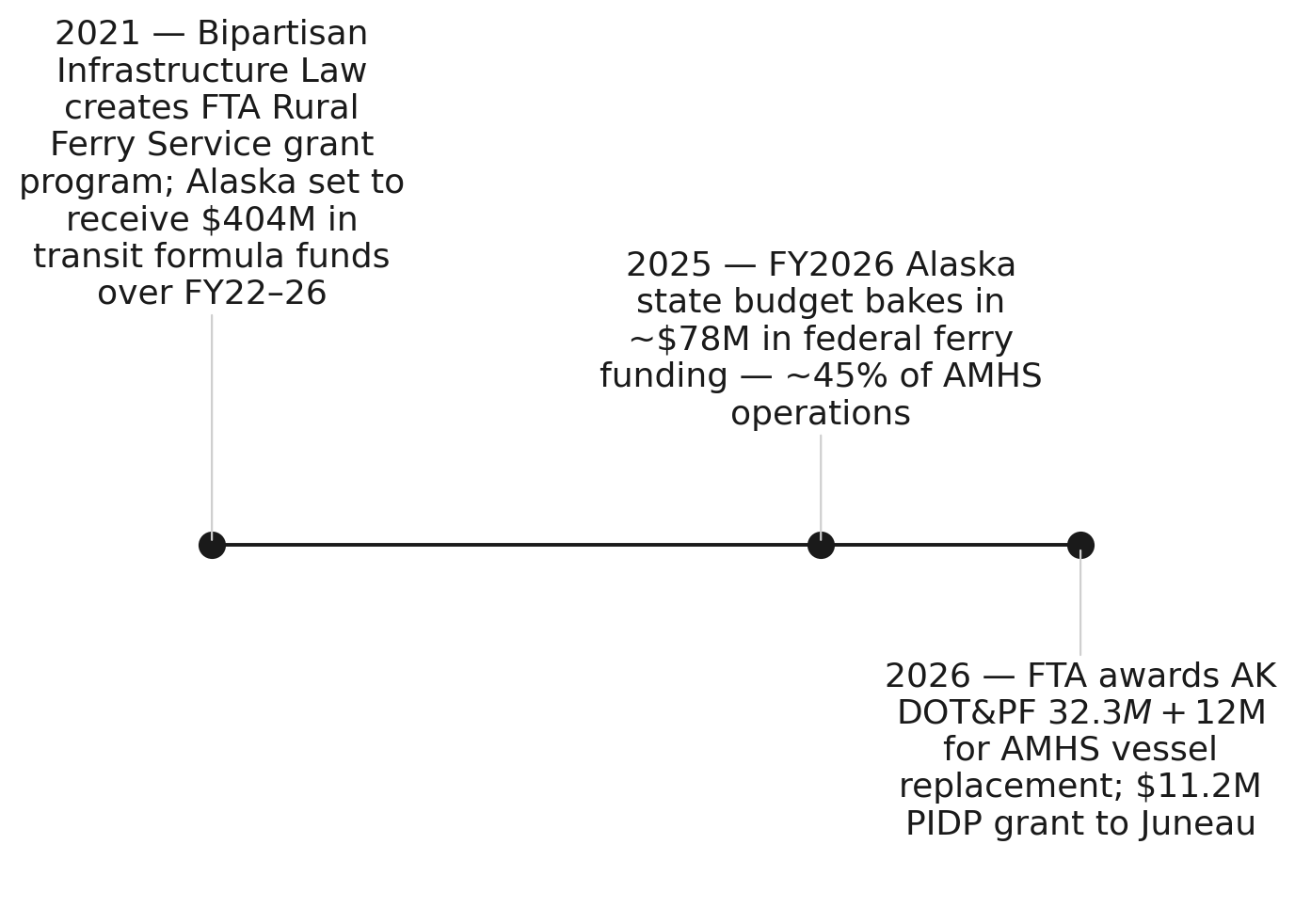
The story behind the numbers starts with a fiscal bet Alaska shouldn't have had to make. When legislators drafted the FY2026 state budget, they baked in roughly $78 million in anticipated federal ferry funding, counting on that money to cover approximately 45% of AMHS operations spending. The federal program they were counting on, the FTA's Rural Ferry Service Grant, authorized under the 2021 Bipartisan Infrastructure Law, had been frozen by the Trump administration since early 2026, its application window closed for roughly a year while an estimated $450 million in unawarded funds sat idle nationally. Alaska had written a check against a balance that didn't yet exist.
That gap is what sent DOT&PF Commissioner Ryan Anderson to Washington, D.C. to personally lobby for the program's reopening. According to reporting from the Anchorage Daily News, the application window finally reopened in April 2026, a year behind schedule. The state scrambled to file. By September 2026, two FTA awards under the Section 5311 Rural Areas and Tribal Transit Formula Program had landed: $32.3 million and $12 million, both explicitly designated for AMHS vessel replacement and fleet modernization. Those two grants account for $44.3 million of the 90-day surge.
Source: NationGraph.
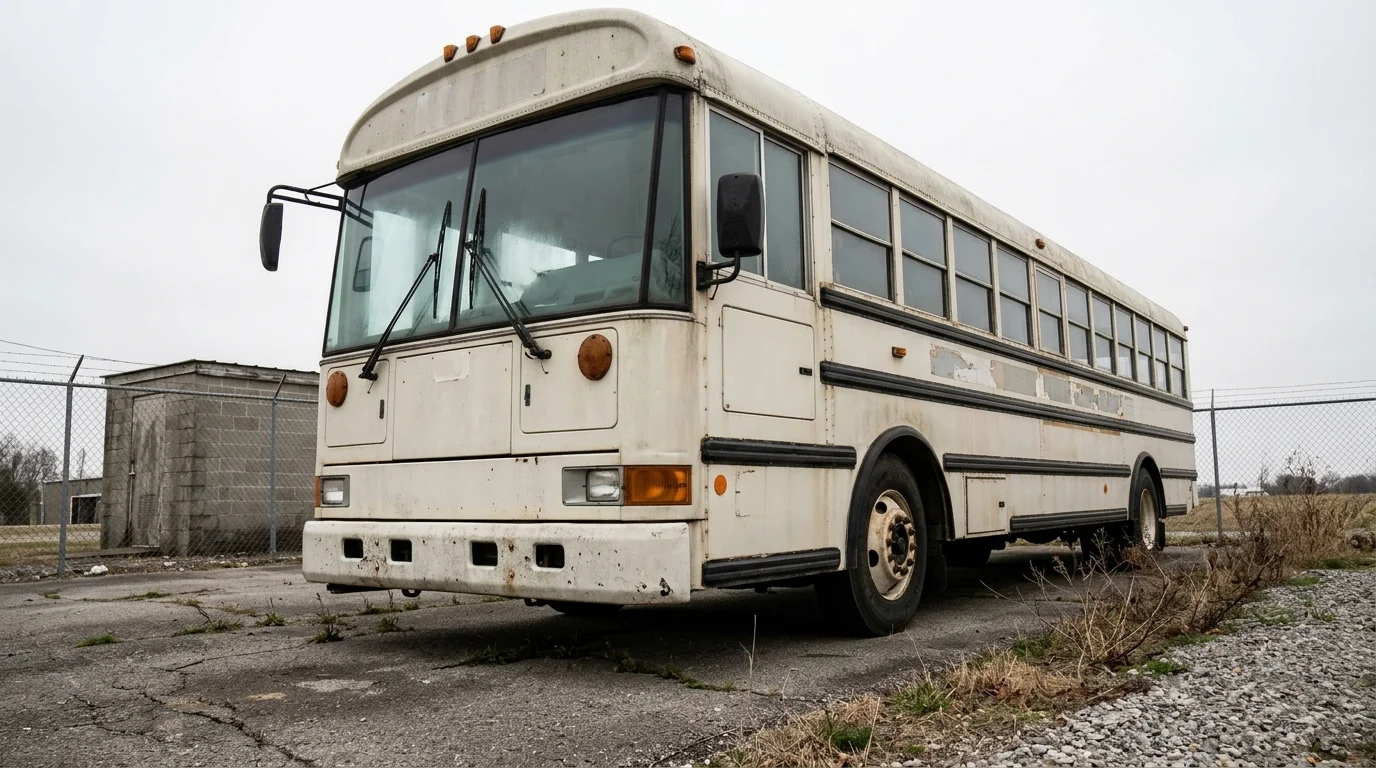
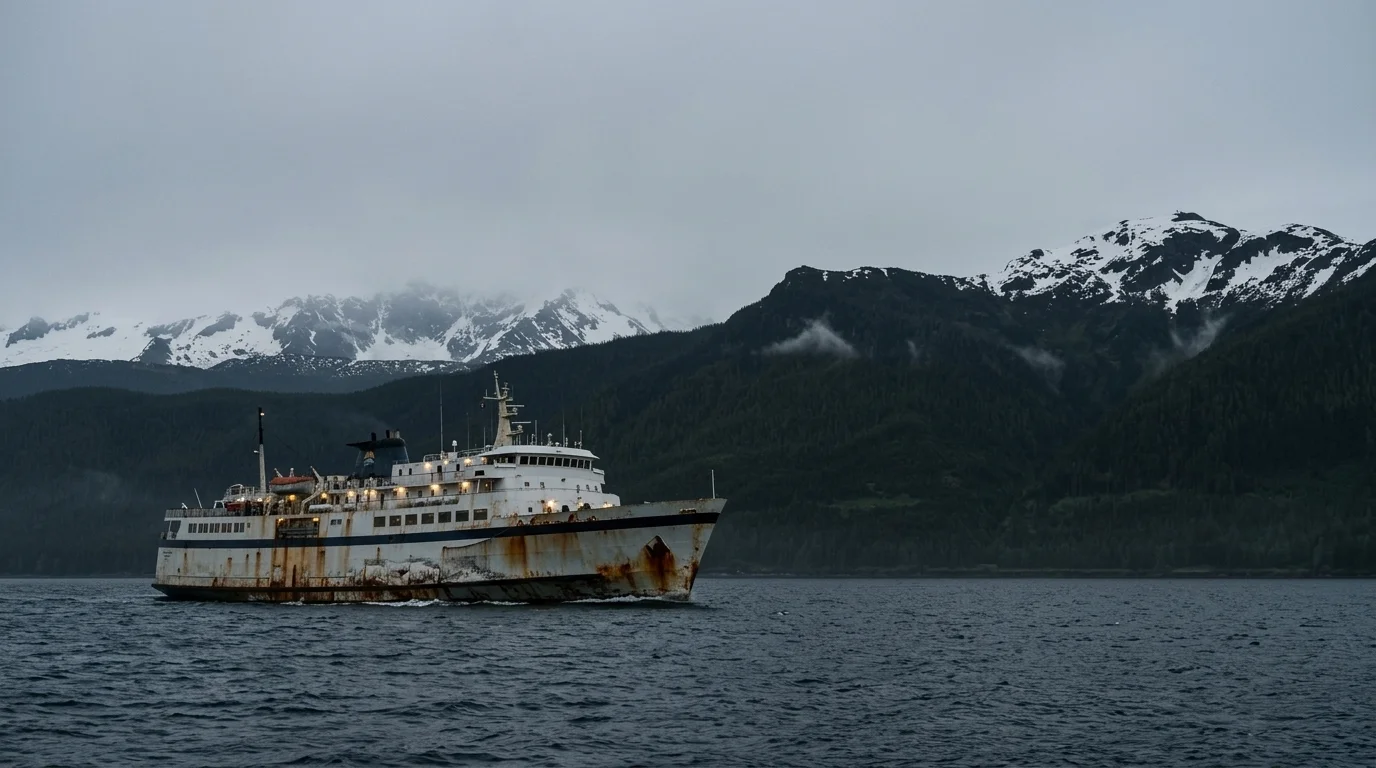
The centerpiece of that spending is the M/V Tustumena, a vessel so old its age reads less like a transit statistic and more like a warning. At 62 years, it has outlasted its 30-year design service life by more than three decades. It has broken down repeatedly, cutting Kodiak off from marine service for months at a time, a consequence that for a community with no road access means disrupted freight, delayed medical travel, and isolated residents. In October 2026, the state awarded a $349.9 million construction contract to Thoma-Sea Marine Constructors for a replacement vessel, with a target service entry of 2029. Federal funding secured toward the Tustumena Replacement Vessel alone now totals roughly $106 million, part of a broader $177 million-plus federal commitment to AMHS fleet renewal.
The September grants didn't arrive alone. A separate $11.2 million Port Infrastructure Development Program award went to the City and Borough of Juneau for dock float expansion and an electric crane procurement, a distinct competitive grant from the Maritime Administration, unrelated to the FTA formula program, but converging in the same 90-day window. A $2.9 million FTA Section 5339 Buses and Bus Facilities grant to the state DOT rounds out the top four awards. These are three separate federal programs with different statutory authorities, different program offices, and different purposes. What unifies them is the state's deliberate strategy of stacking every available federal mechanism to relieve pressure on the general fund.
The Bipartisan Infrastructure Law set the ceiling for that strategy. It provided Alaska $404 million in transit formula funding over five years, a 44% increase over prior authorizations, with significant credit going to Sen. Lisa Murkowski, who shaped the rural ferry provisions. But elevated ceilings only matter if the money moves, which is why the year-long program freeze created such acute risk. Alaska is not a state where ferry service is a quality-of-life amenity. The AMHS is designated as part of the National Highway System. For the Aleutian Chain, Southwest Alaska, and much of Southeast Alaska, it is the highway.
The Alaska DOT&PF's announcement of $16 million in FTA Section 5310 and 5311 grants for rural and senior/disability transit adds further texture to how broadly the federal pipeline now extends: the same formula programs that fund ferry vessels also fund transit vans in villages with fewer than 50 residents. Alaska has 229 federally recognized tribes, and its per-capita draw on FTA tribal transit funding is among the highest in the country.
The active federal transit portfolio for Alaska now shows $318.9 million obligated across 74 currently running grants from DOT alone, with only $75.5 million outlayed so far. Most of the money is still mid-execution, meaning the visible effects of this recapitalization cycle are only beginning to reach the water.
The next signal to watch is the M/V LeConte replacement, for which Alaska has already secured $153.4 million in federal funding, and the TRV's construction progress toward its 2029 target. The larger question is whether the federal program windows stay open long enough to fund the rest of the pipeline, a question Alaska's budget office has already learned not to treat as settled.