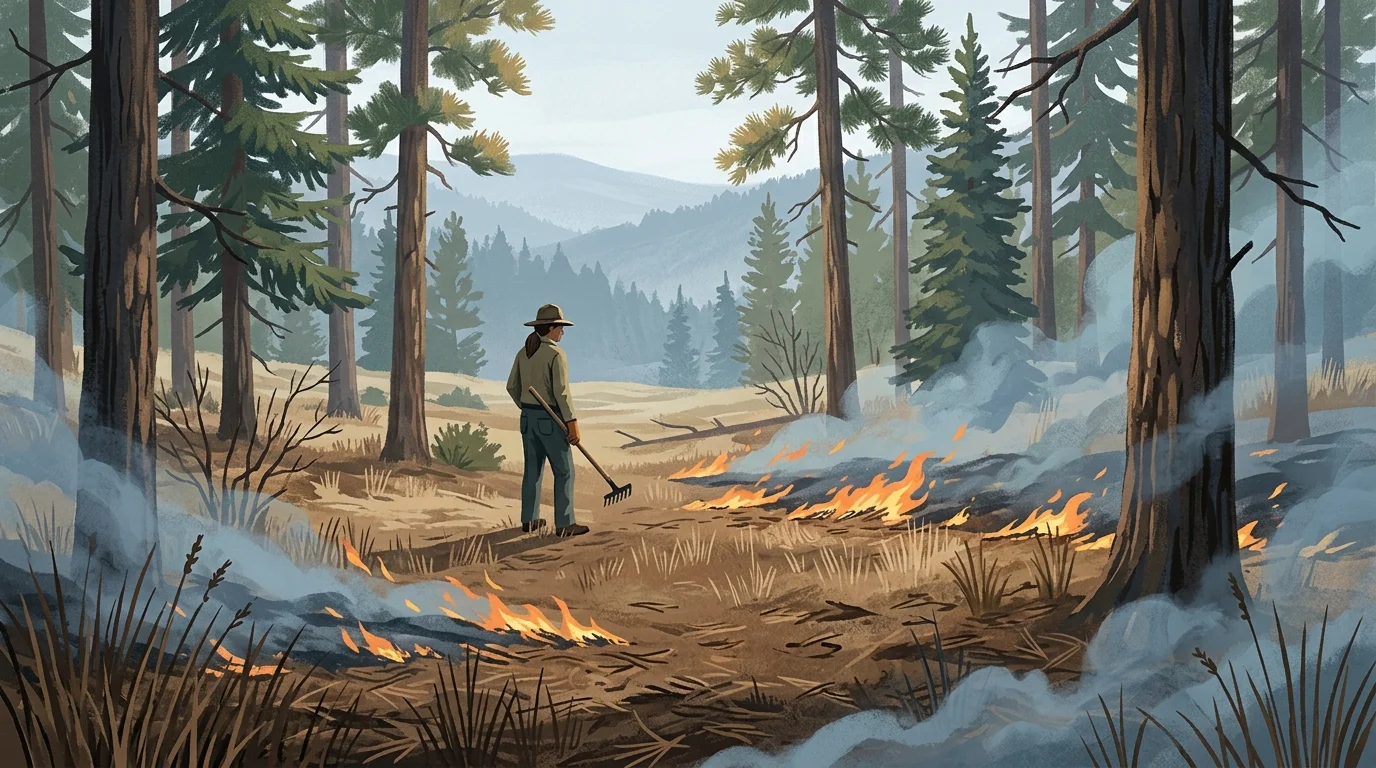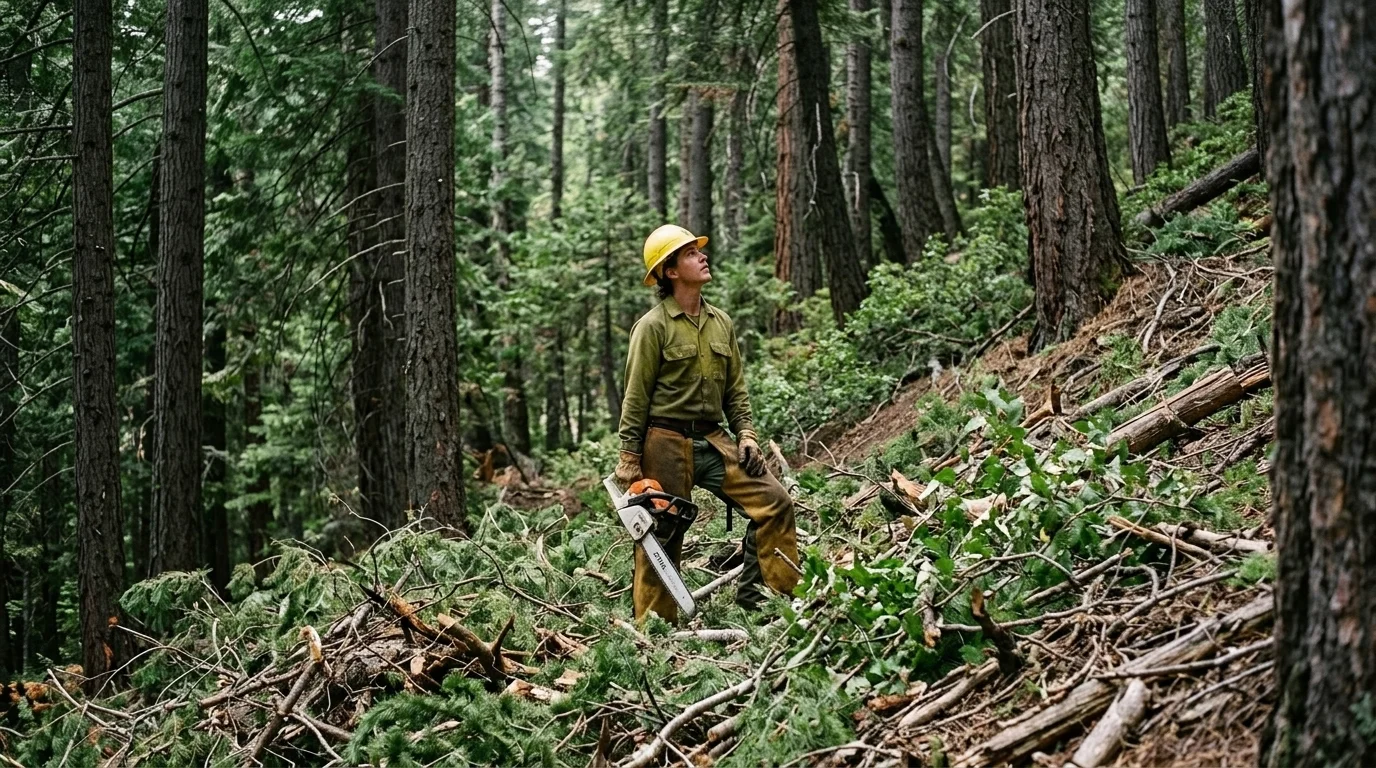
Hand crews are heading into the forests above Parks Creek in Trinity County, California, to thin 515 acres of overgrown woodland before the next big fire gets there first. The Trinity County Resource Conservation District has awarded the contract to Highlanders Forest, LLC, with work set to run from September 2026 through January 2028.
The project sits in terrain that has already seen catastrophic loss. The 2020 August Complex, California's first "gigafire," burned more than a million acres, much of it in Trinity County. The following year, the Monument Fire scorched another 223,000 acres there and came close enough to Weaverville, the county seat of roughly 3,600 people, to trigger mass evacuations. Both fires tore through forests shaped by a century of fire suppression that replaced frequent low-intensity burns with dense, dry fuel loads.
The Parks Creek site connects to more than fire risk. Parks Creek feeds the Trinity River, the largest tributary of the Klamath and a watershed critical to salmon runs that have been at the center of one of the West's largest dam-removal efforts. Keeping that forest healthier reduces erosion and sediment pressure on the river system downstream.
The work will be done by hand crews with chainsaws rather than heavy machinery, the preferred method in steep, sensitive terrain. The Trinity County Resource Conservation District, based in Weaverville, has become one of California's most active conservation districts for this kind of forest health contracting. RCDs can move faster than federal agencies and work across land ownership boundaries, making them key implementers of the state's post-megafire prevention push.
California committed in 2021 to treating a million acres of forest per year, a target the state has struggled to meet. Projects like this one, listed on the TCRCD's public notice page, are part of what that ground-level effort looks like: a single district, a few hundred acres at a time, funded by grants with hard deadlines.
For Trinity County, there is also an economic dimension. Fuels reduction contracting has emerged as one of the few growth industries in a rural county where the timber economy largely collapsed in the 1990s, putting forestry workers back in the woods in a region that lost them a generation ago.
For earlier coverage of this project, see our previous reporting on Trinity County's fuels reduction work. The awarded contract carries a hard completion deadline of Jan. 31, 2028, a compressed window that signals grant funding with fixed federal or state terms. Whether 515 acres is enough to matter depends on what comes next.