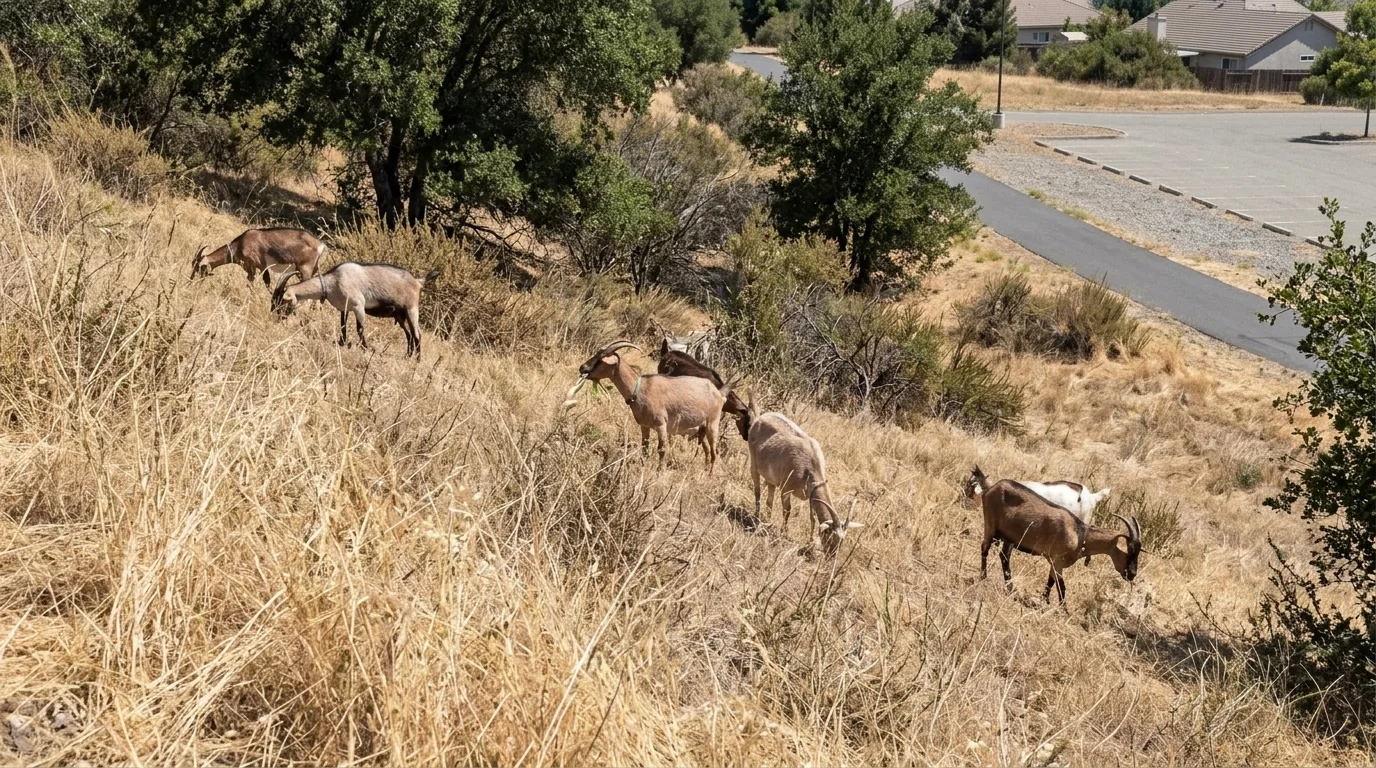
A parks department is turning to goats and sheep to manage vegetation across multiple park locations, joining a growing number of municipalities that have quietly replaced mowers and herbicide sprayers with hooves.
The agency posted a solicitation in early August 2026 seeking livestock grazing services at various park sites, a multi-location contract rather than a single pilot. The agency and jurisdiction weren't identified in the record, but the multi-site scope points to a city parks department or regional open space district.
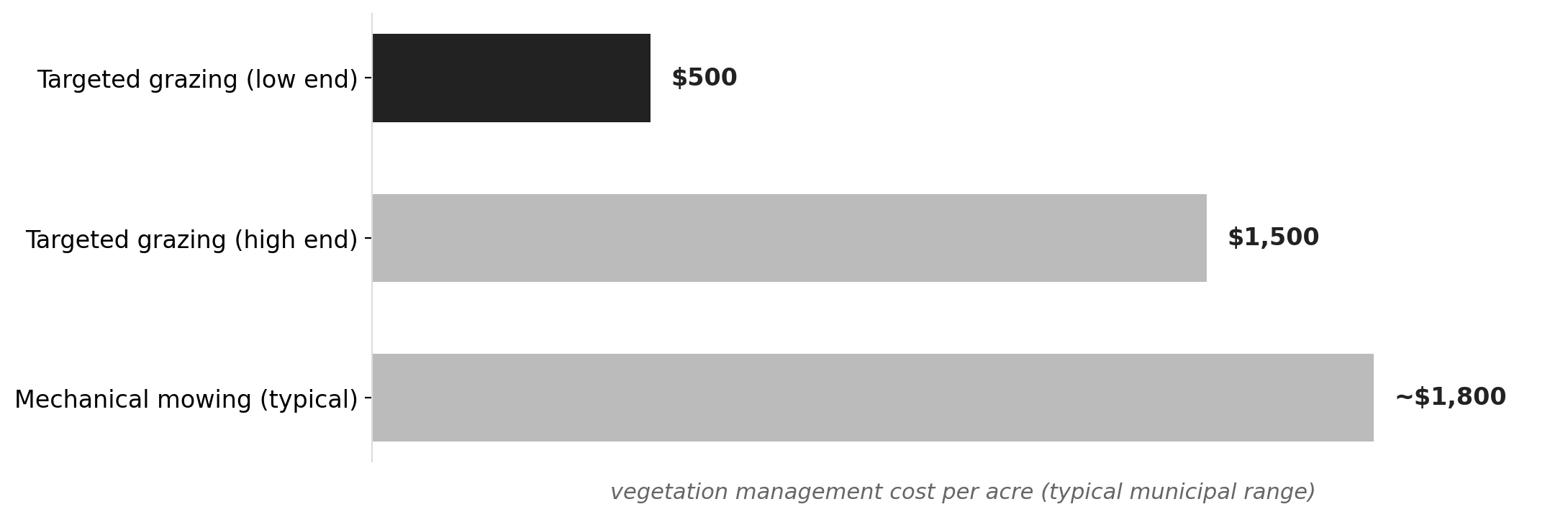
What was once a novelty has become standard practice. Parks agencies in Anaheim, Irvine, Boulder, Portland, Reno and dozens of other cities have launched or expanded grazing programs over the past decade. The appeal is practical: grazing typically costs $500 to $1,500 per acre, roughly comparable to mechanical mowing, but works on steep or ecologically sensitive terrain where equipment can't go. Animals also avoid the soil compaction that heavy mowers cause and leave behind natural fertilizer.
Source: NationGraph.
Two pressures have accelerated the shift. First, wildfire risk. Invasive annual grasses like cheatgrass and wild oats have spread across drought-stressed landscapes in the West, creating dense, flammable fuel loads. Federal fire policy, including $3.5 billion for wildfire risk reduction in the 2021 Bipartisan Infrastructure Law, has pushed local governments to show they're actively managing fuels on public land. Similar efforts are underway elsewhere, including Colorado crews clearing wildfire fuel before the next fire season.
Second, herbicide concerns. After the International Agency for Research on Cancer classified glyphosate, the active ingredient in Roundup, as a probable carcinogen in 2015, and a wave of lawsuits followed, many parks agencies began looking for alternatives to chemical weed control. Livestock fit that need.
The program also tends to be popular with the public. Goats grazing in a city park draw crowds in a way that a mowing crew does not.
The solicitation covers multiple sites, suggesting this is an expansion of an existing approach or a broad new program rather than a limited test. The agency has not yet named a contractor.