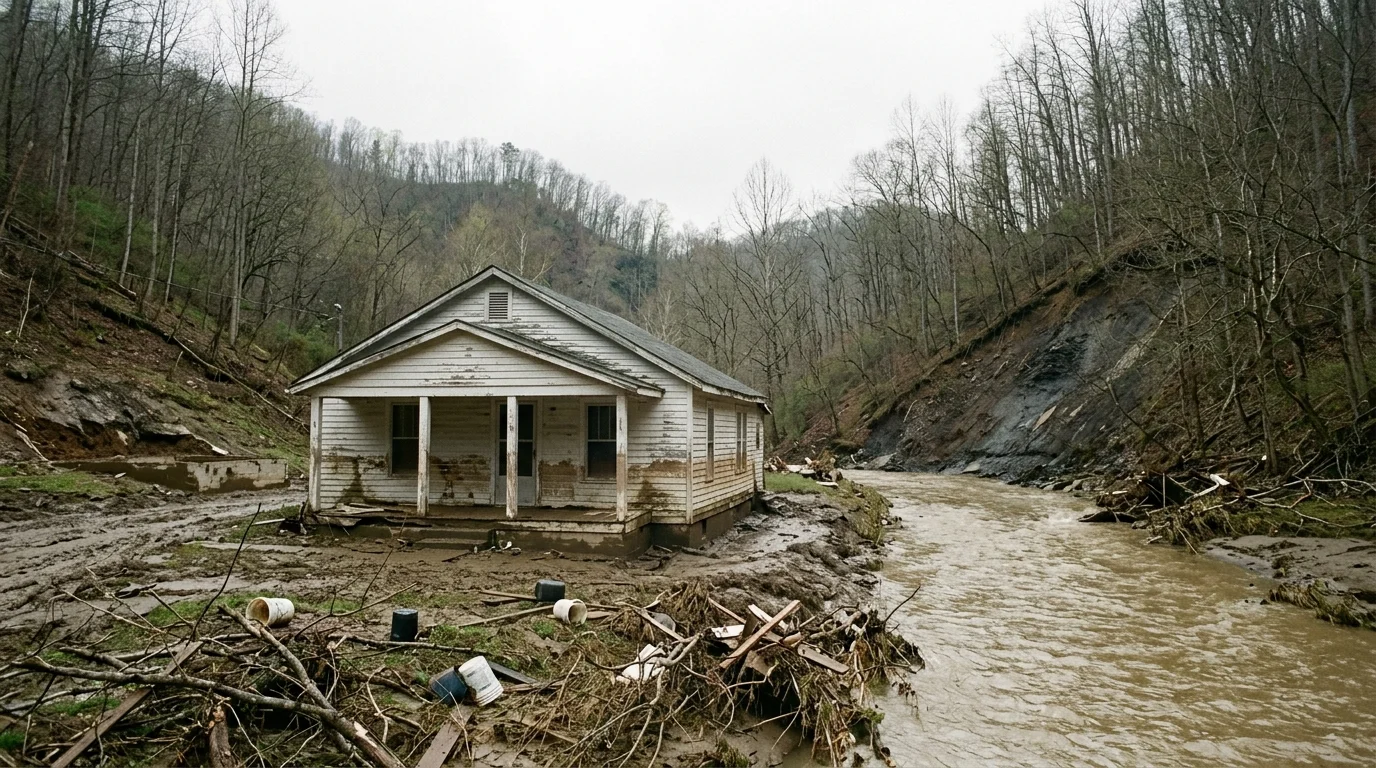
Somewhere in West Virginia, a school damaged by a federally declared disaster is getting $235,672 in repairs funded through FEMA — the latest in a long string of federal recovery dollars flowing into a state where floods and storms regularly batter aging public buildings.
The funding comes through FEMA's Public Assistance Program, the federal government's primary tool for helping states and localities rebuild public infrastructure after presidentially declared disasters. The money flows through the Executive Office of the State of West Virginia, which passes it down to the specific county or school district affected. The public record identifies the purpose only as "repairs to school due to disaster damages" and does not name the school or the county, leaving the local impact difficult to pin down.
The disaster tied to this award is FEMA declaration DR-4884, one of many such declarations West Virginia has received in recent years. The state's geography makes it one of the most flood-prone in Appalachia: steep hillsides, narrow hollows, and river valleys give floodwaters nowhere to go, and flat land is scarce enough that many schools were built in floodplains simply because there was no better option. When those buildings flood, students often have no nearby alternative, and disruptions can stretch for months.
West Virginia's schools are also among the oldest in the country. Many districts have deferred maintenance for decades, constrained by a state economy long dependent on a contracting coal industry and among the lowest median household incomes in the nation. A damaged roof or flooded gymnasium in a wealthy suburb is an inconvenience; in a rural West Virginia hollow, it can mean busing children hours away or canceling in-person classes entirely.
Federal recovery dollars like this one are broadly welcomed in the state, but the process isn't painless. FEMA's PA program typically requires a 25% local or state match, which can strain small districts already running tight budgets. And climate researchers tracking Appalachian precipitation patterns say intense rain events are becoming more frequent, meaning the cycle of damage and repair is unlikely to slow down on its own.
The state has also received separate FEMA disaster funding to strip asbestos from other damaged public buildings, a reminder that disaster recovery in aging West Virginia facilities often uncovers compounding problems beyond the initial storm damage.
Repairs are expected to proceed as the state processes the subaward to the affected district, though no public timeline has been announced.