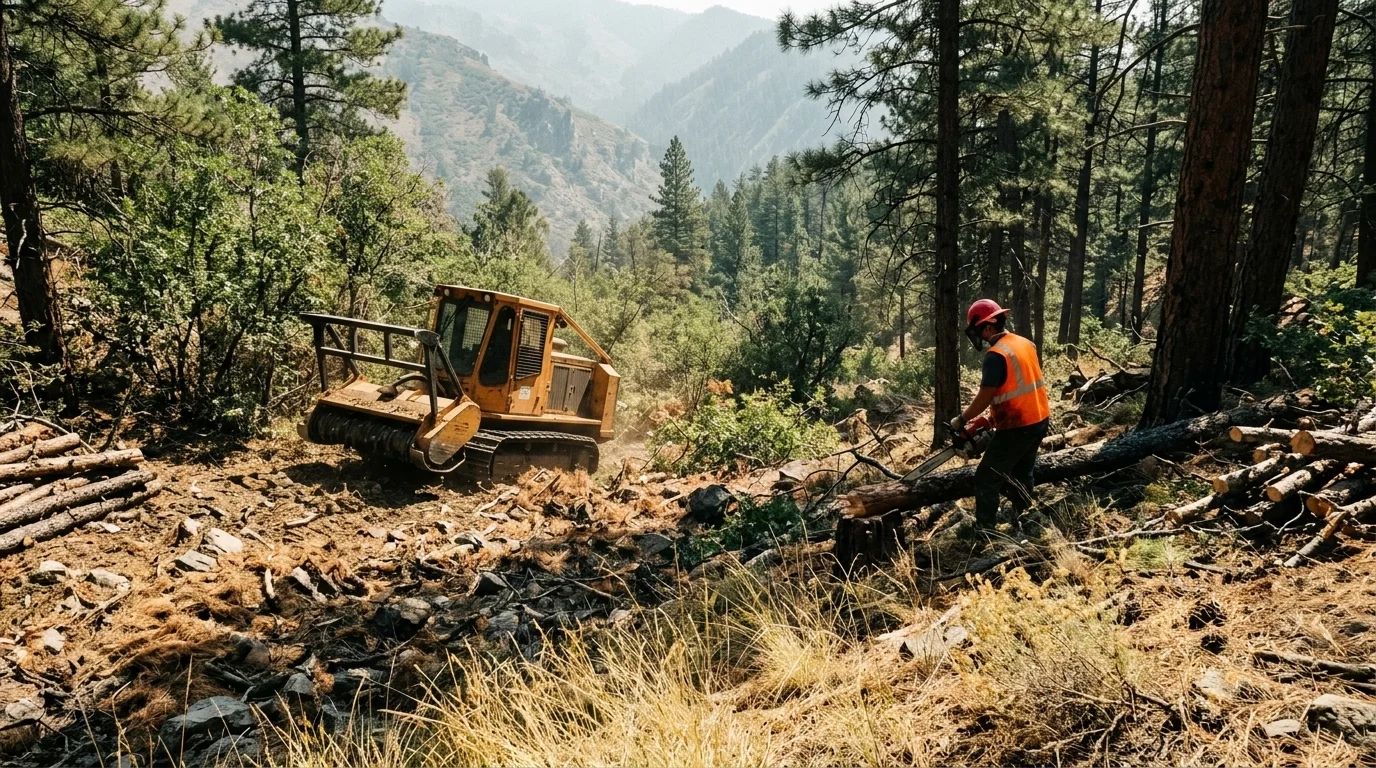
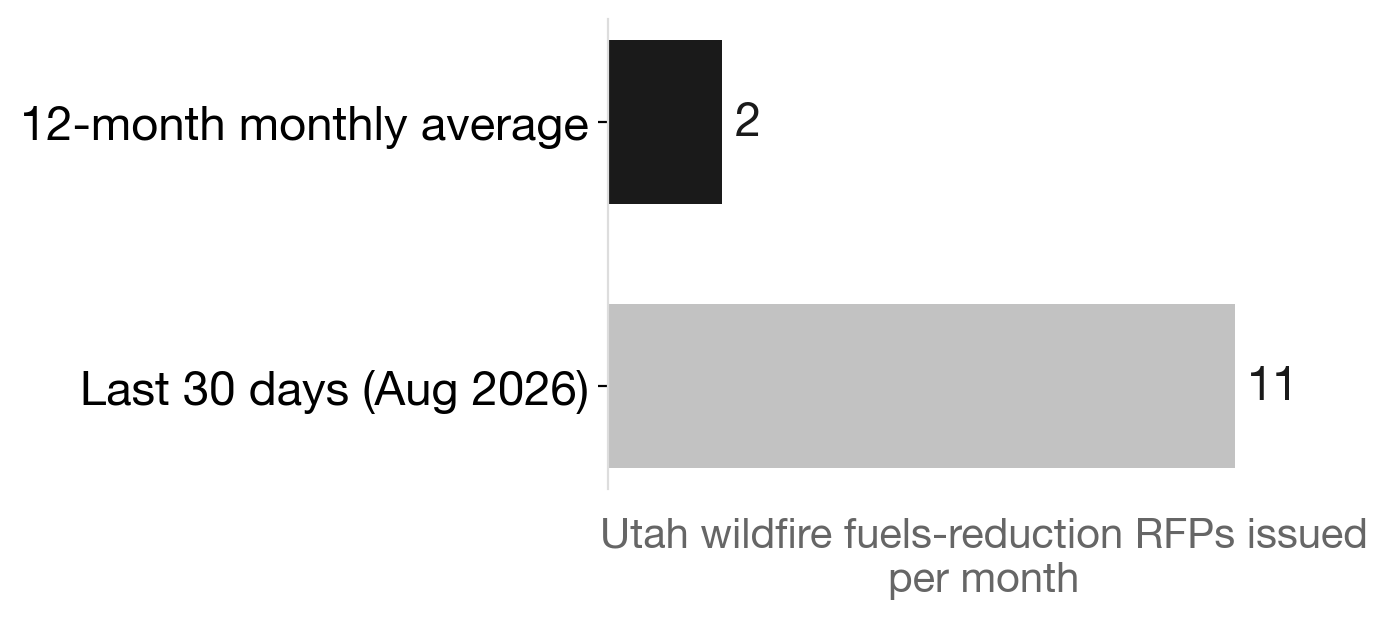
Utah has issued 11 wildfire fuels-reduction contracts in the last 30 days, 5.5 times its 12-month monthly average of roughly two, and every one of them is proactive prevention work: lop-and-scatter thinning, shaded fuel breaks, mastication. Not a single contract is for suppression or post-fire recovery. The state is spending its political capital and its federal grant dollars on the forests before they burn, and it is doing so at a pace it has not matched in at least three years.
The reason is visible from space. The Babylon Fire, which ignited June 26 in San Juan County, burned 107,189 acres in the Manti-La Sal National Forest and reached a point in mid-July where it was the largest active wildfire in the United States. Federal agencies spent nearly $42 million suppressing it. That number, more than the state's entire active Good Neighbor Authority grant from the Department of Interior, landed with force on land managers and legislators who had been slow-walking fuels treatment for years.
The 2025-26 winter accelerated the reckoning. It was the warmest on record for Utah, with one of the lowest snowpack readings in state history, and it left fuels across the Colorado Plateau and the Wasatch Front dry enough for fire-ready conditions as early as March 2026. The National Interagency Fire Center had already flagged above-average fire potential across all of Utah for the summer. Governor Spencer Cox issued a statewide fireworks restriction on June 25, the day before Babylon ignited, noting that human causes were suspected in 75% of Utah's 2026 wildfires. The conditions and the timing removed the usual friction from the contracting process.
Source: NationGraph.
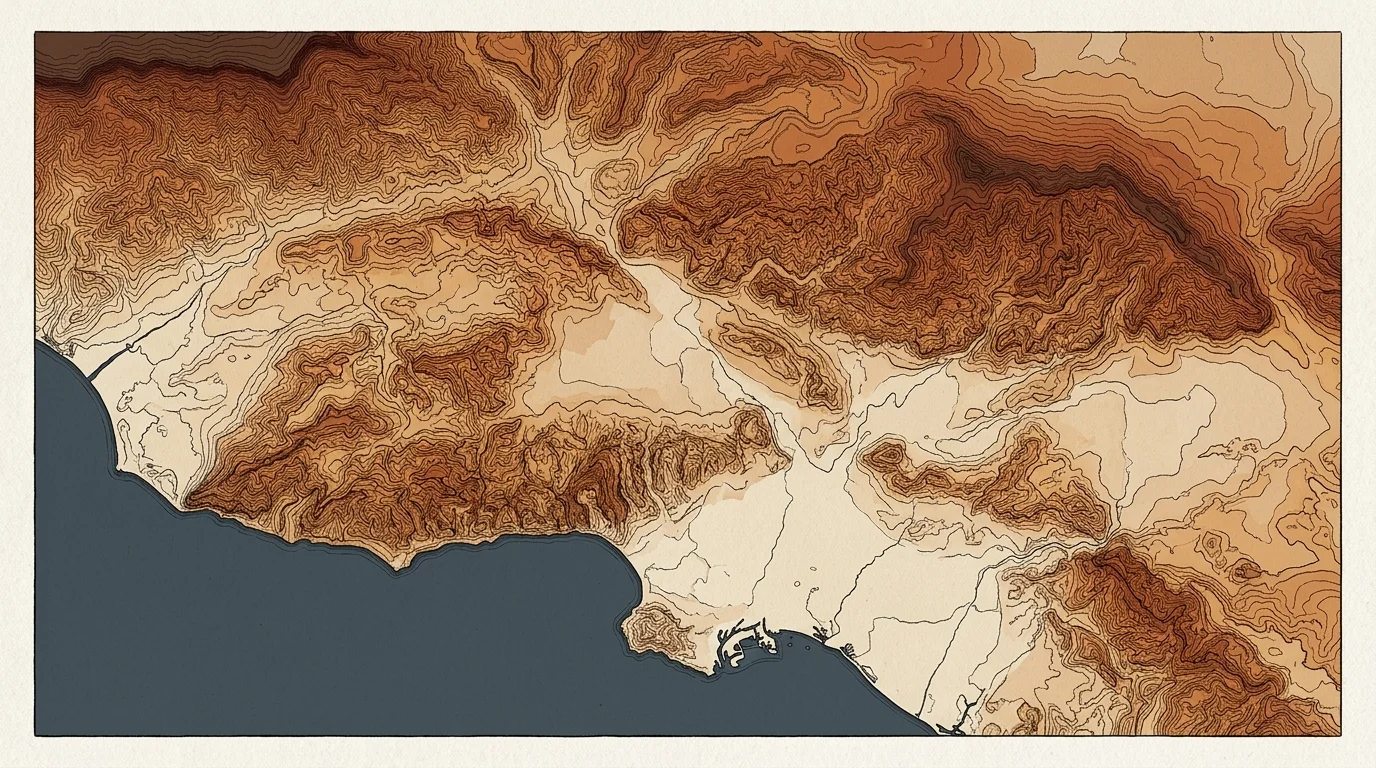
The geographic concentration of the new RFPs matters as much as the volume. The eleven contracts cluster in the American Fork Canyon and Parowan Canyon corridors, with additional work in the Big Cottonwood Canyon watershed. Those are not random forest management zones. The Wasatch watershed above Salt Lake City and Utah County delivers drinking water to more than 80% of the state's population. A crown-fire event in American Fork or Big Cottonwood Canyon would not be an ecological event that news cameras follow for a week; it would be a public-utility crisis measured in months of compromised municipal water supply for more than two million people. State and federal land managers have known this for years. The Babylon Fire made the theoretical catastrophic.
The funding mechanism behind the RFP surge is a layered federal portfolio that Utah has been building since the Bipartisan Infrastructure Law passed in 2021. A $39.3 million Good Neighbor Authority grant from the Department of Interior, running through August 2029, gives the Utah Division of Wildlife Resources the flexibility to move fast on cross-boundary fuels work. A separate $3.6 million USDA Wildfire Crisis Strategy Landscapes grant and a $1 million BLM Fuels Management grant through the University of Utah round out the active portfolio at more than $55 million. The Community Wildfire Defense Grant program, funded at $1 billion nationally over five years under the Infrastructure Law, has delivered more than $10 million to Utah entities across two completed rounds, with a third round announced in September 2025. The money was already there. Babylon provided the urgency to spend it.
Utah's 11 RFPs in 30 days ranks second among Western states in the current window, behind only California's 35. That comparison is instructive: California has been running aggressive fuels programs for several years in response to its own catastrophic fire decade, and Utah is now compressing a similar ramp-up into a single summer. The July 2025 contracting window also saw 11 RFPs, suggesting that some seasonal rhythm exists, but 2025's spike arrived without a 107,000-acre fire as backdrop. This year's volume has a different weight behind it.
For residents in the Wasatch Front communities directly below these treatment areas, the contracting push translates to crews working in the canyons above their homes through the fall. Mastication and lop-and-scatter work is visible, noisy, and sometimes temporarily closes trailheads. The fuel breaks being cut now are designed to slow a fire's advance long enough for aerial resources to work, not to stop a wind-driven crown fire outright. The honest signal to watch is whether the 2026 contracting pace holds into the 2027 budget cycle, when the emergency pressure of Babylon will have faded and the political friction over forest management will return.
The Great Basin Coordination Center has flagged Northern Utah for the highest fire activity from August through September. Contracting season and fire season are, for the first time in recent memory, running simultaneously.