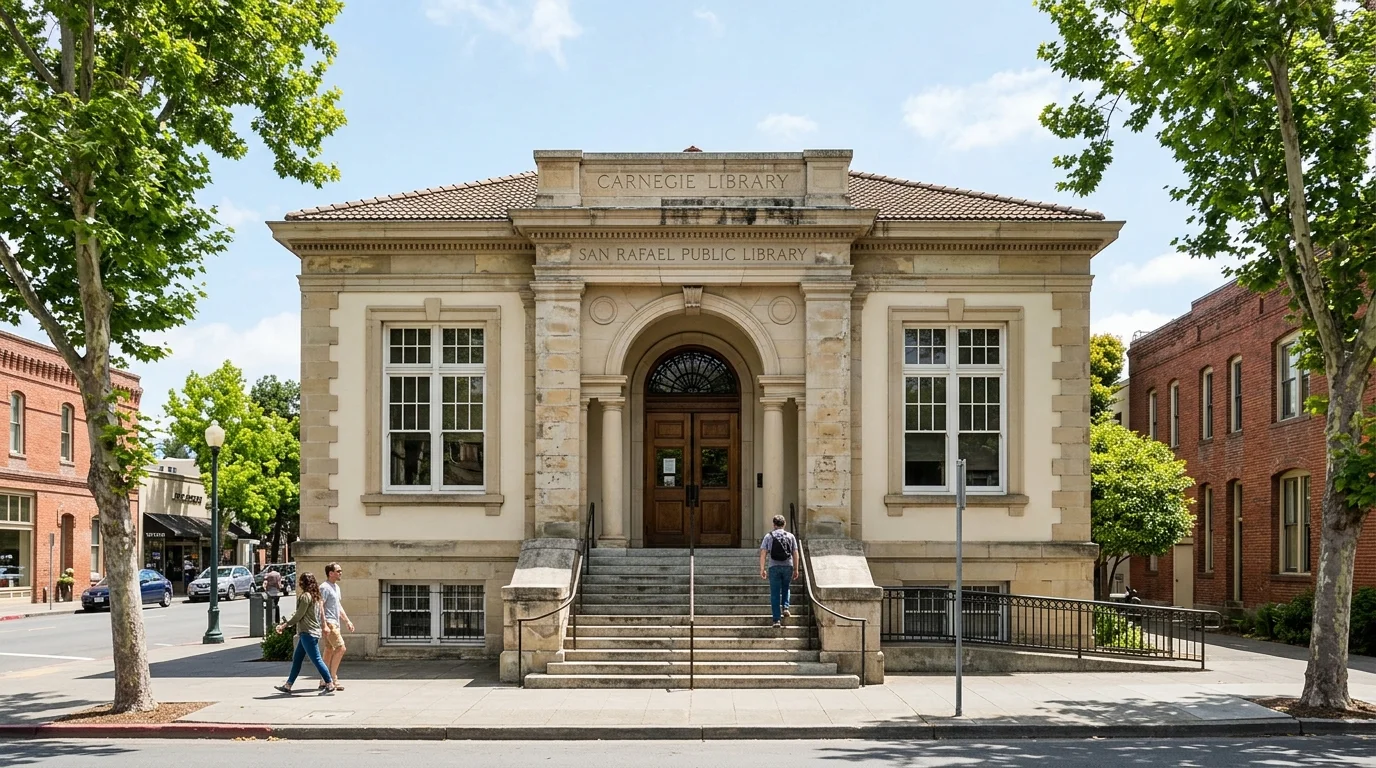
San Rafael, California is moving to replace its century-old downtown library with a modern 43,700-square-foot civic facility that would combine library services with a community center, addressing decades of complaints about a building that is seismically vulnerable, ADA non-compliant, and roughly half the size experts say a city of nearly 60,000 residents needs.
The main branch of the San Rafael Public Library occupies the city's original 1909 Carnegie building, expanded in the 1970s but never fundamentally upgraded. A facilities planning study completed in August 2019 concluded that the 17,000-square-foot structure cannot be adequately renovated to meet modern library standards, formalizing what residents and library staff had said for years. The city has now posted an RFP for a conceptual design study as the next concrete step toward replacement.
The combined library-and-community-center model reflects a broader shift in how cities think about public libraries. Over the past 15 years, communities across the country have moved away from single-purpose book facilities toward civic hubs that house meeting rooms, maker spaces, teen centers, and social services under one roof.
In San Rafael, that vision carries particular weight. The city is more economically and ethnically diverse than Marin County's wealthy reputation suggests, with a substantial Latino population and the dense, lower-income Canal neighborhood nearby. The library system serves as a critical resource for immigrant families, ESL learners, and residents without home internet access. The city also operates a smaller Pickleweed branch serving Canal district residents, but the main branch handles the bulk of demand.
The current design study is a preliminary planning step, not a construction commitment. The harder question is funding. Bay Area construction costs mean a facility of this size could easily run $60 million to $100 million or more, likely requiring a voter-approved bond measure. California libraries have depended heavily on local bonds since the state's Proposition 14 library bond program expired, and while San Rafael voters have shown a willingness to pass local tax measures, a project of this scale would be one of the city's largest capital investments in a generation.
The conceptual design work will help the city define what it wants to build before going to voters with a price tag.