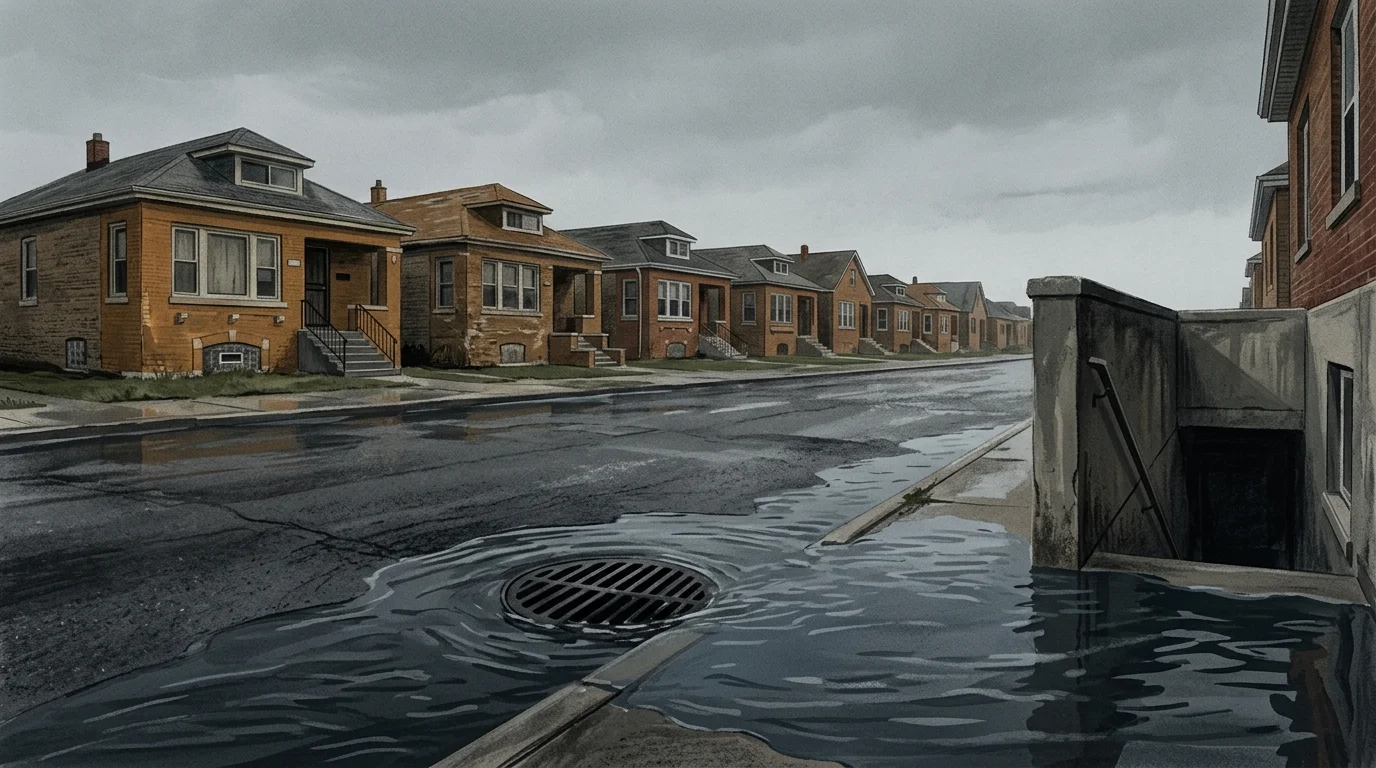
Six Texas institutions issued their first water infrastructure solicitation in more than a year during July 2026, a quiet but measurable sign that the most ambitious water legislation in Texas history is finally converting into local construction contracts. The cities driving that activity are not Houston or San Antonio. They are Seymour, population 2,576, and a colonia lift station in Hidalgo County.
The context for this re-entry matters. Texas water RFP activity collapsed between August 2025 and January 2026, falling to as few as two to four active institutions per month statewide, as localities waited to see how new state money would actually reach them. By February 2026, volume had rebounded to 18 to 21 institutions per month. July's six first-time re-entrants are part of that recovery wave, but their composition is the story.
The legislation that unlocked them passed in two pieces. House Bill 500 from the 89th Legislature appropriated $2.6 billion in one-time funding to the Texas Water Development Board, including $131 million to capitalize the Clean Water and Drinking Water State Revolving Funds. That capitalization, in turn, triggered additional EPA matching grants: more than $1.17 billion in currently active EPA water commitments now flow through TWDB, with roughly $149 million in new EPA commitments added in just the past 12 months. Separately, SB 7 and the accompanying constitutional amendment, approved by voters as Proposition 4 on November 4, 2025, dedicated up to $1 billion per year in sales tax revenue to the Texas Water Fund beginning in 2027, and expanded the Economically Distressed Areas Program that serves colonia communities.
The mechanism that explains the re-entrant cohort specifically is buried in TWDB's SFY 2026 Intended Use Plans, published in August 2025 and now actively disbursing. For communities with populations at or below 10,000, the revolving funds now offer 0% interest loans and up to 100% principal forgiveness. For a town like Seymour, bidding out wastewater aeration equipment replacement in Baylor County, that is the difference between a project that pencils out and one that does not. Seymour could not independently access the bond market for a wastewater equipment overhaul. Under the TWDB's current DWSRF terms, it may not need to.
Willow Park, population 7,182 in Parker County west of Fort Worth, is procuring the decommissioning of a 0.495 MGD wastewater treatment plant, a project that signals a community moving off an aging standalone facility and onto a regional system. Denton County Road Utility District 1 is building 1,822 linear feet of water main and sewer to serve 30 new lots in the Tradition subdivision, the kind of incremental MUD infrastructure that keeps DFW's exurban growth from outrunning its pipes. These are not the same problem, but they share a common feature: each institution had been absent from the procurement market for over a year before this month.
The Hidalgo County solicitation is the most structurally significant of the group. Hidalgo County, with a population of 656,158, is not a small rural community in the conventional sense. But the CDBG-Colonia program includes an unusual carve-out that makes large border counties eligible for colonia-specific set-aside funding, and the county's RFP for wastewater lift station improvements at the D.T. Villareal site is explicitly federally sourced under that program. Colonias are unincorporated communities along the Texas-Mexico border that in many cases still lack first-time sewer connections. The 2026 Colonia Fund Construction cycle lists Hidalgo County as eligible despite its size, which is why it appears alongside Seymour in the same re-entrant cohort.
The demand picture behind all of this is sobering. The Texas Living Waters Project has documented SRF demand running at roughly 10 times available dollars, meaning the procurement queue is backlogged even as new money flows. TWDB projects a $153 billion water infrastructure gap in Texas through 2070. The six re-entrants in July represent a fraction of the localities that have been waiting for viable financing terms.
For residents of these communities, the signal is straightforward: projects that stalled during the legislative limbo of late 2025 are now moving into active solicitation. Whether contractors can meet the moment is a separate question. The construction labor market in Texas remains tight, and small-town projects often struggle to attract competitive bids even when funding is in place.
The next signal to watch is TWDB's pre-application deadline cycle. Several major funding windows, including SWIFT and EDAP tranches, carry deadlines in late 2026, and communities that have not yet submitted pre-applications risk missing the current disbursement cycle entirely. Six re-entrants in a single month is a data point, not a flood. The question is how many more localities are one pre-application away from their own first RFP in over a year.