Residents of Chicago's Far Southside, who have watched sewage back up into their basements for decades while the rest of the city received protection from the massive Deep Tunnel system, are seeing concrete movement toward flood relief: the city has posted an engineering contract for the final design of a Far Southside Overflow Tunnel.
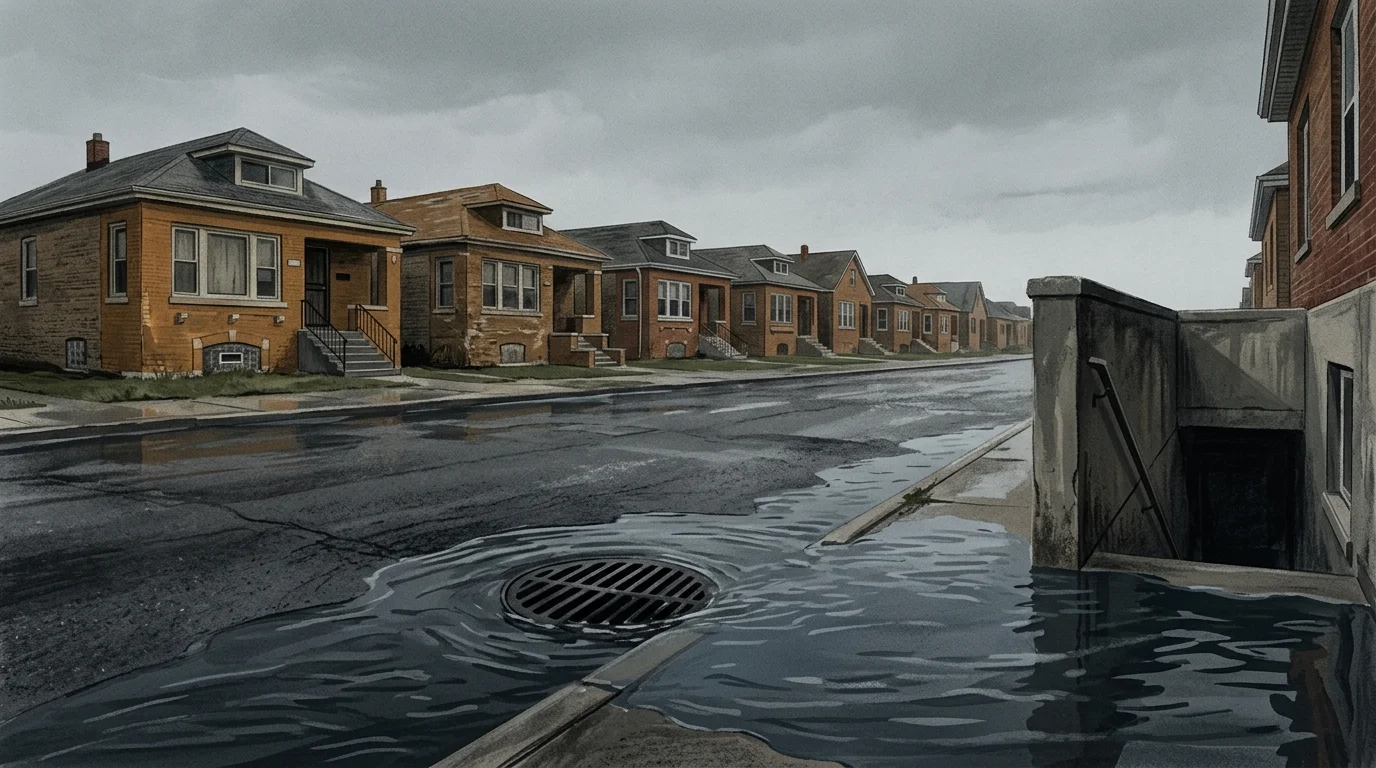
Neighborhoods like Roseland, Pullman, West Pullman, Auburn Gresham and Chatham sit on Chicago's aging combined sewer system, where stormwater and sewage share the same pipes. When heavy rain overwhelms the system, that mixture has nowhere to go but up through basement drains and into streets. While Chicago's broader Tunnel and Reservoir Plan, known as the Deep Tunnel, has been under construction since 1975 and covers much of the city's central, north and near-south areas, the Far Southside's Calumet service area has long had far less protection.
The urgency is real. A July 2023 storm dropped up to 9 inches of rain on the South and West Sides, inundating thousands of homes and triggering a federal disaster declaration. Climate scientists expect such storms to become more frequent. A 2014 federal Clean Water Act consent decree among the EPA, the Department of Justice, Illinois and the Metropolitan Water Reclamation District requires combined sewer overflows in the Chicago area to be substantially eliminated by 2029. That deadline is driving this project forward.
The environmental justice dimension is hard to ignore. The flood-prone Far Southside neighborhoods are predominantly Black and lower-income, and in 2024, community groups filed a federal housing complaint alleging that the city's flood protection has been distributed along racial lines. Mayor Brandon Johnson, who took office in 2023 on an equity-focused platform, has tied stormwater investment to environmental justice.
The solicitation for final design engineering services was posted July 31, 2026, through the City of Chicago's procurement portal. The record lists the City of Chicago as the procuring agency, though large-scale overflow tunnels in the Chicago region have historically been the responsibility of the Metropolitan Water Reclamation District, an independently elected body. It is not yet clear whether this is a city Department of Water Management project, a joint city-MWRD effort, or green infrastructure that feeds into the regional system. That jurisdictional question will matter for how the project is financed and who is accountable for hitting the 2029 federal deadline.
Final design is the step before construction contracts are awarded, meaning a tunnel is still years from being built. With the consent decree clock ticking and storms growing more severe, how quickly design moves to groundbreaking will be the question residents are watching.