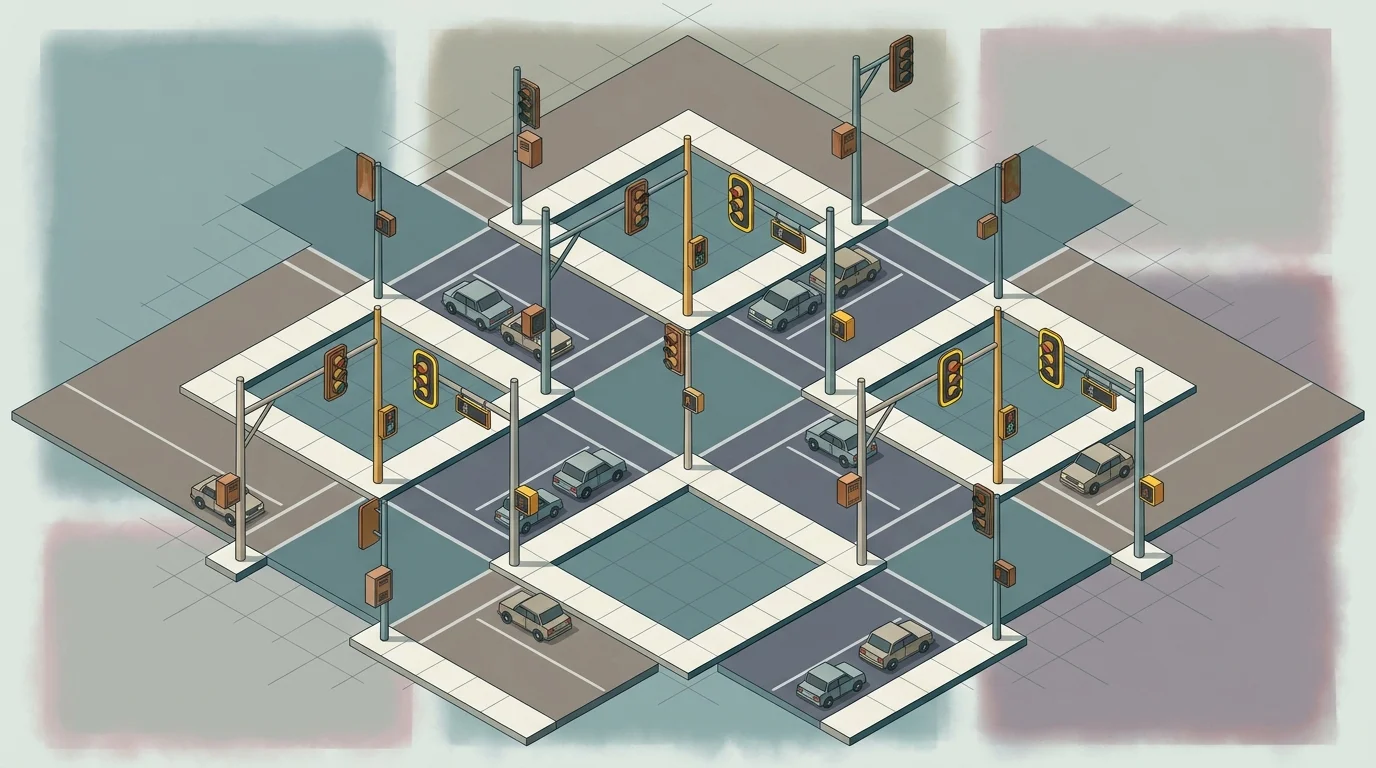
Suffolk, Virginia is overhauling its entire traffic signal network, retiming intersections and replacing aging equipment that hasn't kept pace with the city's transformation from a rural backwater into a fast-growing Hampton Roads suburb.
The city's population topped 100,000 in the 2020 Census, up from about 63,700 in 2000. That growth, concentrated in the northern part of the city near the I-664/Route 58 corridor, has reshaped traffic patterns on roads like Holland Road, Route 17, and Bridge Road. Many of the signals managing that traffic still run on timing plans designed for a much quieter city, contributing to congestion, longer commutes, and hazards for pedestrians trying to cross busier intersections.
The Federal Highway Administration recommends updating signal timing every three to five years, but budget pressure leads many cities to fall behind by a decade or more. Outdated signals don't just frustrate drivers: they increase crash rates and cause vehicles to idle longer, which raises emissions. Pedestrian accommodations like countdown timers and accessible signals for people with visual impairments also tend to lag on older systems.
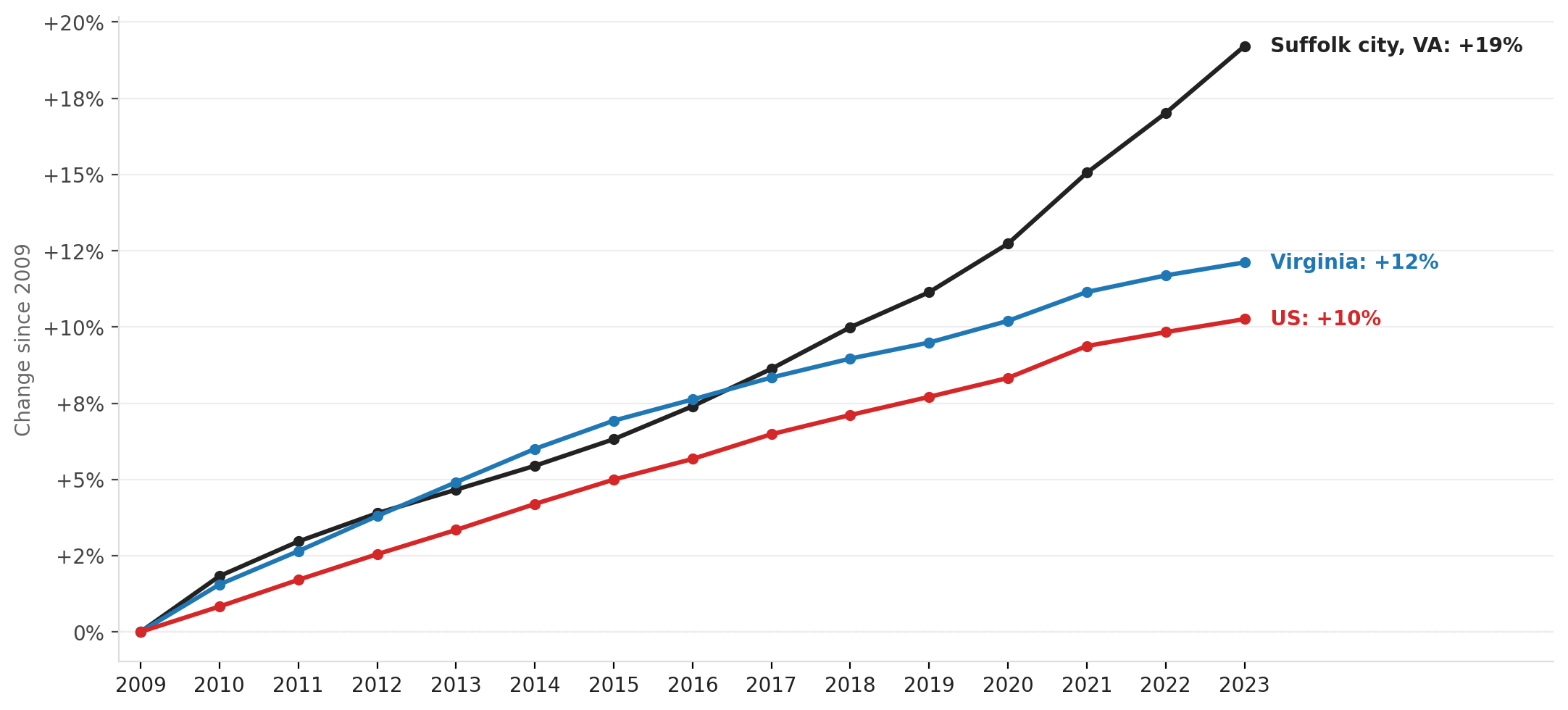
Source: U.S. Census Bureau, American Community Survey.
Suffolk's citywide signal project goes beyond reprogramming. The hardware side of the work is expected to include new signal controllers, updated vehicle detection equipment to replace aging loop detectors buried in the pavement, and pedestrian signal upgrades required under federal ADA standards. Cities across Virginia have been moving toward centralized traffic management systems that let engineers monitor and adjust signals in real time, and Suffolk's upgrade fits that broader shift.
The project covers the full city, which at roughly 430 square miles is the largest in Virginia by land area. That creates a two-track challenge: modernizing busy commercial corridors in the suburban north while addressing intersections in southern Suffolk that are seeing new development traffic for the first time. Suffolk handles its own roads and signals as an independent city, without county government involvement, so the entire burden falls on the municipal budget.
National funding has made projects like this more feasible. The 2021 Bipartisan Infrastructure Law created new streams for exactly this kind of work, including the Safe Streets and Roads for All program, which prioritizes signal timing and pedestrian safety as frontline tools for reducing traffic deaths. Virginia's own highway safety plan similarly targets intersection safety.
The city is now seeking a contractor to carry out the work. How long the project will take and what it will cost have not been publicly disclosed in the bid materials.