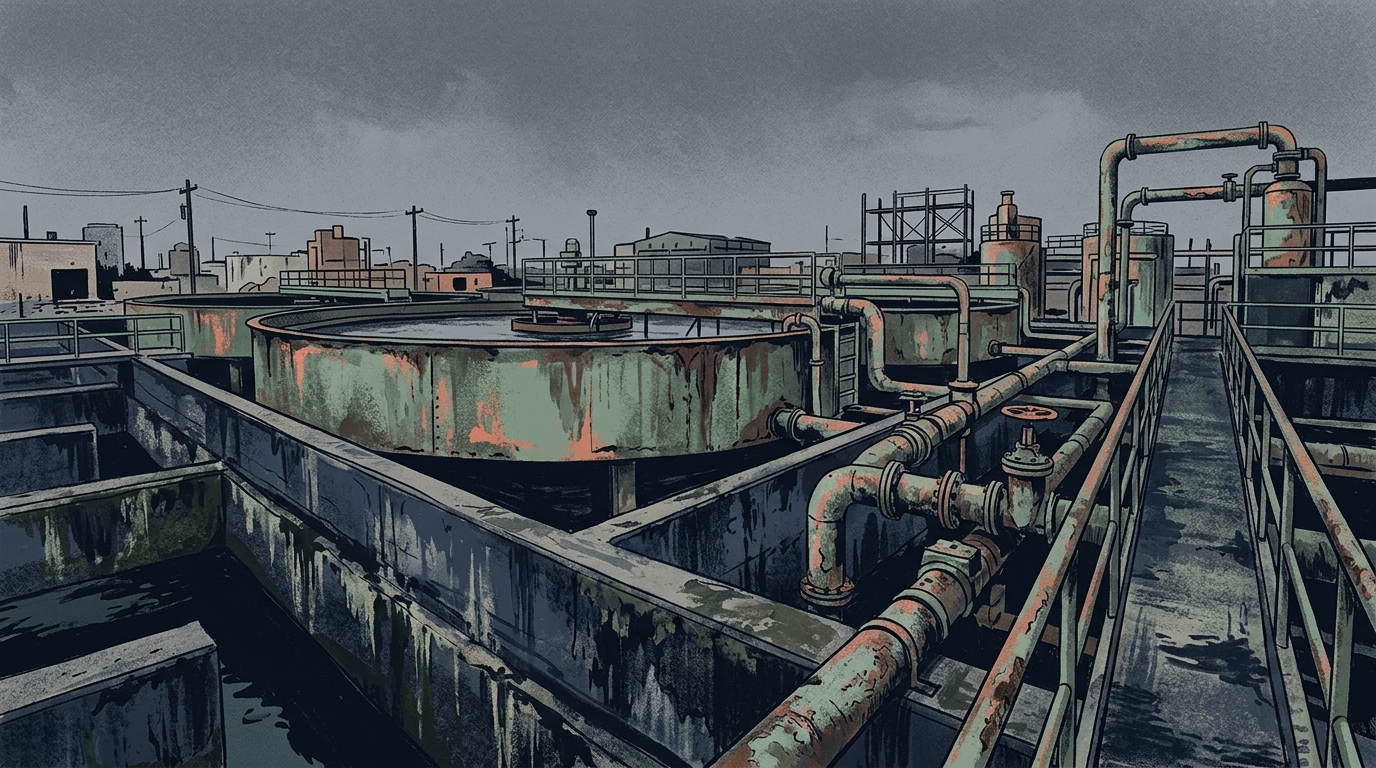
Steubenville, Ohio is replacing the grit removal system at its wastewater treatment plant, equipment that has been running continuously since 1979 and is now well past its designed useful life. A federal grant of $1,034,652 from the EPA will cover the cost.
Grit removal systems are the first line of defense in wastewater treatment, pulling sand, gravel, and heavy particulates out of incoming sewage before it reaches more sensitive biological treatment processes. When they degrade, efficiency drops, downstream equipment wears out faster, and treatment quality can suffer. Steubenville's version has been doing that job for nearly half a century.
The city on the Ohio River couldn't easily pay for this on its own. Once a steel industry hub with a population of roughly 35,000, Steubenville has shrunk to around 18,000 residents, eroding the tax base that would normally fund major capital projects. Much of the city's infrastructure dates to its industrial peak and the wave of construction that followed the Clean Water Act of 1972, meaning large portions of it are hitting end-of-life at the same time. The situation mirrors what's happening in [other shrinking industrial cities](articles/logan-wv-gets-500k-to-design-a-backup-water-supply-it-cant-afford-to-build) across the Ohio River Valley and beyond.
The money comes through Congressionally Directed Spending, the formal name for what used to be called earmarks. Congress banned the practice in 2011 following corruption scandals, but revived it in 2021 under new rules requiring lawmakers to publicly disclose requests and certify they have no personal financial stake. Water infrastructure has become one of the most common uses since the return, precisely because small cities like Steubenville lack the fiscal capacity to self-finance repairs through ratepayer fees or municipal bonds alone.
Steubenville's plant serves not just city residents but plays a role in Ohio River water quality, which affects downstream communities across state lines. The EPA categorizes the project under its clean water pillar, and the funding was directed by the FY2024 Consolidated Appropriations Act signed in March 2024. The grant agreement was posted in February 2026, reflecting roughly a two-year lag from appropriation to execution.
The city is the sole recipient and will handle implementation directly. No timeline for construction completion has been made public.