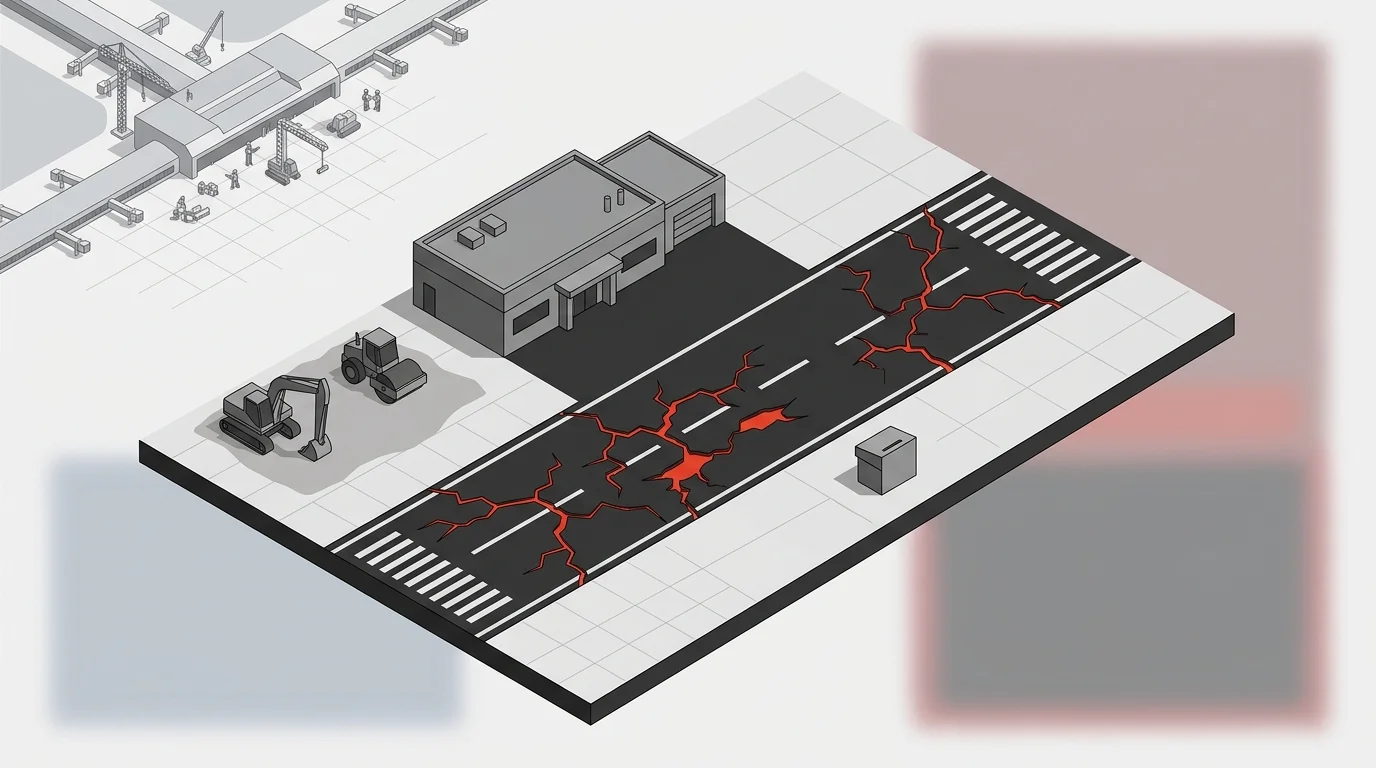
The main runway at Elmira-Corning Regional Airport in New York's Southern Tier is overdue for rehabilitation, and Chemung County is trying again to find someone to do the work after its first attempt to hire a contractor came up empty.
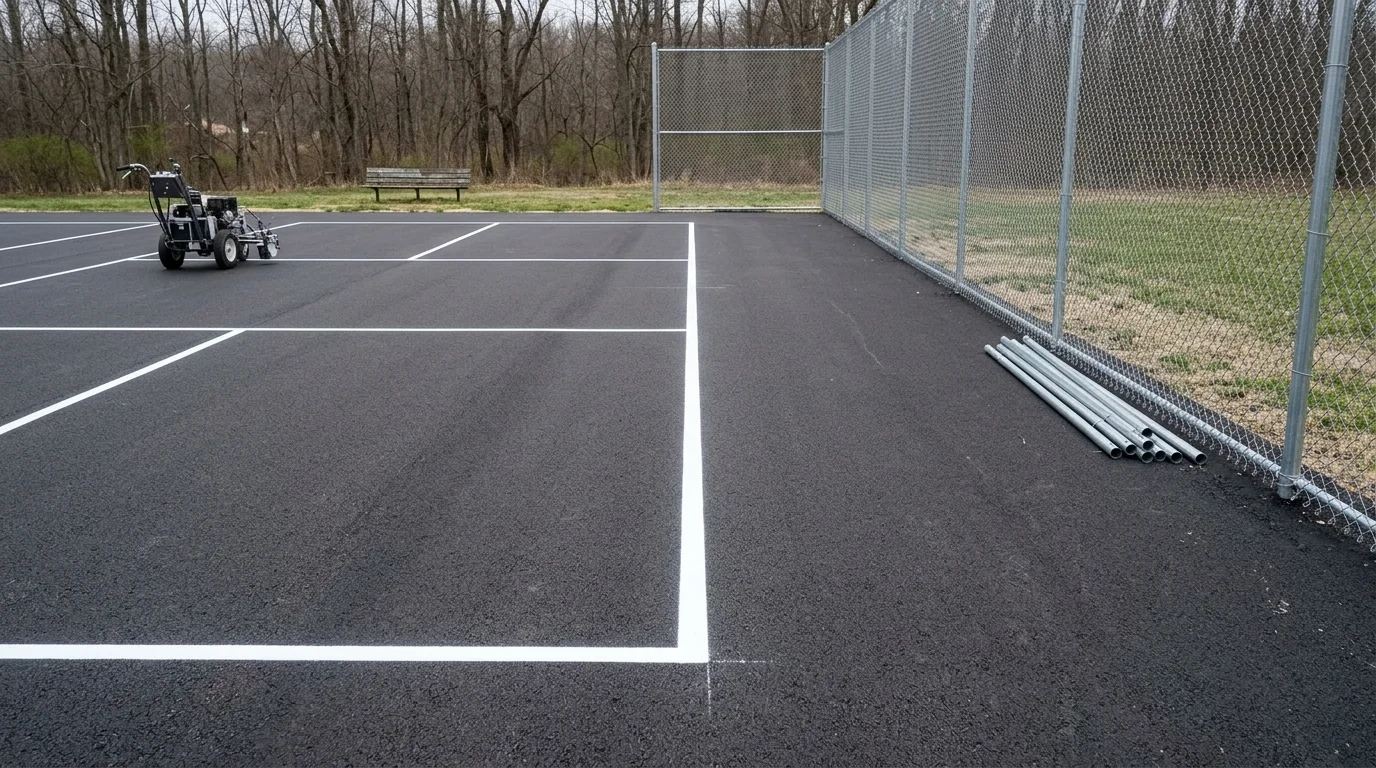
The county's joint purchasing office with the City of Elmira posted a rebid on May 21 for the rehabilitation of Runway 6-24, the airport's roughly 7,000-foot primary commercial runway. The original solicitation failed to result in a contract, a designation that has become increasingly familiar to airport managers across the country.
The reasons aren't hard to find. Since 2022, construction labor shortages and sharply higher materials costs have stretched the contractor market thin. At the same time, the 2021 Bipartisan Infrastructure Law pumped an additional $15 billion into airport projects nationwide over five years, flooding the pipeline with work that the industry hasn't fully caught up to. More projects are competing for the same limited pool of firms capable of specialized runway paving, and smaller regional airports often lose that competition to larger markets offering bigger contracts.
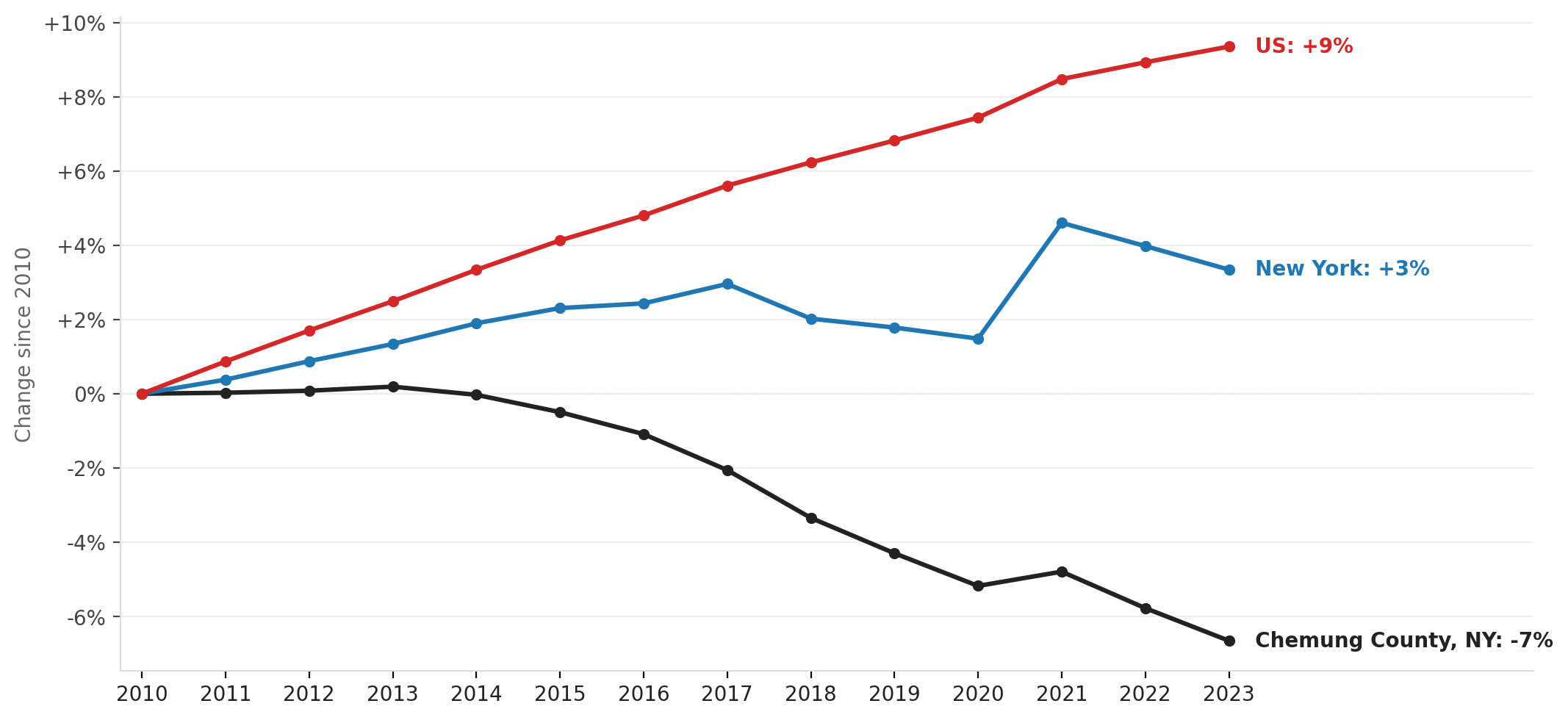
Source: U.S. Census Bureau, American Community Survey.
For Elmira, the stakes are higher than the pavement. Chemung County has about 84,000 residents and has shed population for decades as manufacturing declined across the Southern Tier. Local officials have long pointed to the airport as critical infrastructure for keeping businesses connected to the region and attracting new ones. A runway that can't get repaired is a vulnerability the county can ill afford.
FAA guidelines generally call for major runway resurfacing every 15 to 20 years, and Upstate New York's punishing freeze-thaw cycles tend to accelerate that clock. The rehabilitation is almost certainly supported by FAA Airport Improvement Program funding, which typically covers 90 percent of eligible costs at commercial service airports, with state and local sponsors covering the rest. The county's constrained finances make that federal share essential.
The specific project cost and timeline aren't included in the public notice. Whether this second solicitation draws viable bids will depend on whether the scope or budget was adjusted to be more attractive to contractors. If it does, construction would likely need to fit within a compressed warm-weather window given the region's short building season.