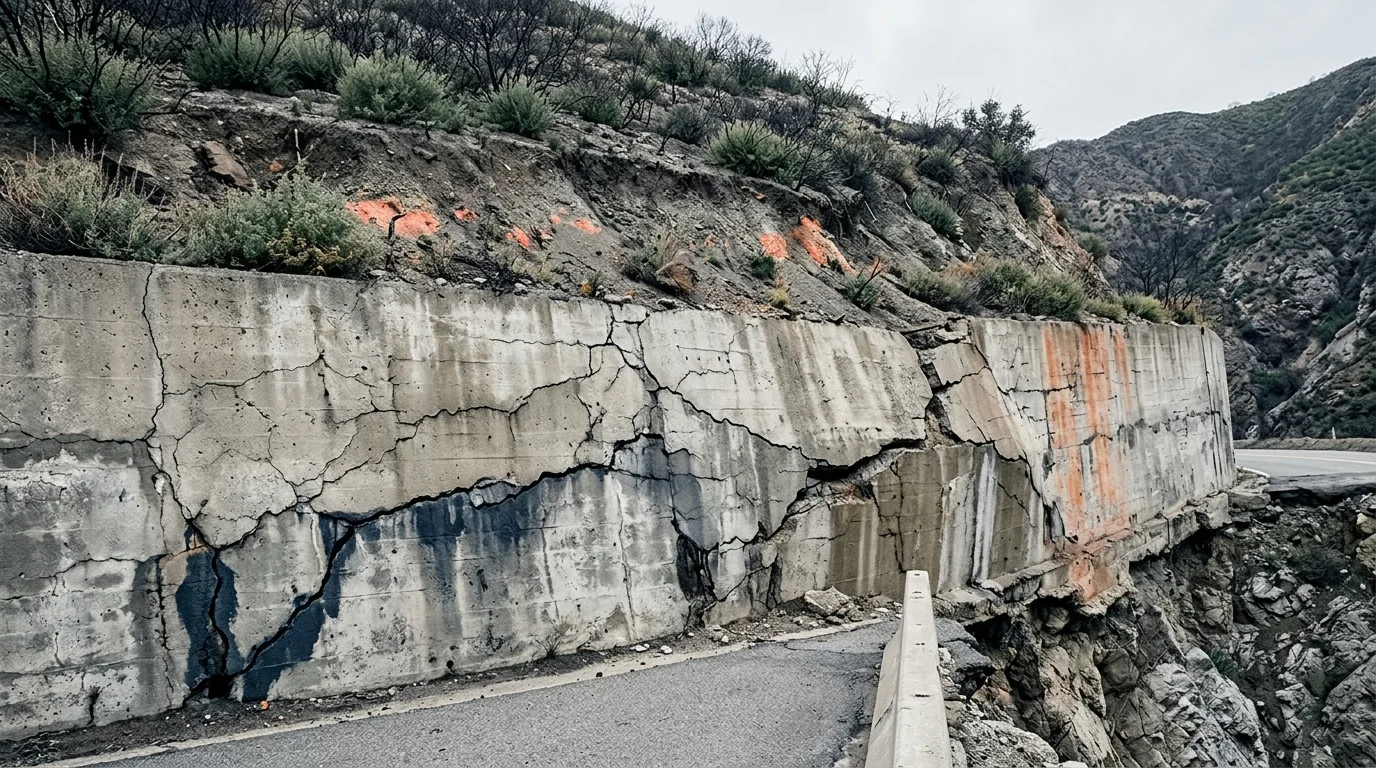
A retaining wall along Bienveneda Avenue in Los Angeles's Pacific Palisades area has deteriorated to the point where the city is treating its repair as an emergency, moving quickly to shore up a structure that holds back the hillside beneath one of the city's canyon roads.
Los Angeles Public Works posted the solicitation on April 15, using a fast-track procurement process that draws from a pre-qualified contractor pool rather than going through the standard competitive bidding timeline, which can stretch for months. The emergency designation suggests the structure poses an imminent risk to the roadway or adjacent properties. No cost estimate has been made public.
The timing is hard to separate from the January 2025 Palisades Fire, which burned through large stretches of the hillside communities above West Los Angeles. Even where flames didn't reach, the fire stripped away the vegetation and root systems that hold hillsides in place. The winter rains that followed drove water into destabilized soil, dramatically increasing the pressure on retaining walls and bulkheads throughout the area. Southern California has seen this pattern before: the 2018 Montecito mudslides came weeks after the Thomas Fire burned the same hillsides.
Benveneda Avenue sits in terrain that is typical of the structural challenges facing much of Los Angeles. The city's hillside neighborhoods were built out rapidly during the postwar decades, and many of the retaining structures that support canyon roads are now 50 to 75 years old. The Bureau of Engineering oversees roughly 78,000 infrastructure assets citywide and has long faced a maintenance backlog measured in the billions of dollars. The 2025 fire has added new stress to a system that was already stretched.
It is not yet clear whether the Bienveneda wall was previously flagged as deteriorating or whether the emergency designation reflects a more sudden failure. The city has not released a repair timeline or a cost estimate for the work.
With another rainy season approaching, city engineers will be under pressure to complete the stabilization before conditions worsen.