Some of St. Paul's most heavily used bus corridors are finally getting the rapid transit upgrade that Minneapolis-side routes have enjoyed for years. The Metropolitan Council is moving forward with the METRO G Line, a bus rapid transit route planned along Rice Street and Robert Street that would connect downtown St. Paul to suburbs in both directions while plugging into the existing Green Line light rail.
The G Line would run from Little Canada and Maplewood to the north through downtown St. Paul and south into West St. Paul and Inver Grove Heights. Along the way, it passes through the North End and Frogtown, among the most racially and economically diverse neighborhoods in the city and areas where residents depend heavily on public transit. The corridor already carries some of the highest local bus ridership in the East Metro, but riders have had to make do with standard local bus service while faster, more reliable lines were built elsewhere.
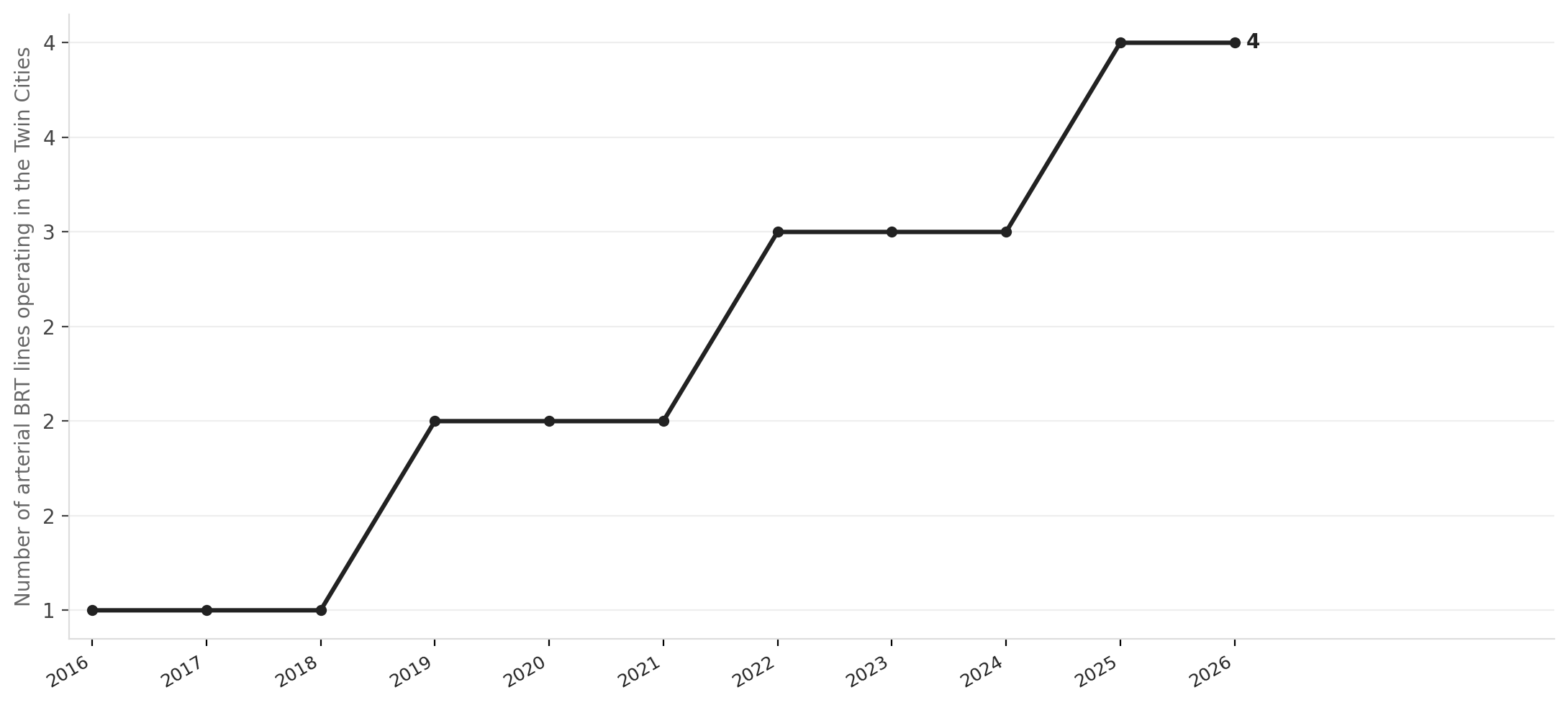
Bus rapid transit, as the Twin Cities has deployed it, is designed to deliver most of the speed and reliability of rail at a fraction of the cost. Dedicated signal priority, level boarding, off-board fare payment and branded stations running at 10-minute frequencies are the hallmarks of the model. The region's first arterial BRT line, the A Line on Snelling Avenue, opened in 2016 and exceeded ridership projections. The C and D Lines followed, and the B Line along Lake Street opened in 2025. The G Line is among the next priorities in the Met Council's Network Next plan.
Source: NationGraph.
The Green Line connection is a central part of the G Line's appeal. The 2014 light rail route links downtown Minneapolis and downtown St. Paul, but it doesn't reach the neighborhoods along Rice and Robert Streets. The G Line would effectively extend rapid transit access to those communities by intersecting the Green Line, creating a network that lets riders transfer between the two systems.
The Metropolitan Council, which has posted the G Line procurement on its portal, is the state-created regional agency that operates Metro Transit across a seven-county area of about 3 million residents. Because the G Line spans Ramsey and Dakota counties, it requires coordination with multiple suburban governments that have varying levels of transit investment history.
The project will need to clear design, environmental review and construction phases before service begins. Community concerns about construction impacts on small businesses and potential displacement along the corridor have surfaced in earlier planning rounds and are likely to remain part of the conversation as the project advances.