On the eastern edge of South Hero, Vermont, a residential road called Sunrise Drive sits directly in the path of some of Lake Champlain's most punishing storm waves. Years of flooding and rising lake levels have eaten away at the shoreline there, and the community's options for fighting back are narrowing.
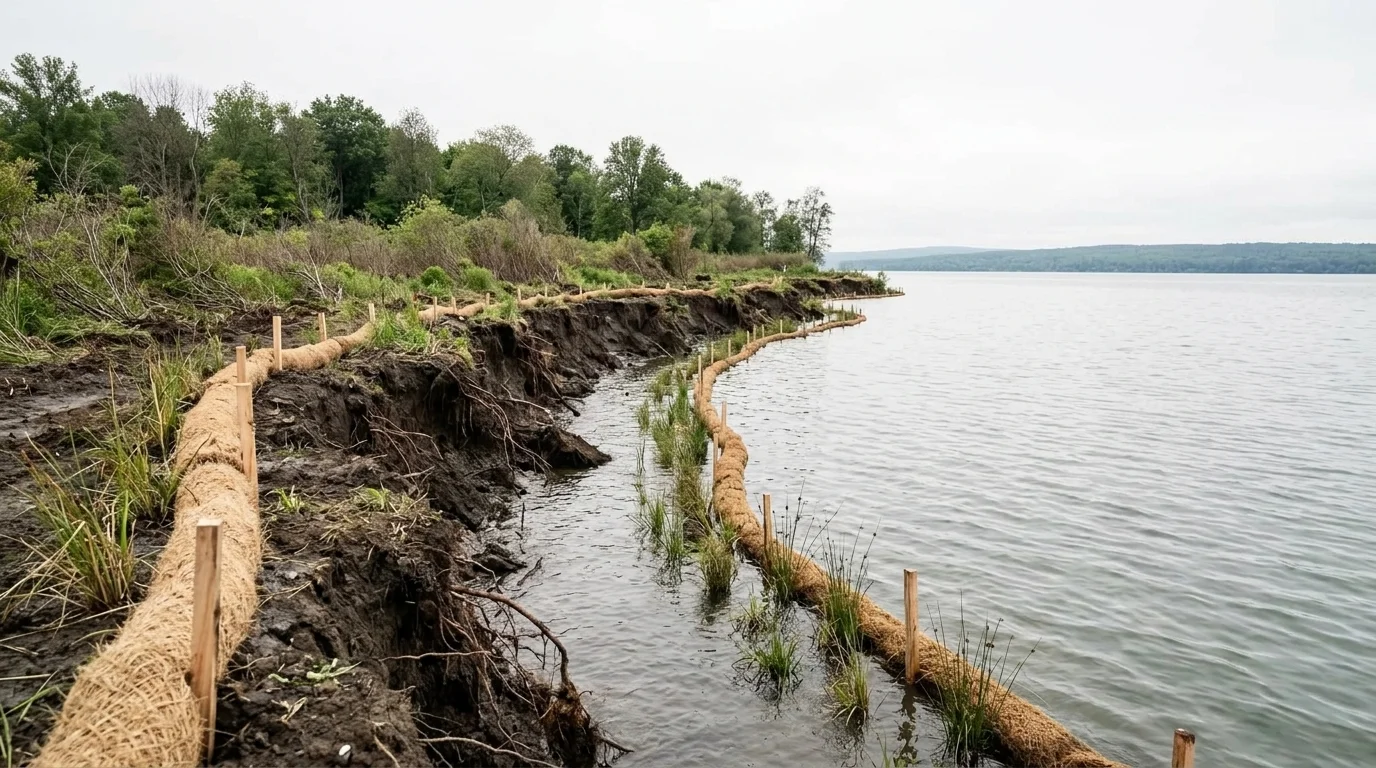
The South Hero Land Trust is now moving to restore the Sunrise Drive shoreline using bioengineering: a combination of living plants, root systems, natural fiber logs, and soft-engineering techniques that stabilize eroding banks without the concrete and rip-rap that have long been the default fix. The land trust, which has served the Champlain Islands since 1991, posted the project for contractor bids on Oct. 7.
The shift from hard armoring to living shorelines is not simply a preference. Vermont's Shoreland Protection Act, passed in 2014, heavily discourages and in many cases prohibits new seawalls and revetments within 250 feet of larger lakes. The law came after state environmental researchers found that shoreline hardening was accelerating erosion on neighboring properties and degrading the near-shore habitat that fish and wildlife depend on.
Source: NationGraph.
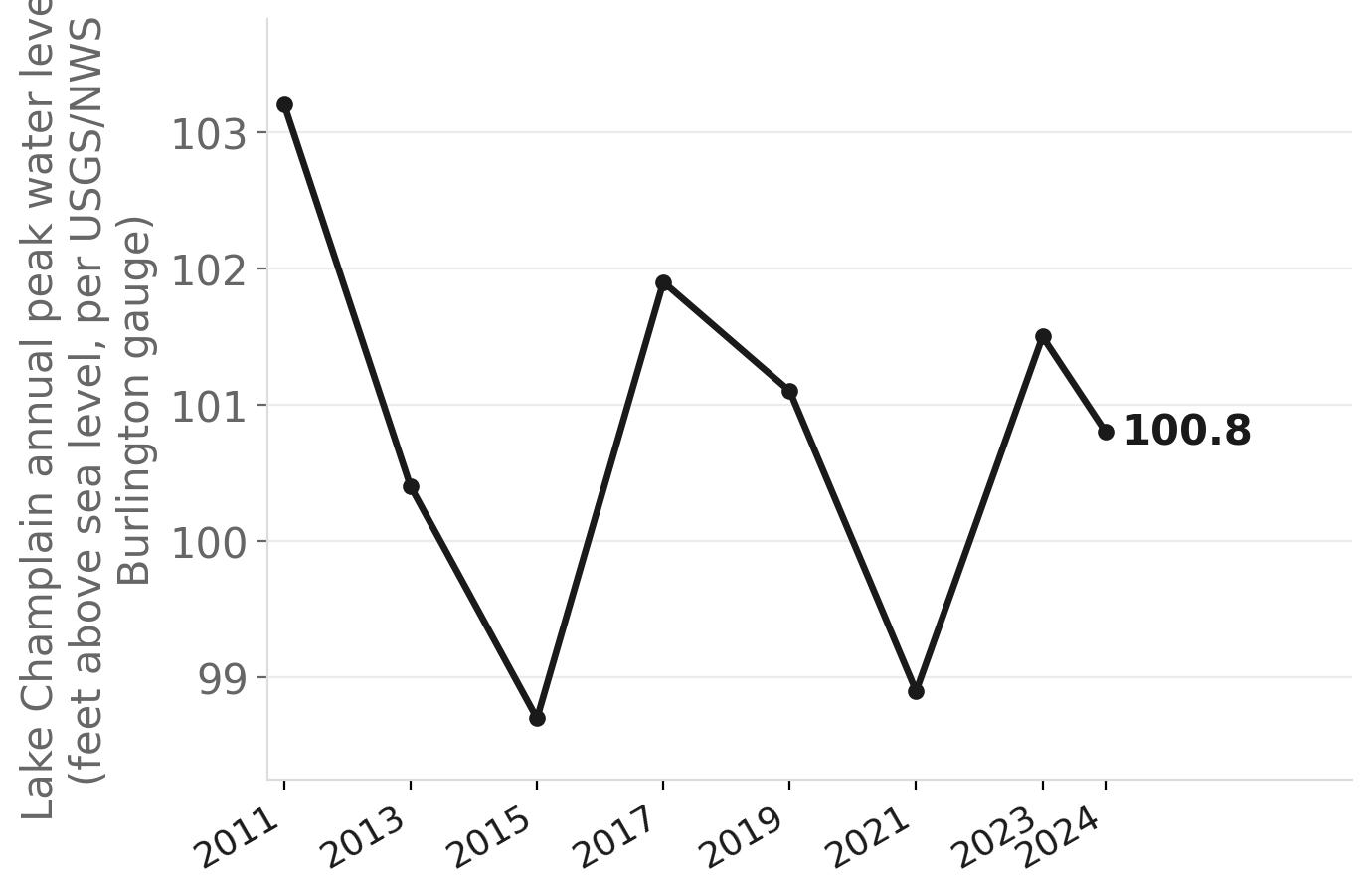
South Hero is among the most exposed communities on the lake. The Champlain Islands sit low, with limited road redundancy, and a washed-out stretch of Route 2 can effectively isolate the town. Record lake levels in 2011, repeated high-water years in 2017 and 2019, and the floods of 2023 and 2024 have all taken bites out of island shorelines. Sunrise Drive faces the main lake body, where prevailing westerly and northerly winds can build waves across more than 120 miles of open water.
The stakes extend beyond individual properties. Lakefront parcels along corridors like Sunrise Drive carry high assessed values, meaning shoreline loss has direct consequences for the town's tax base. And with traditional armoring largely off the table, bioengineering projects like this one have become among the only legally available tools for property owners and conservation groups trying to hold the line.
The land trust is seeking a qualified contractor to carry out the restoration work. The full scope, budget, and funding source are detailed in the RFP, but specific figures were not publicly summarized. Projects of this type in Vermont have typically drawn support from the state's Clean Water Initiative, the Lake Champlain Basin Program, and federal climate-resilience funding streams.
Contractor selection will determine when ground work begins.