San Diego County is looking for clinics and providers willing to treat one of the most underserved groups in the fentanyl crisis: pregnant women and new mothers struggling with addiction.
The county's Behavioral Health Services division has put out a call to the provider community to gauge how many outpatient treatment programs exist locally that specialize in perinatal substance use disorder care, covered through Medi-Cal. The outreach reflects a documented shortage of addiction specialists willing to work with pregnant patients, a population that faces heavy stigma and, in some states, legal risk when seeking help. San Diego County is soliciting that information now as it works to expand its provider network.
The stakes are significant. Overdose has become the leading cause of pregnancy-associated death in California, according to a 2023 state report on maternal health. In San Diego specifically, fentanyl deaths roughly tenfold between 2016 and 2022, driven in part by the county's position as a primary U.S. entry point for the drug. The Board of Supervisors declared fentanyl a public health crisis in 2022.
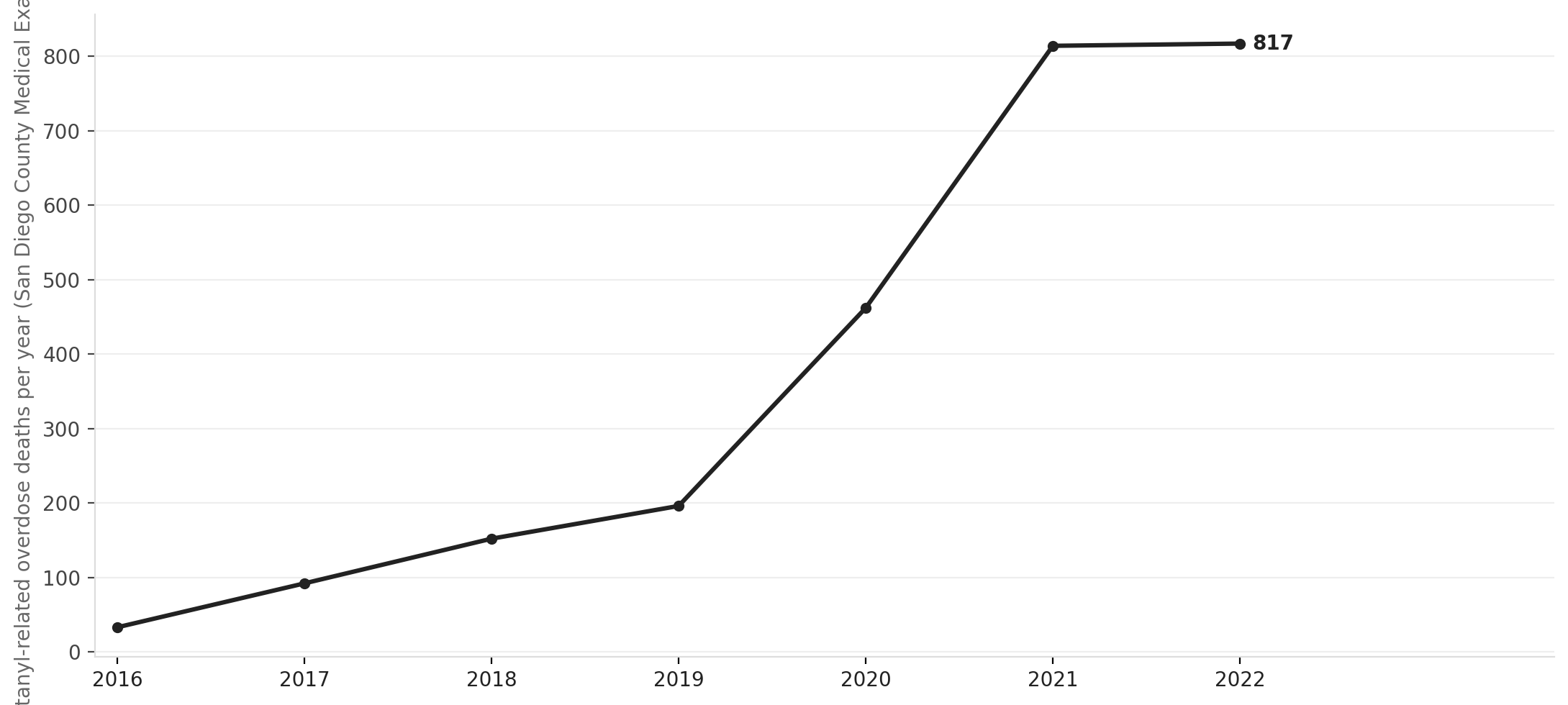
Source: NationGraph.
California has made expanding perinatal addiction care a policy priority in recent years. The state's Drug Medi-Cal Organized Delivery System, a first-of-its-kind Medicaid waiver launched in 2015, created a full continuum of care for substance use disorders. San Diego joined the program in mid-2018. California's CalAIM initiative, which took effect in January 2022, pushed counties further by explicitly prioritizing pregnant and postpartum women. That same year, the state extended Medi-Cal postpartum coverage from 60 days to a full year, dramatically expanding the pool of eligible patients.
Yet coverage on paper and care on the ground are different things. The county faces a persistent shortage of OB-GYNs and addiction medicine providers willing to prescribe medications like buprenorphine or methadone to pregnant patients. San Diego's roughly 900,000 Medi-Cal enrollees include a large perinatal population, and the county's behavioral health system has already drawn scrutiny over gaps in psychiatric services.
No contract has been awarded and no dollar figure is attached to this effort yet. The county is conducting market research first, essentially asking: are enough providers out there to build the network the law now requires? The answer to that question will shape what comes next.