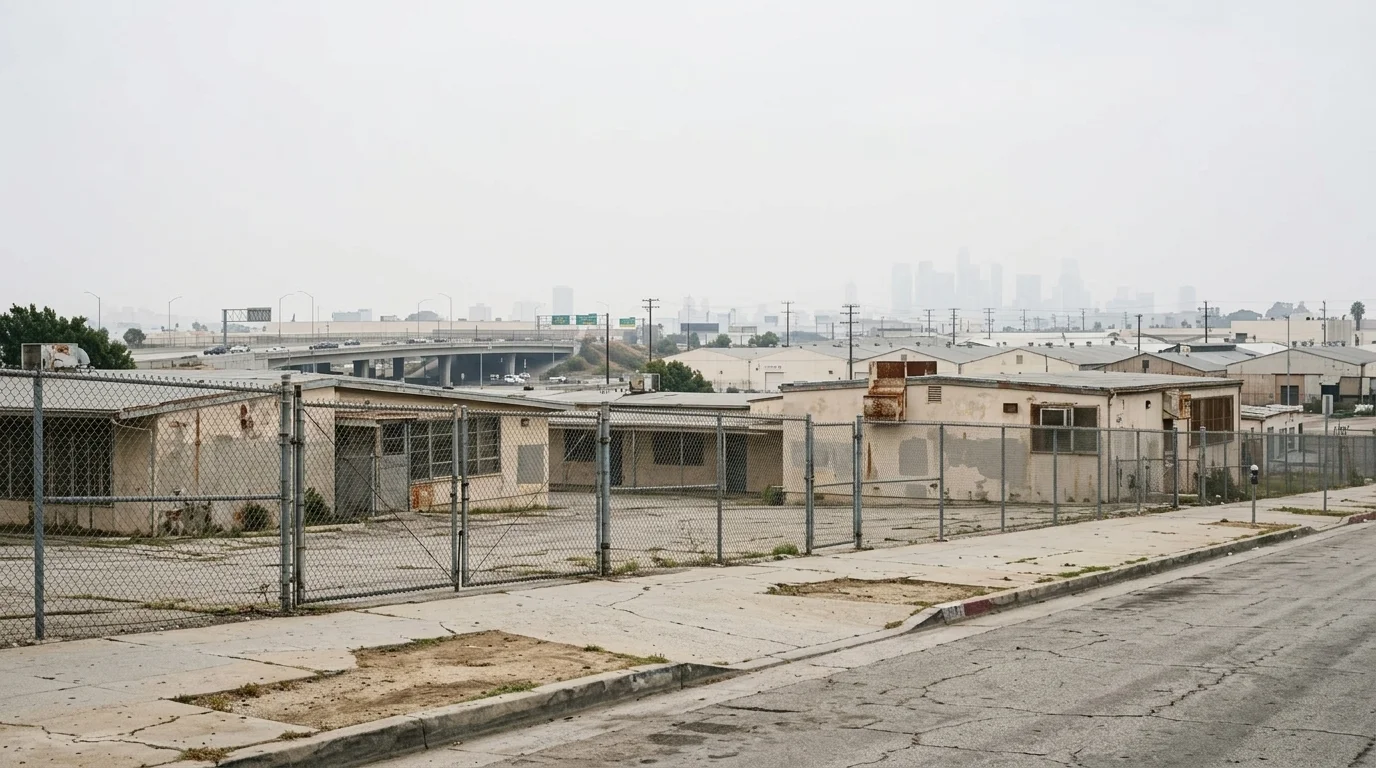
Compton Unified School District is moving to clean up contaminated soil at Centennial High School, a campus that has served students in one of Southern California's most industrially burdened communities for seven decades.
The district is now hiring a construction contractor to carry out the remediation, meaning an assessment of what's in the ground has already been completed and a cleanup plan is in place. Bid documents are posted on the district's procurement page. The specific contaminants haven't been publicly disclosed, but older Southern California school sites in similar situations typically show elevated levels of lead from historic leaded gasoline and paint, arsenic from industrial fill and pesticides, and petroleum hydrocarbons from nearby fuel infrastructure.
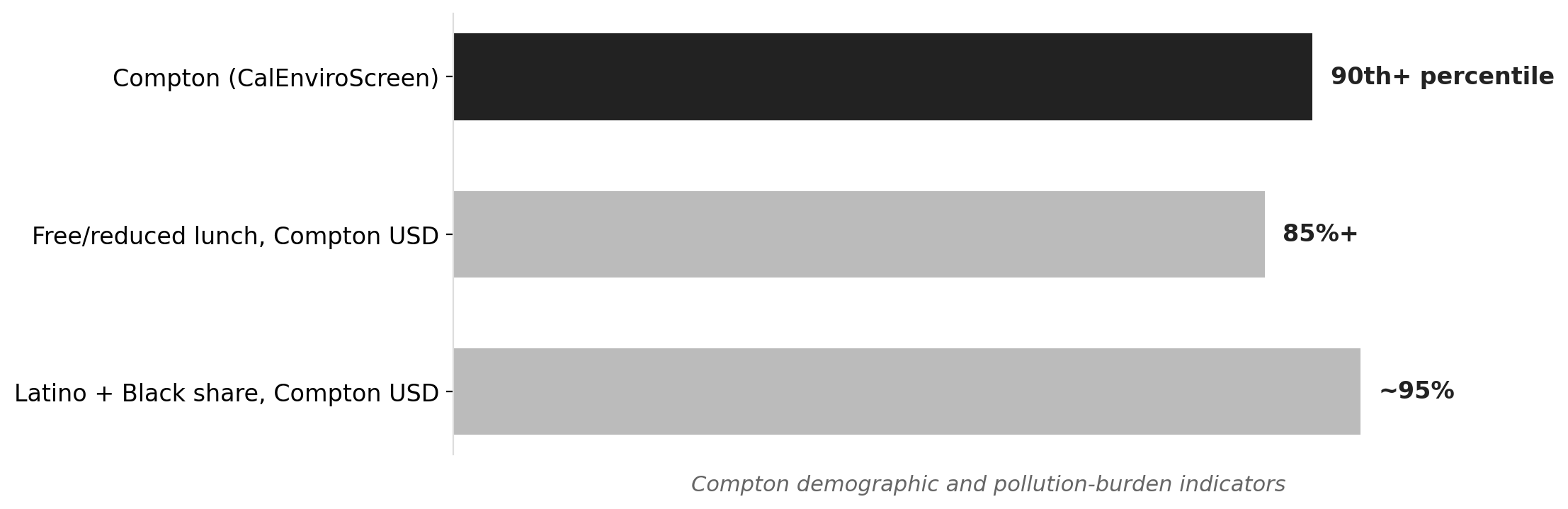
Centennial, founded in 1954, sits in a part of Compton with deep industrial roots: auto body shops, metal plating operations, and proximity to the 710 Freeway corridor, one of the region's most documented sources of lead and diesel particulate pollution. Compton ranks in the 90th percentile or higher on California's CalEnviroScreen index, which measures cumulative pollution burden, making it one of the most environmentally stressed communities in the state.
Source: NationGraph.
The cleanup comes amid years of compounding neglect. Compton Unified was the first California school district placed in state receivership, spending nearly a decade under state control beginning in 1993 following fiscal collapse. Chronic underinvestment in district facilities followed, and environmental issues at campuses like Centennial have historically surfaced through state regulatory filings or parent pressure rather than district disclosure.
California has required Department of Toxic Substances Control oversight of school site environmental reviews since 2002, legislation that followed the Belmont Learning Center scandal in Los Angeles, where LAUSD built a school on a former oil field. Since then, dozens of school sites across the state, disproportionately in low-income communities of color, have been flagged for soil testing and cleanup. Compton, as a designated disadvantaged community, qualifies for priority funding under state school bond measures and federal programs, including EPA Brownfields grants expanded under the 2021 Infrastructure Investment and Jobs Act.
Compton Unified serves roughly 17,000 to 18,000 students, more than 80 percent Latino and about 15 percent Black, with over 85 percent qualifying for free or reduced lunch. Centennial is the older of the district's two comprehensive high schools.
What remains unanswered is how long the contamination has been present, what students and staff may have been exposed to over the years, and whether prior environmental reviews identified problems that went unaddressed. Environmental justice organizations including Communities for a Better Environment have tracked school contamination issues across the 710 corridor for years and may have additional records on Centennial's site history.