Portage County, Wisconsin is moving from years of debate into active construction on a new jail and Law Enforcement Center in Stevens Point, a project that will rank among the largest public investments the county of roughly 70,000 residents has made in a generation.
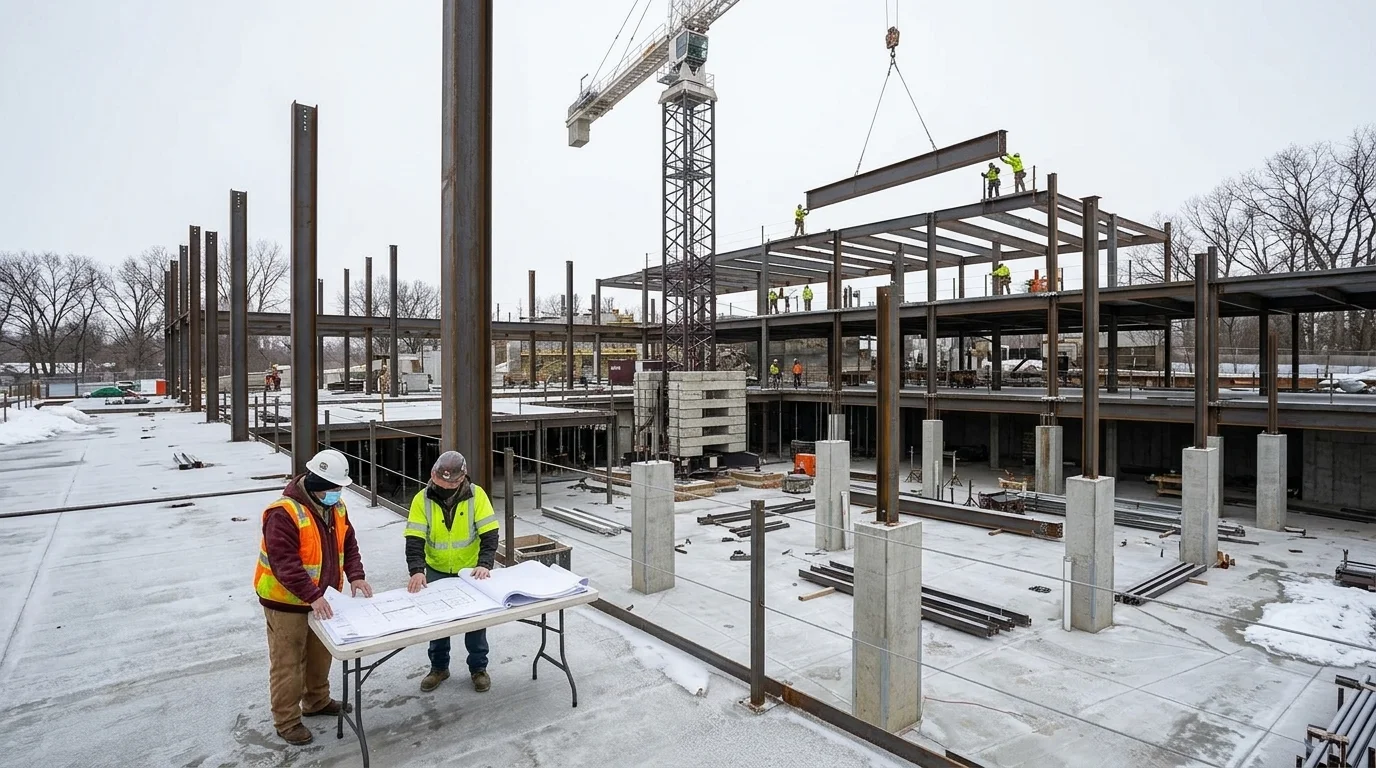
The county is now soliciting structural trade contractors, covering the steel, precast concrete, and load-bearing systems that form the backbone of any secure detention facility. That step signals the project has cleared planning, design, and site selection and is firmly in the build phase. The structural package is listed on the county's bids portal.
The push behind the project is years in the making. Portage County's existing jail was built to an older generation of correctional standards and has long struggled with capacity, staffing strain, and code compliance. To manage the overflow, the county has paid daily boarding fees to house inmates in neighboring counties, a recurring cost that has added pressure on an already cautious county budget. Sheriff Mike Lukas has been a public advocate for replacement, citing overcrowding and safety conditions for staff in the aging facility.
Source: NationGraph.
The population inside the jail has also changed. Across rural Wisconsin, jails are holding fewer low-level offenders but more people with serious mental health needs, substance use disorders, and longer pretrial stays tied to the state's methamphetamine and fentanyl surges. Older linear-style jails were not designed for that population, making modern facilities with dedicated medical and mental health space, direct-supervision layouts, and ADA compliance a practical necessity under updated state Department of Corrections standards.
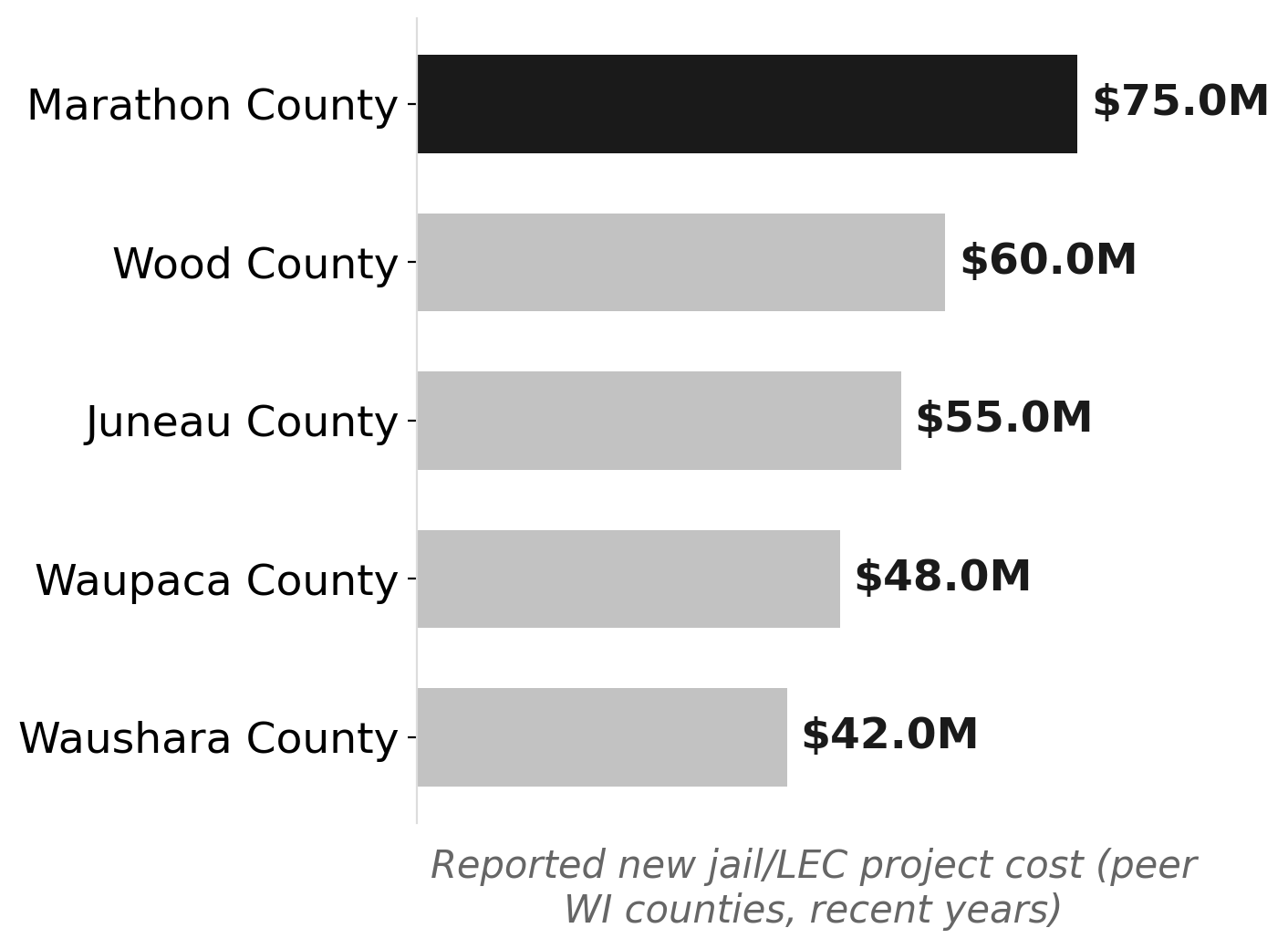
Combining the jail with a Law Enforcement Center, consolidating the sheriff's office, dispatch, and detention under one roof, has become the standard model for Wisconsin counties undertaking these projects. Marathon, Wood, Juneau, Waupaca, and Waushara counties have all pursued similar facilities in recent years, typically at costs ranging from $40 million to $80 million, financed through general obligation bonds. Portage County's project is expected to fall somewhere in that range, though the final bonding cost has been a source of community debate and county board friction.
For taxpayers, the coming months will bring the clearest picture yet of what the project will actually cost as individual trade bids come in and the full construction budget takes shape.