Fifty-eight Florida institutions issued stormwater management RFPs in May 2026 alone, the highest single-month count in at least two years and roughly 64% above the state's 2025 monthly average. The number that matters more than the volume, though, is the shape: monthly institution counts have climbed in a near-unbroken staircase since January, from 16 to 41 to 47 to 56 to 58. That is not a seasonal flush. That is a structural shift.
The force behind it is a single date: December 28, 2025.
That was the implementation deadline baked into SB 7040, signed by Governor Ron DeSantis in June 2024, after which all new development and redevelopment permit applications must meet a "net improvement" nutrient-reduction standard. Under the prior regime, that bar applied only to projects discharging into already-impaired water bodies. SB 7040 made it universal. Municipalities whose permit applications were incomplete after December 28 now face a fundamentally harder engineering problem, one that practitioners have called the most significant update to Florida stormwater rules in decades. Industry estimates put the statewide cost of compliance at roughly $1.2 billion over five years, or $2,600 per developed acre.
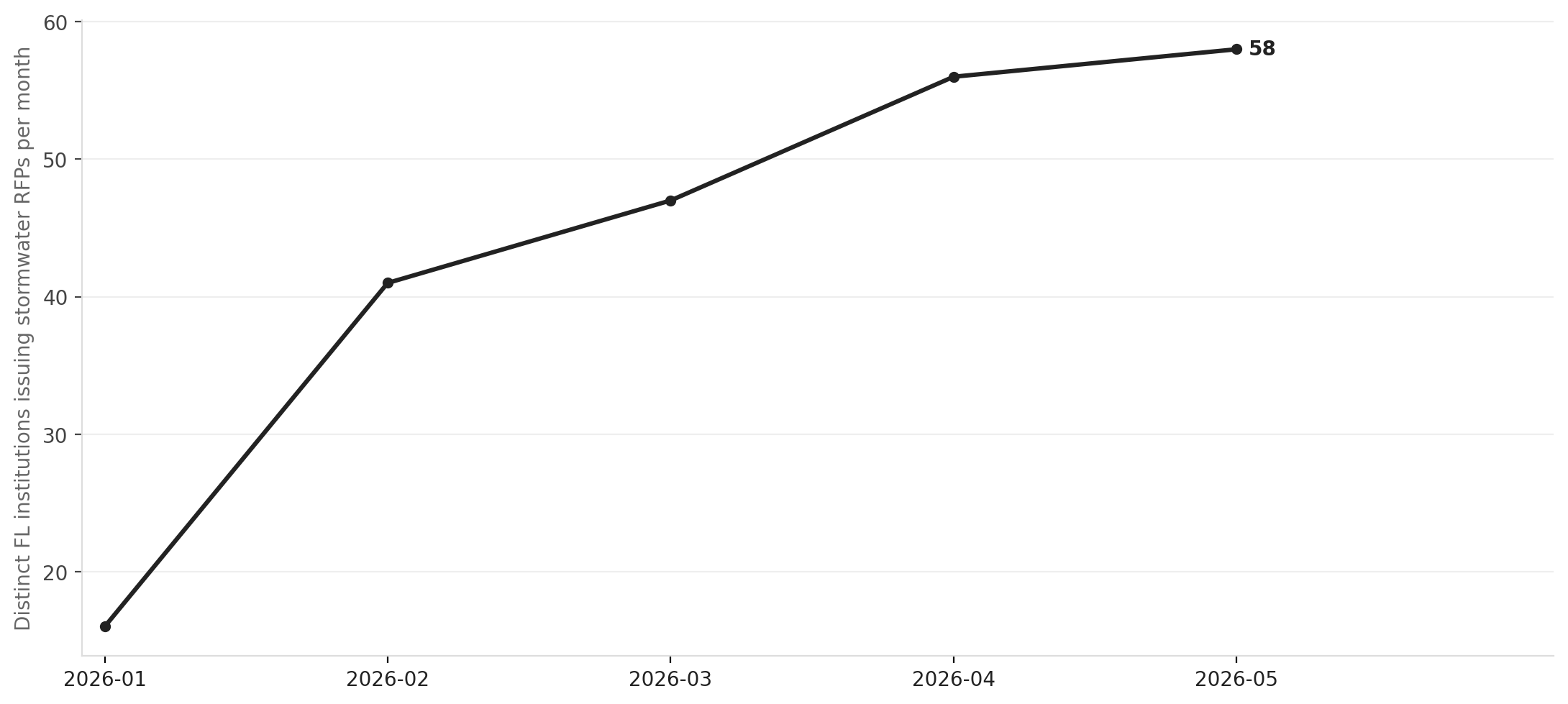
Source: NationGraph.
The municipalities going to market now are, in large part, the ones that did not scramble to get applications in before the deadline. They missed the grandfather window, and they are paying for it in harder standards and higher contractor costs. The procurement surge is geographically diffuse, active RFPs in May spanned at least 20 counties, from Escambia in the Panhandle to Monroe at the tip of the Keys, which points to SB 7040 compliance as the primary driver rather than any single storm event or regional emergency.
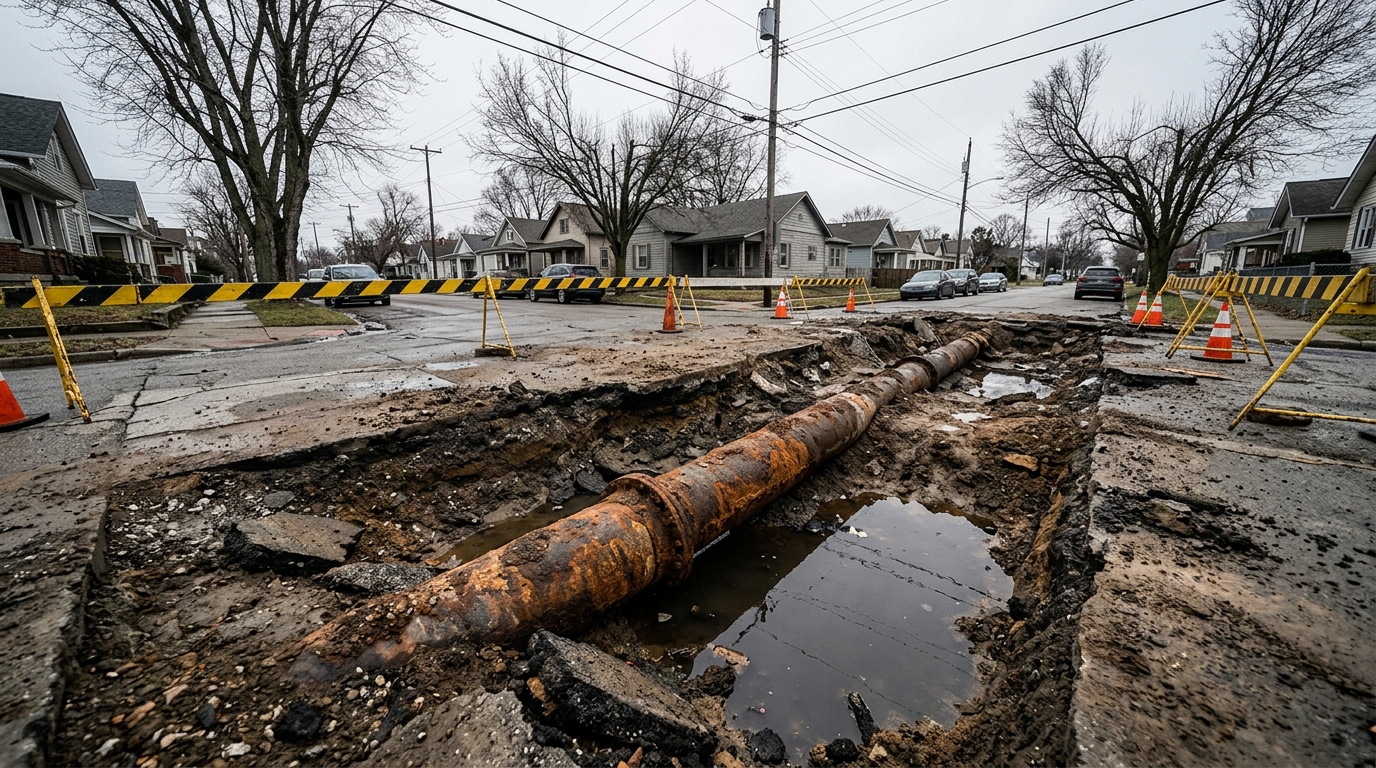
The projects hitting the market reflect the full range of what compliance now requires. Tampa has issued contracts for FY26 stormwater pipe repair and pond dredging in Hillsborough County. Fort Lauderdale has put out an RFP for drainage infrastructure improvements in the Melrose Manors neighborhood in Broward County. Clewiston, a small city in Hendry County near Lake Okeechobee, is procuring a stormwater vulnerability assessment, the kind of foundational study that typically precedes capital investment by a year or more. SB 7040 also introduced new qualified inspector requirements that took effect June 2025, adding a separate credentialing procurement layer on top of the engineering and construction work.
FEMA is adding fuel. In February 2026, the agency announced $480 million in Florida disaster-recovery grants covering more than 500 projects, with $180 million directed toward critical infrastructure. On April 22, FEMA announced a further $235 million in Flood Mitigation Assistance awards, with a new application deadline of August 6, 2026 still open. For counties already mobilizing under SB 7040 pressure, that deadline is a near-term grant-capture incentive that is activating project pipelines faster than the regulatory pressure alone would have. Florida DEP's Clean Water State Revolving Fund is also running a $27.5 million stormwater grant through June 2030, and a separate EPA municipal grant of $1.2 million is active through 2029.
Florida's physical geography makes this problem harder than it sounds. The state is largely flat with a shallow water table, 1,350 miles of coastline, and five regional Water Management Districts each administering overlapping permit requirements. The 2024 hurricane season, Debby, Helene, and Milton, exposed how badly existing municipal stormwater systems underperform under surge conditions, building the political pressure that SB 7040 was partly designed to address. But political will and engineering capacity are different things, and the staircase of monthly RFP counts raises a question the procurement data cannot answer on its own: whether Florida's stormwater engineering and contracting community can absorb 58 simultaneous new clients without delays, cost escalations, or shortcuts on scoping.
For residents, the most immediate signal to watch is whether their municipality has issued an RFP yet. Cities and counties still in the planning stage face the August 6 FEMA grant deadline as a hard near-term test. Those that have already gone to market will be negotiating contracts against a backdrop of compressed contractor availability and rising compliance costs, conditions that tend to favor well-resourced jurisdictions over smaller ones.
The next inflection point arrives this fall, when the first wave of SB 7040-compliant permit applications will begin reaching the Water Management Districts for review. If processing times lengthen under the new nutrient-improvement standards, the procurement surge will have a second act: municipalities returning to market for amended designs and supplemental assessments. The December 28 deadline passed months ago, but its consequences are still accelerating.