Pensacola, Fla. is moving to redesign some of its most car-dominated streets for walkers, cyclists and other non-motorized travelers, drawing on federal highway funds to turn a safety blueprint into physical reality.
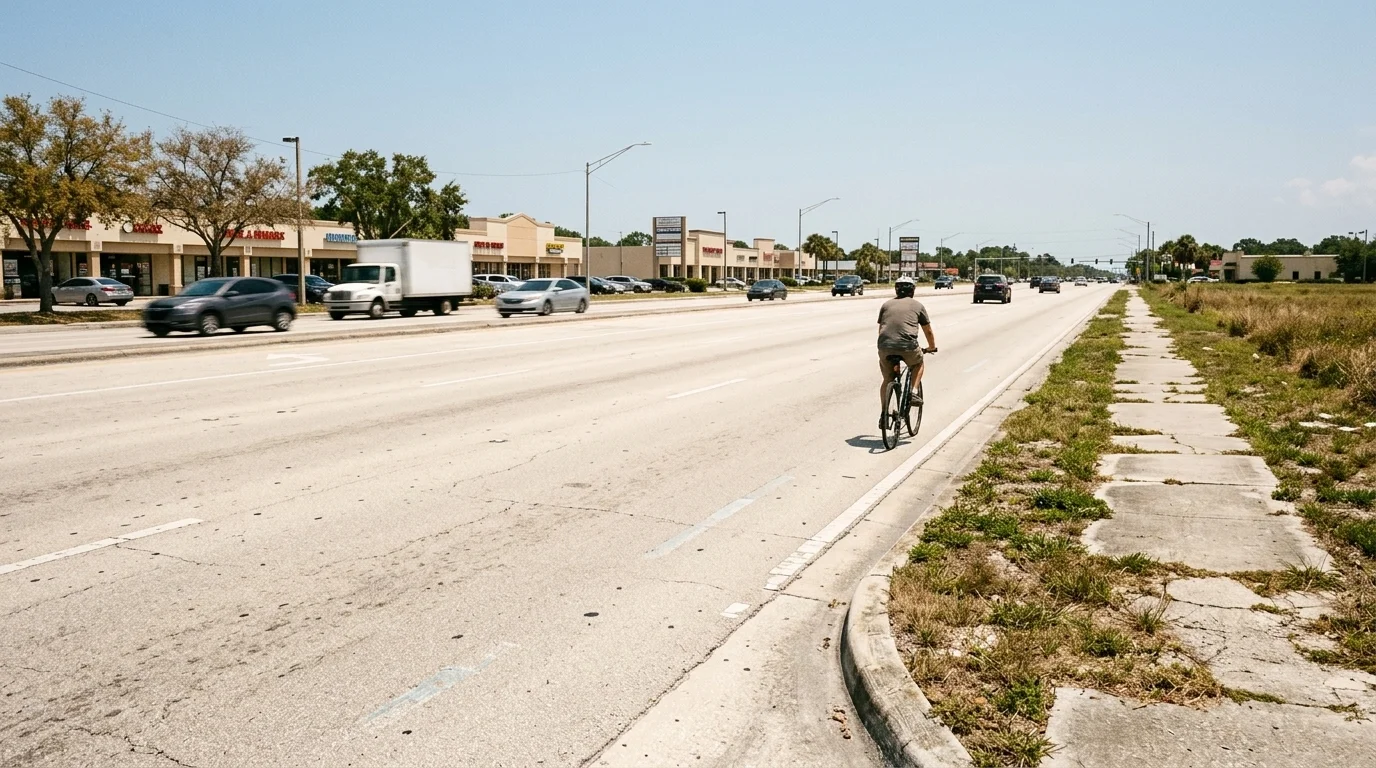
The project, branded Streets Are For Everyone (SAFE) Pensacola, builds directly on the city's 2023 Active Transportation Plan, which identified where Pensacola's wide, high-speed arterials pose the greatest danger to residents on foot or bike. Escambia County has historically ranked poorly on pedestrian safety metrics, and Florida as a whole consistently appears among the deadliest states for walkers and cyclists in national rankings.
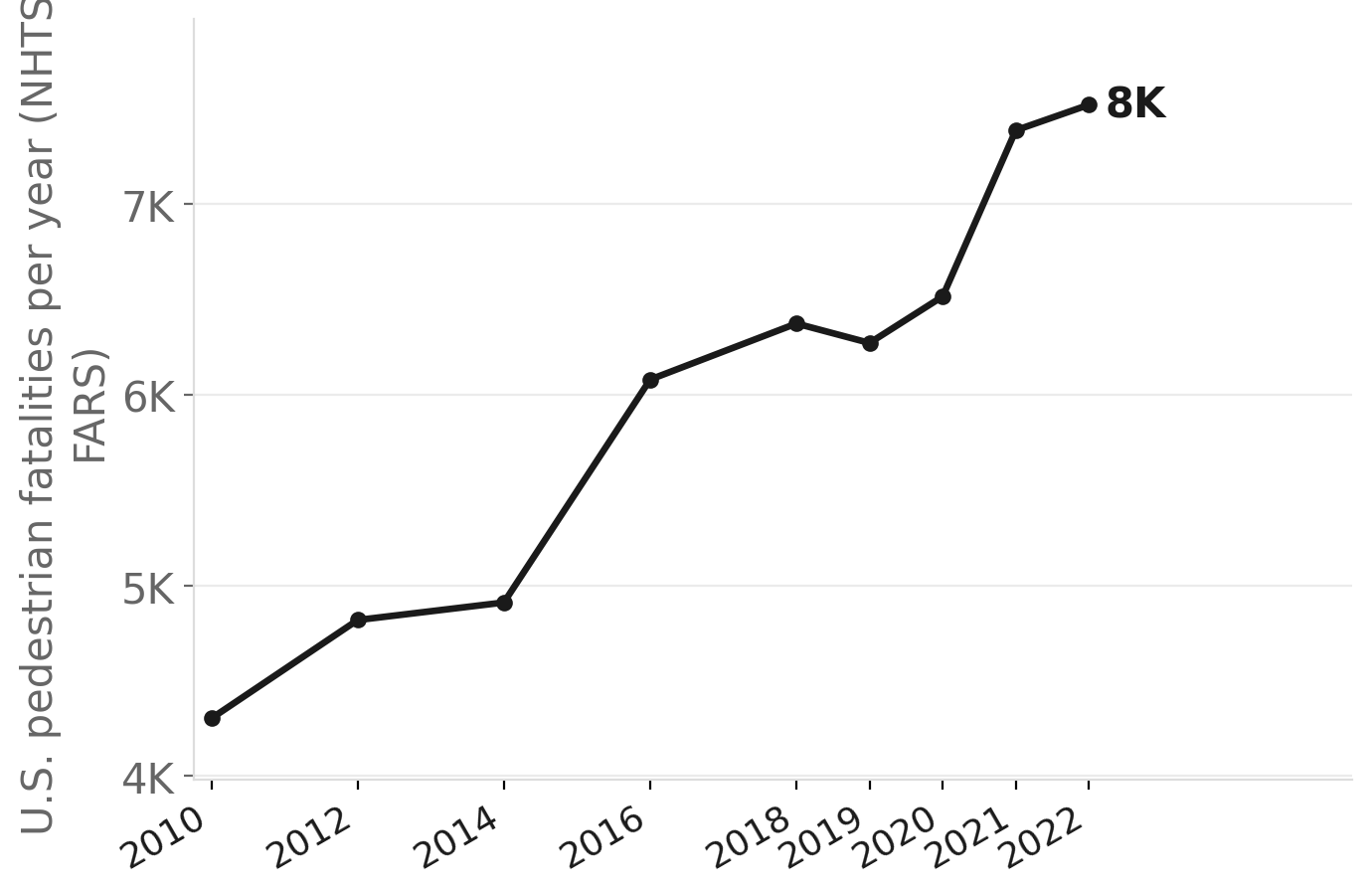
The federal money flows from the Safe Streets and Roads for All program, a $5 billion initiative created by the 2021 Bipartisan Infrastructure Law amid a sharp rise in U.S. traffic deaths. Pedestrian fatalities hit 40-year highs around that time, reversing decades of gradual progress and pushing Washington to fund cities and counties willing to rethink street design from the ground up.
Source: NationGraph.
For Pensacola, a coastal Panhandle city of roughly 54,000 with a walkable historic downtown surrounded by sprawling car-oriented corridors, the gap between what the streets could be and what they are has long been visible. Florida's state DOT has historically prioritized vehicle throughput, leaving cities largely on their own to pursue safer multimodal design. Federal grants like this one give Pensacola the resources to act independently of that dynamic.
The city has posted the project on its bid portal as it moves to hire the engineers and planners who will carry the work forward. How quickly new infrastructure reaches specific streets, and which corridors get prioritized first, will become clearer as the project gets underway.