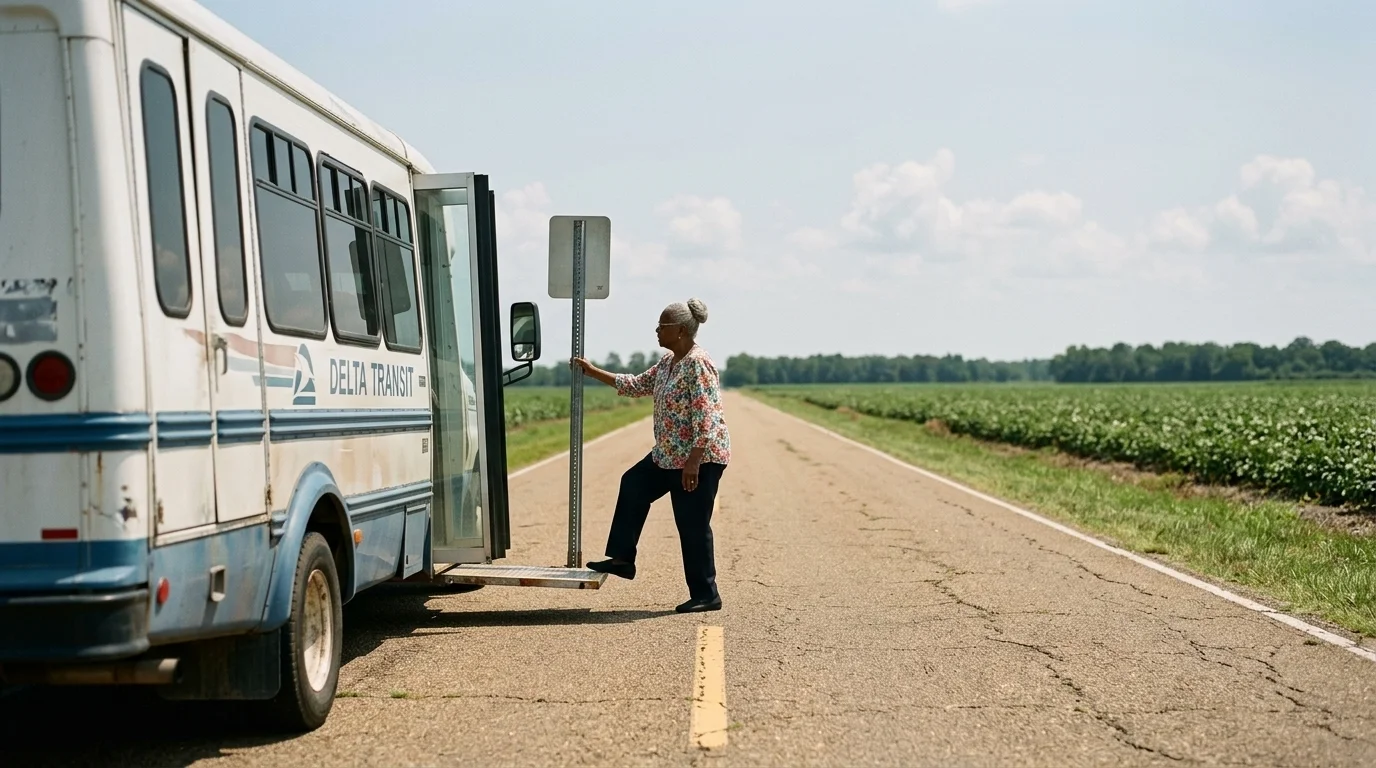
Six Pennsylvania transit agencies issued their first procurement solicitations in more than a year during the past 30 days, not because Harrisburg solved anything, but because Washington sent money, and federal grant rules give agencies no choice but to spend it or lose it.
The re-entries are small: parts quotes, ADA paratransit service contracts, streetscape mobility planning. But they mark the first signs of procurement life from a tier of agencies that went silent when Pennsylvania's 2025 budget impasse left them without state capital. Among the newly active issuers are South Central Transit Authority in Lancaster, Lemoyne Borough Municipal Authority in Cumberland County, and LANTA, the Lehigh and Northampton Transportation Authority serving Allentown, agencies that, as Penn Capital-Star reported, had much to gain from new state funding and received none of the Pennsylvania Public Transportation Trust Fund relief that kept SEPTA and PRT operating through 2026.
The driver is the Consolidated Appropriations Act of 2026, signed February 3, 2026, which secured $21.1 billion for FTA programs nationally, including $14.6 billion in formula grants drawn from the Mass Transit Account. Those formula tranches began flowing to Pennsylvania's smaller agencies over the summer. LANTA received a $13.2 million FTA formula grant in August 2026 and posted an ADA paratransit RFP almost immediately after. South Central Transit pulled in $14.7 million in combined federal formula money over the past six months. Susquehanna Regional Transportation Authority landed a $25 million RAISE grant plus $9.7 million in formula funds, bringing its active DOT portfolio to $73 million. Cambria County Transit Authority drew $7 million across three tranches between June and September. Luzerne County Transportation Authority received $4.3 million for low- and no-emission buses in September.
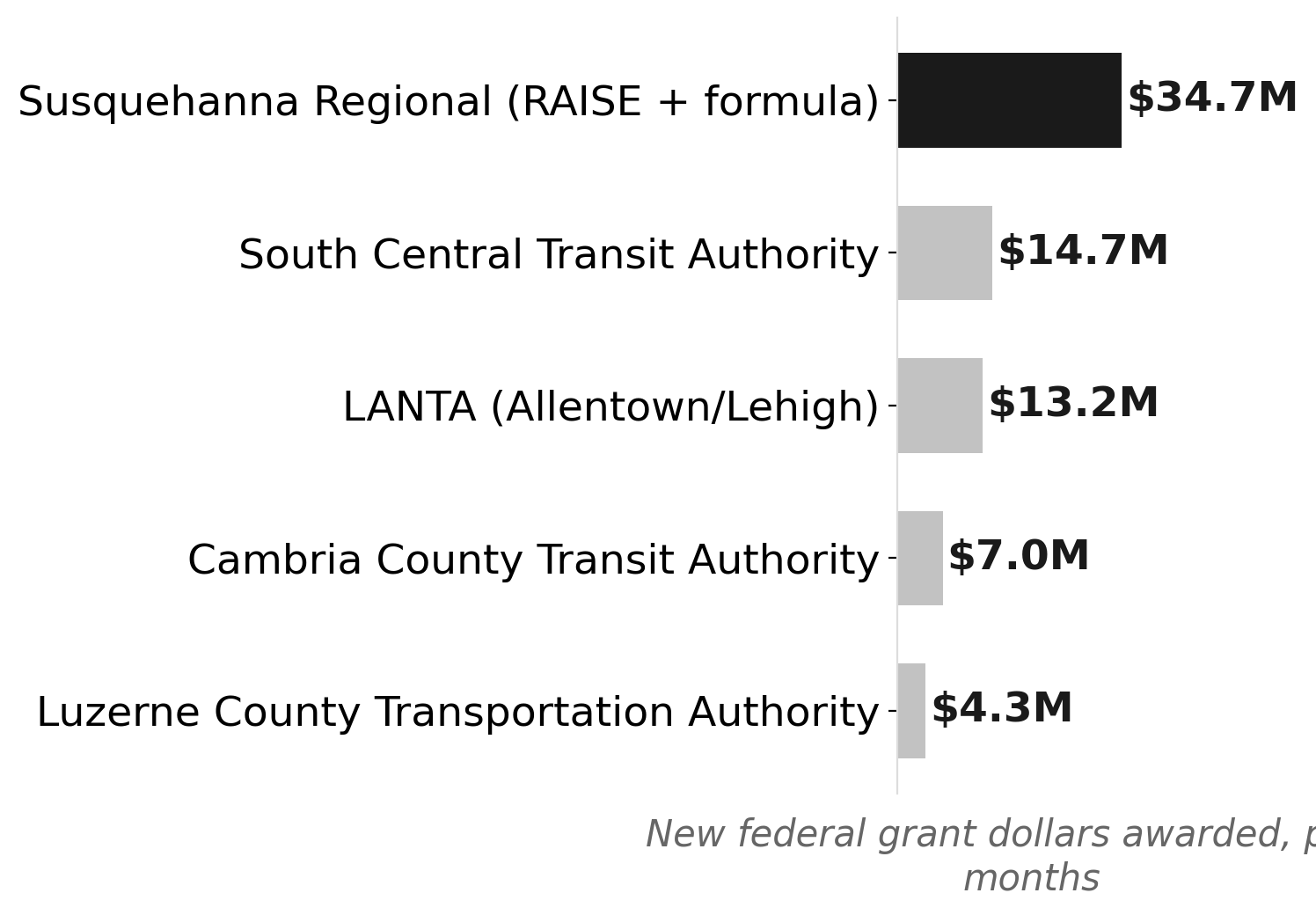
Source: NationGraph.
The procurement activity is a direct symptom of how federal transit grants work: agencies that fail to obligate awarded funds within statutory windows forfeit them. That use-it-or-lose-it pressure is the same force documented in our earlier reporting on SEPTA and PRT, where capital-flex transfers created their own obligation deadlines. For smaller agencies, there is no state backstop creating that pressure, only the federal clock.
And that distinction matters enormously. The PTTF capital-flex transfers that sustained SEPTA ($394 million approved in October 2025, $219.9 million more in November) and PRT through the state funding gap are a Pennsylvania state mechanism, drawn from Public Transportation Trust Fund reserves and available only to those two systems. The 33 smaller agencies serving rural communities, elderly riders, and people with disabilities across Pennsylvania's remaining 55 counties were explicitly excluded from that relief. They have been running on prior-year federal balances and whatever formula grants arrived, with no state capital supplement, for more than a year.
Governor Shapiro twice proposed redirecting 1.75 percent of Pennsylvania's sales tax to transit. Both proposals stalled in the Republican-controlled Senate. The November 2025 budget was finalized without a permanent replacement for the Act 89 Turnpike toll-revenue pipeline to the PTTF, which expired without a legislative successor. The FY2026-27 Shapiro budget proposes no immediate structural repair; a new ongoing PTTF revenue stream appears only in the FY2027-28 projections, still a year away from materializing. As a Penn Policy Institute budget overview noted earlier this year, the gap between what smaller systems need and what the state is currently providing remains unaddressed in every enacted spending plan.
For riders in Lancaster, Allentown, Cambria County, or Luzerne County, the RFP activity means buses will keep running and paratransit contracts will be renewed, for now. The federal money is real and it is arriving. But it is arriving as one-time or formula-cycle capital, not as the recurring operating base that keeps a transit system stable across years. When the FY2026 formula tranches are obligated and spent, the structural question returns: what does Pennsylvania replace Act 89 with?
The next pressure point is the FY2027-28 budget cycle, when Shapiro's proposed new PTTF stream would need to actually pass a legislature that has declined to act twice. If it stalls again, agencies that just reactivated their procurement pipelines on federal money will face the same freeze, this time without a fresh formula cycle to bail them out on schedule.