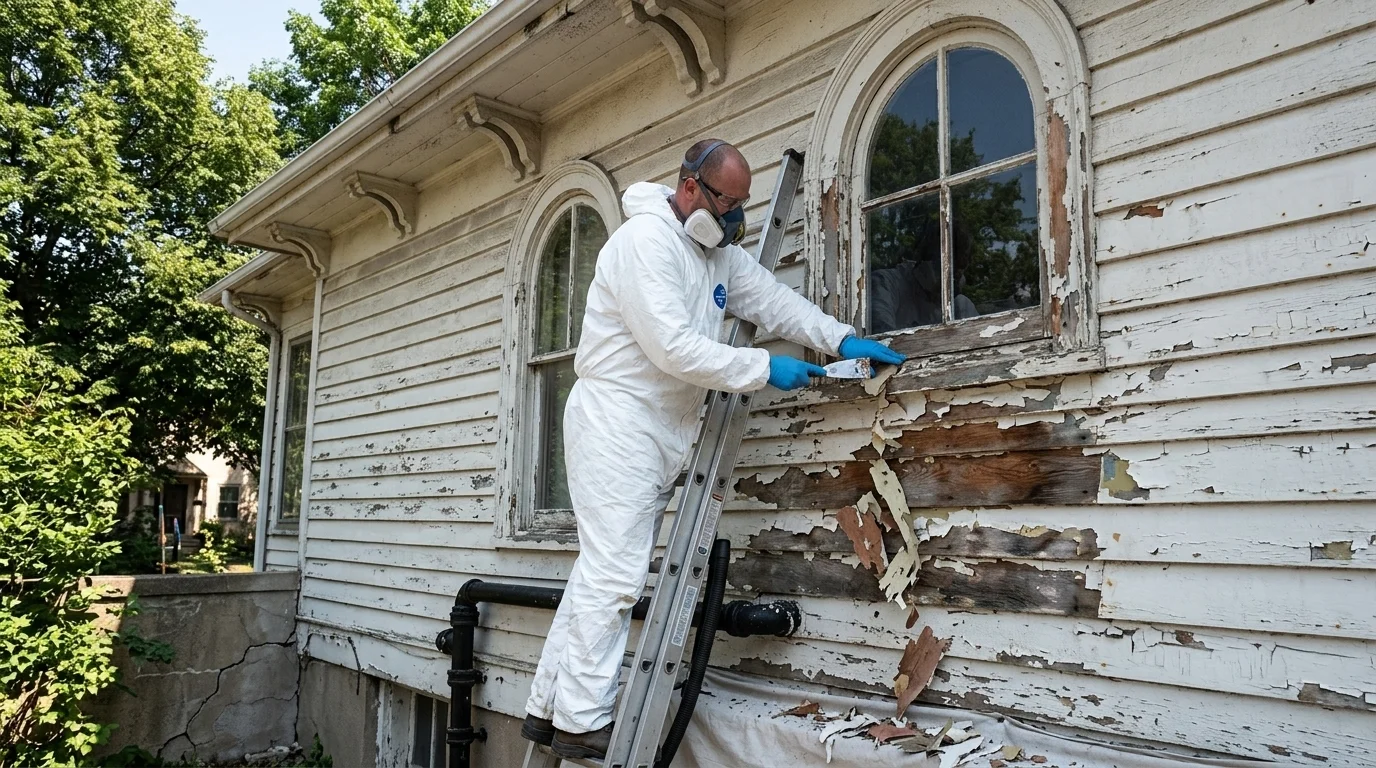
Minneapolis is hiring contractors to remove lead paint hazards from city housing and municipal facilities, the latest round of work in one of the Midwest's most active urban lead abatement programs.
The urgency is real. An estimated 60% or more of Minneapolis homes were built before 1978, when lead paint was banned for residential use, and a significant share date to before 1950, when lead paint use was heaviest. Neighborhoods like Near North, Hawthorne, Jordan and Phillips have documented childhood lead exposure rates that run several times higher than city or state averages. Many of the most affected families live in older rental housing and include immigrants and refugees from Somali, Hmong, Oromo and Latino communities who have settled in parts of the city with some of the oldest housing stock.
The scale of the problem grew on paper in recent years when Minnesota aligned with a tighter federal standard, lowering the blood lead level that triggers intervention to 3.5 micrograms per deciliter. That change roughly doubled the number of Minneapolis children flagged as lead-poisoned overnight, expanding the pool of homes that qualify for city-funded abatement.
The Minneapolis Health Department has run a Lead and Healthy Homes Program for years, sending crews into privately owned homes where a child under six or a pregnant resident has tested positive, and addressing hazards in city-owned buildings. The program has drawn federal support through HUD's Lead Hazard Reduction grants, including a multimillion-dollar award in 2021 and 2022 tied to the Biden administration's broader push to eliminate lead exposure. Historic levels of federal infrastructure funding have accelerated that work, but the window is not unlimited.
The city's bid for lead abatement services, posted Aug. 18, 2026, covers both residential and municipal building scopes. The contract value, term and number of properties have not been disclosed in the solicitation. A separate but related pressure is building on the water side: a 2024 EPA rule requires all cities to replace lead service lines within a decade, though that work falls under Public Works rather than the Health Department.
Once a contractor is selected, the city's pace of abatement will depend in part on how quickly new cases are referred from clinics and schools, and on how much federal funding remains available. Advocates have argued for years that the city's program, while nationally recognized, has moved too slowly relative to the size of the problem.