The Osage Nation is moving forward with a fiber-optic backbone project worth up to $5 million that would connect rural Hominy, Oklahoma to Tulsa, building the internet infrastructure that commercial carriers have long refused to provide across one of the country's largest and most sparsely populated counties.
Osage County covers roughly 2,300 square miles, about 45,000 residents and almost no commercial broadband investment. The economics are simple and brutal: too few customers per mile of fiber for private telecoms to bother. That calculus left Osage Nation communities with some of the worst connectivity in the state, a problem the pandemic made impossible to ignore when students couldn't log into class and elders couldn't reach doctors by video.
The project is funded through the National Telecommunications and Information Administration's Tribal Broadband Connectivity Program, a $3 billion federal carve-out created in 2021 specifically for federally recognized tribes. It's part of the broader $65 billion broadband push authorized by the Bipartisan Infrastructure Law, the largest federal broadband investment in U.S. history. Tribal lands have historically had the lowest broadband adoption rates in the country, with access below 50% in many areas compared to over 90% nationally.
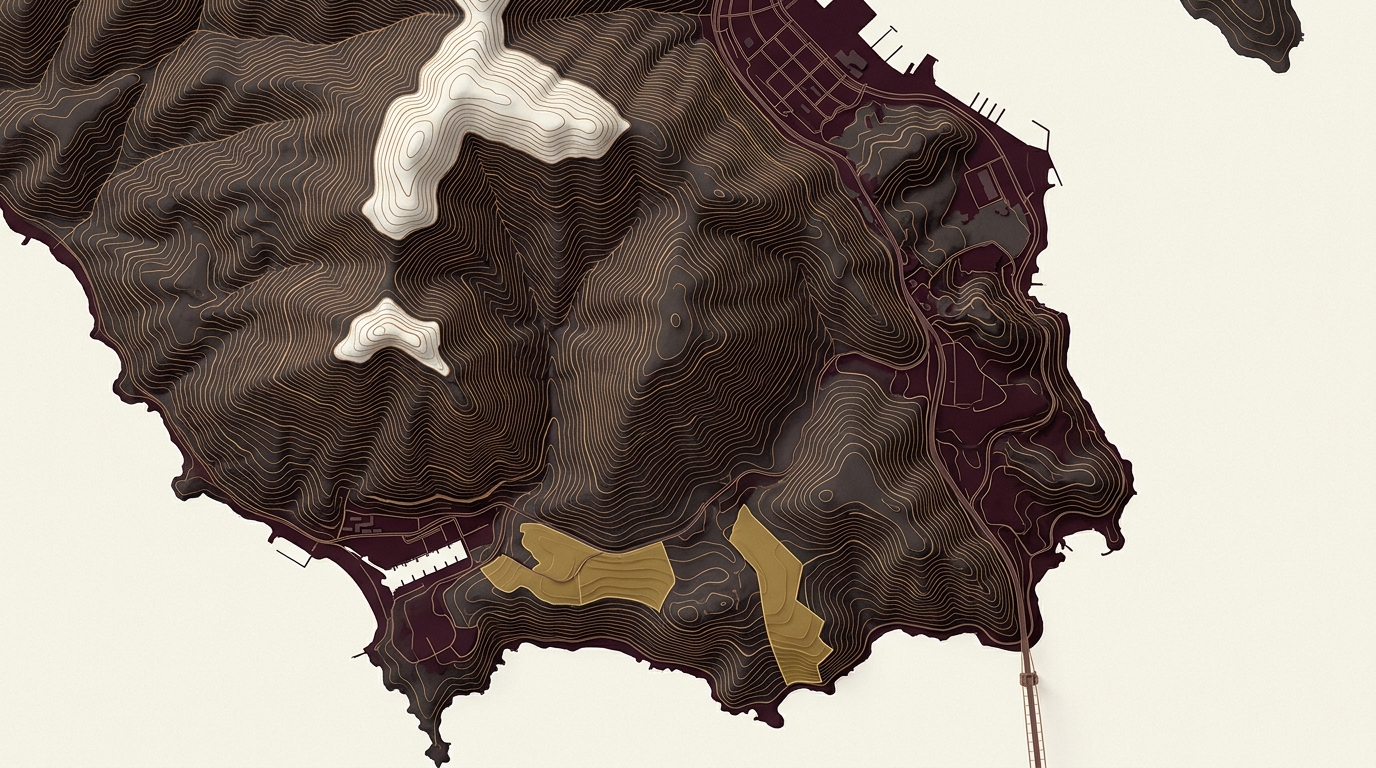
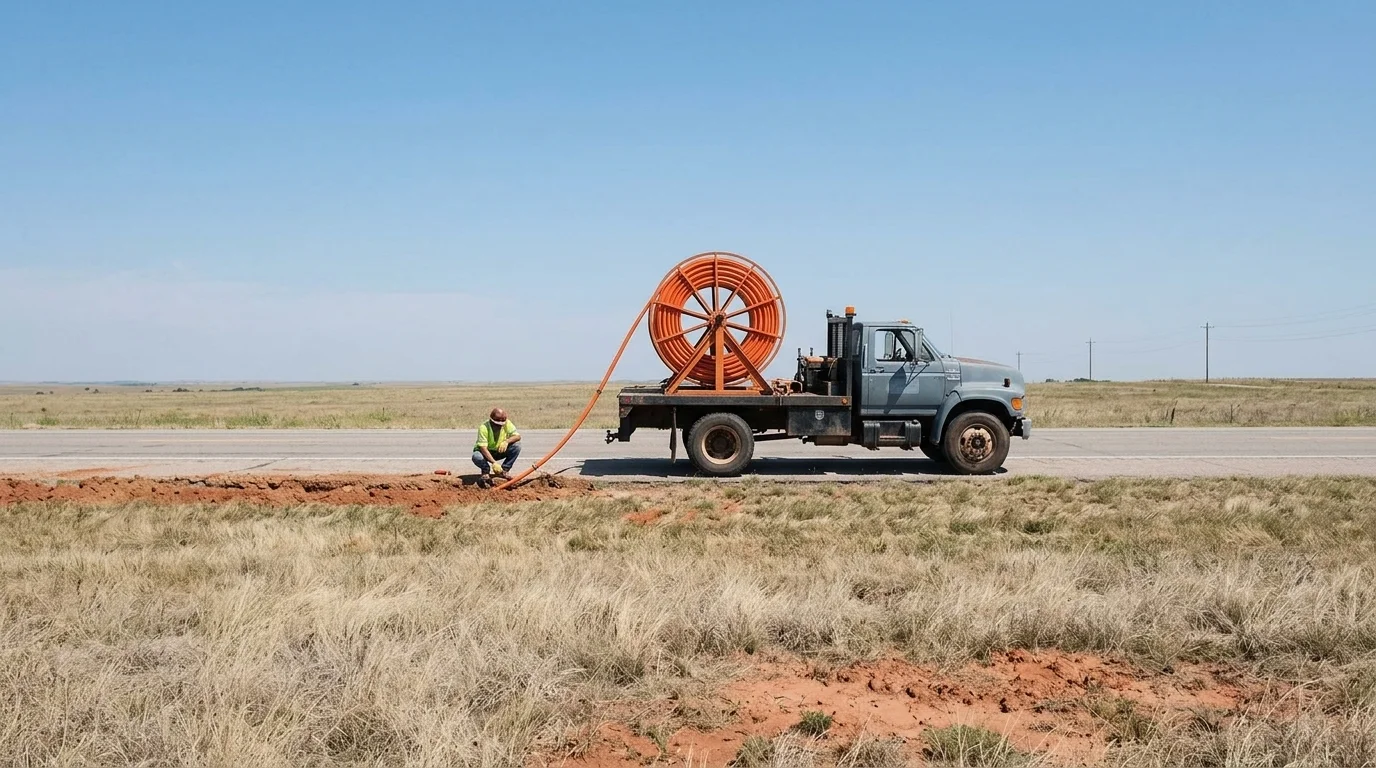
The fiber route runs from the tribe's Hominy East tower site east along Highway 20, then south through county roads to the Osage Casino in Tulsa. In technical terms, this is "middle-mile" infrastructure: the backbone that local internet providers plug into to deliver service to homes and businesses. Without it, last-mile connections to individual residents can't function. The Osage Casino anchoring the Tulsa end gives the project a built-in demand base that strengthens the case for the investment.
The Osage Nation has been building out its broadband footprint for several years under Principal Chief Geoffrey Standing Bear, using federal programs and tribal revenue from its seven casinos to fund infrastructure the federal government once left entirely to private markets. This project is a continuation of that effort, and notably comes amid uncertainty in some other federal broadband programs: NTIA's separate BEAD program was restructured in 2025 to allow alternatives to fiber, but the Tribal Broadband Connectivity Program funding this project operates independently of those changes.
The tribe is seeking a contractor for the build, with bids due Nov. 5, 2026. A single contractor will be selected, with Osage tribal preference applied in the evaluation. How quickly construction begins after award will determine when rural communities between Hominy and Tulsa see the connectivity gains.