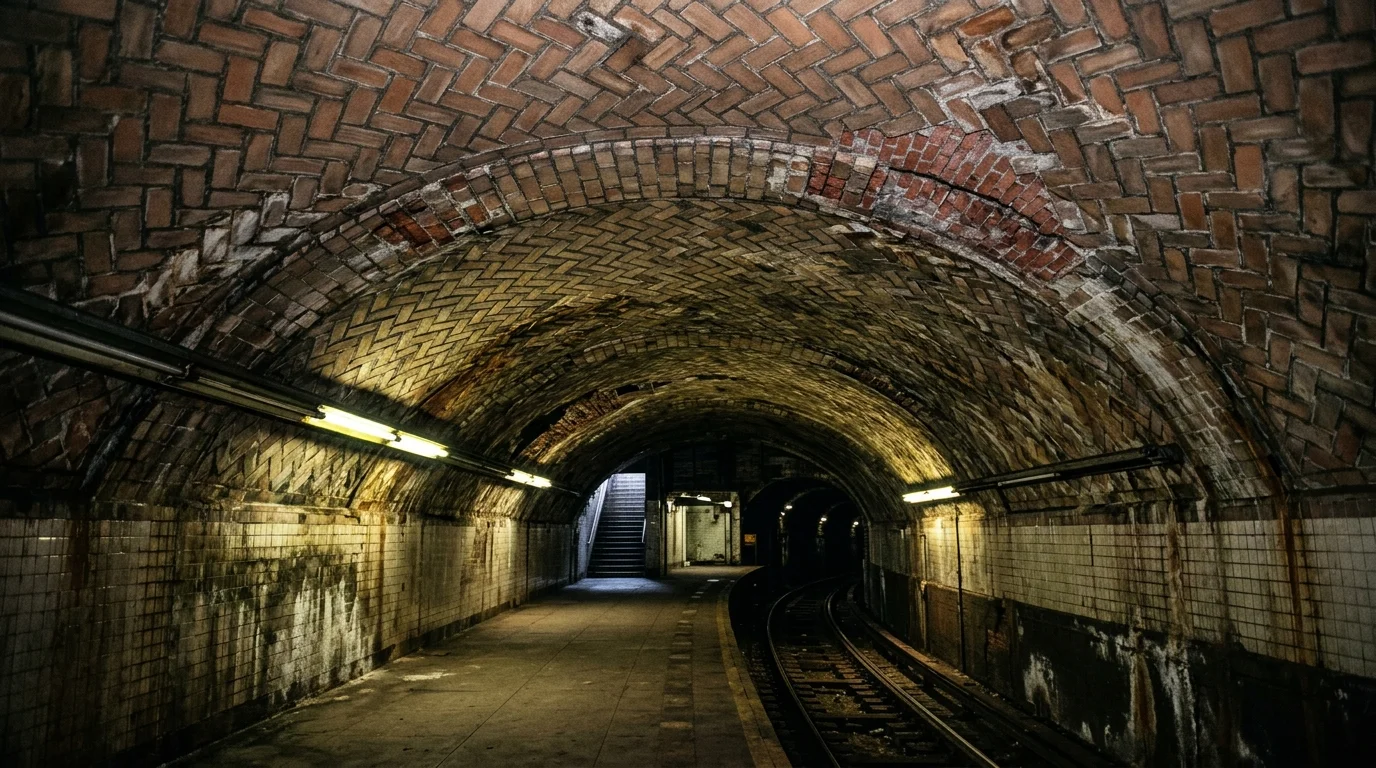
One of New York City's oldest and most deteriorated subway stations is finally getting rebuilt. The MTA is moving to overhaul Chambers Street Station in Lower Manhattan, a 1913 landmark serving J and Z train riders that has spent decades accumulating crumbling tile, water damage and a complete absence of elevators, all while sitting directly beneath the building where the city's own government works.
The project uses a design-build model that bundles design and construction under a single contractor. The agency posted the solicitation on June 18, 2026.
The station's renewal is driven in part by a 2022 federal consent decree in which the MTA agreed to make 95% of its subway stations ADA-accessible by 2055, following lawsuits from disability rights groups who argued the system, where fewer than a quarter of stations have elevators, has been in violation of the Americans with Disabilities Act since 1990. Chambers Street, which currently has no elevator access, is among the stations the MTA is obligated to fix under that agreement.
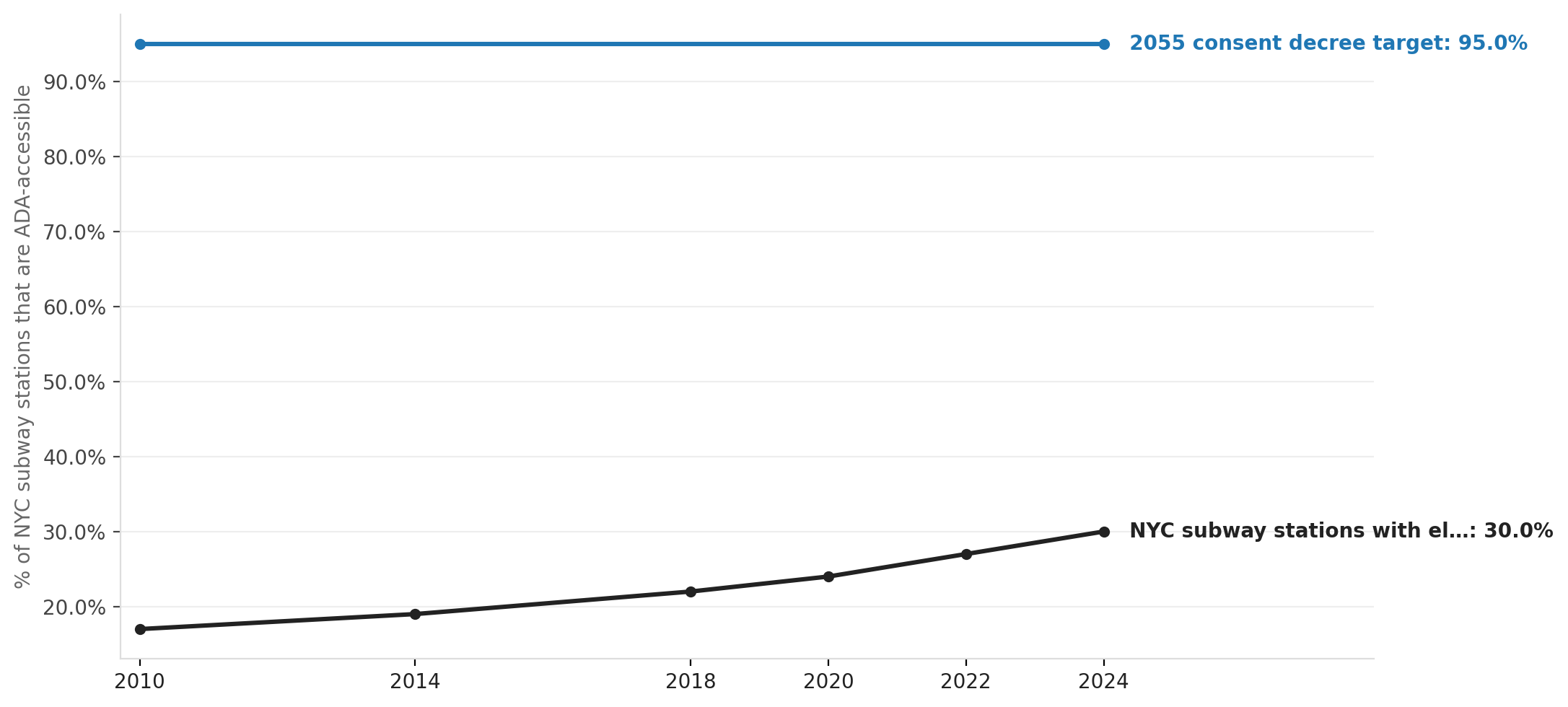
Source: NationGraph.
Funding for the work flows through the MTA's $68.4 billion 2025-2029 Capital Program, which Albany approved in May 2025 and which draws heavily on revenue from congestion pricing. That program has faced sustained political pressure, including efforts by the Trump administration to block the congestion pricing tolls, though court rulings have so far preserved them. Each visible capital project now carries extra weight as proof the funding is actually producing results, a dynamic that makes the Chambers Street overhaul, steps from City Hall, especially symbolic.
When it opened as part of the BMT Centre Street Loop, Chambers Street was one of the largest stations in the system, built to serve the Manhattan Municipal Building above it and designed with Guastavino tile vaulting that preservationists have long considered architecturally significant. Some of its outer platforms have been closed and unused for decades. What remains open has appeared regularly on lists of the subway's most neglected stations.
The design-build approach the MTA is using here reflects a broader strategic shift. New York State only authorized the agency to use design-build contracting in 2019, and the MTA has since leaned on it to compress timelines and reduce costs after years of criticism for having among the most expensive subway construction in the world. Recent projects on the 7 line and L train have been cited as early wins for the model. The same approach is driving the signal upgrade on the subway's busiest Brooklyn-Manhattan corridor.
Lower Manhattan has also changed around the station. Post-pandemic office-to-residential conversions have brought thousands of new residents to a neighborhood that was historically a commuter destination, shifting the demands on J and Z service in ways that make a functional, accessible Chambers Street more important than it was a decade ago.
A contractor has not yet been selected, and no construction timeline has been announced. How quickly the MTA can move from solicitation to shovels will be an early test of whether design-build can deliver what a century of deferred maintenance did not.