Hundreds of thousands of daily subway riders on the B, D, F, M, and Q lines could see meaningfully faster and more frequent service under a major signal modernization project the MTA is now moving to contract out, nearly two decades after New York City began the painfully slow work of replacing its 1930s-era train control technology.
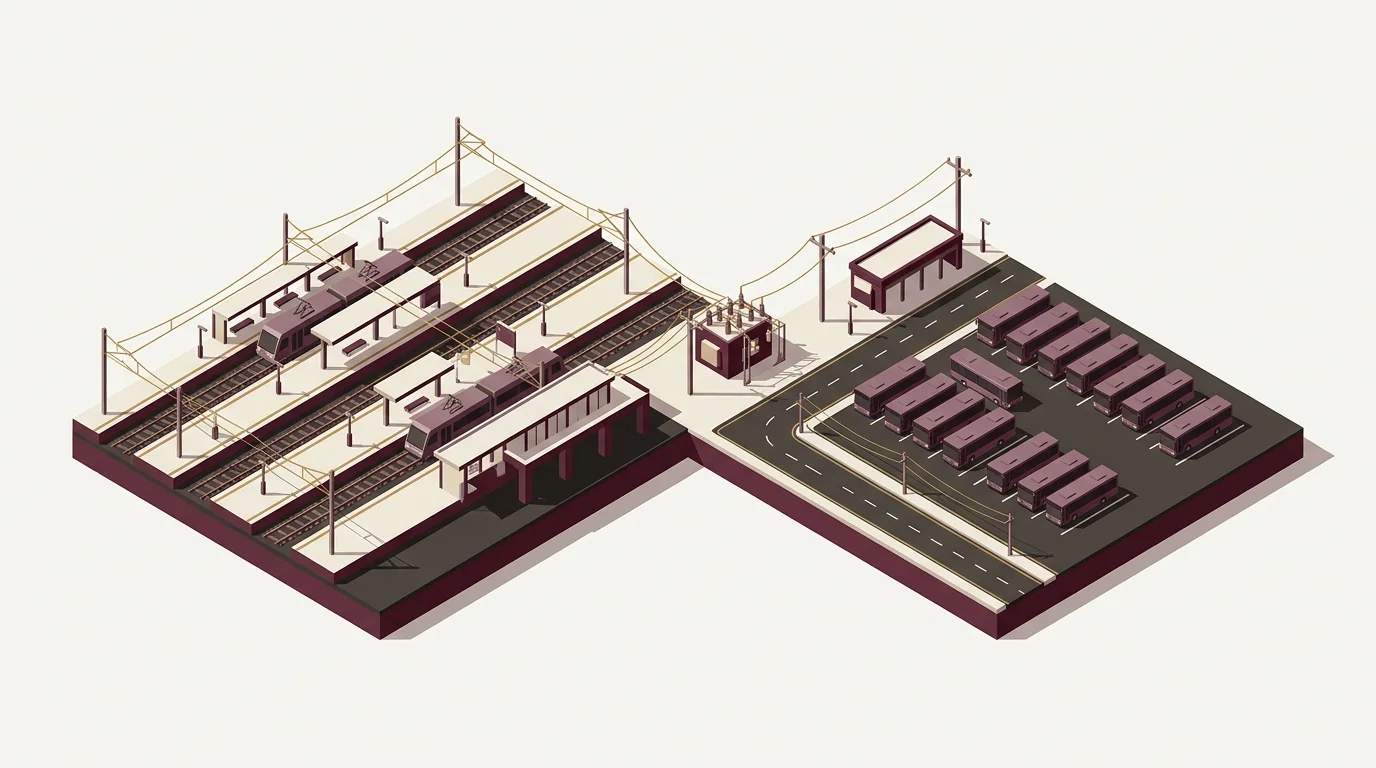
The project covers three interconnected pieces of the subway's core: the Sixth Avenue Line, the 63rd Street tunnel under the East River, and DeKalb Avenue Interlocking in downtown Brooklyn. That last piece may be the most consequential. DeKalb is one of the most complex junctions in the entire system, where the B, D, N, Q, and R lines converge in a tangle of tracks beneath Flatbush Avenue. A single signal problem there can cascade into delays across every one of those routes, affecting service from Bay Ridge to the Bronx.
The upgrade installs Communications-Based Train Control, or CBTC, which replaces fixed mechanical block signals with a continuous radio link between trains and the control system. Because the system always knows exactly where each train is, trains can safely run closer together. On lines that have already been upgraded, like the L, the technology has allowed the MTA to run more than 30 trains per hour, compared to roughly 20 to 24 under legacy signals.
Source: NationGraph.
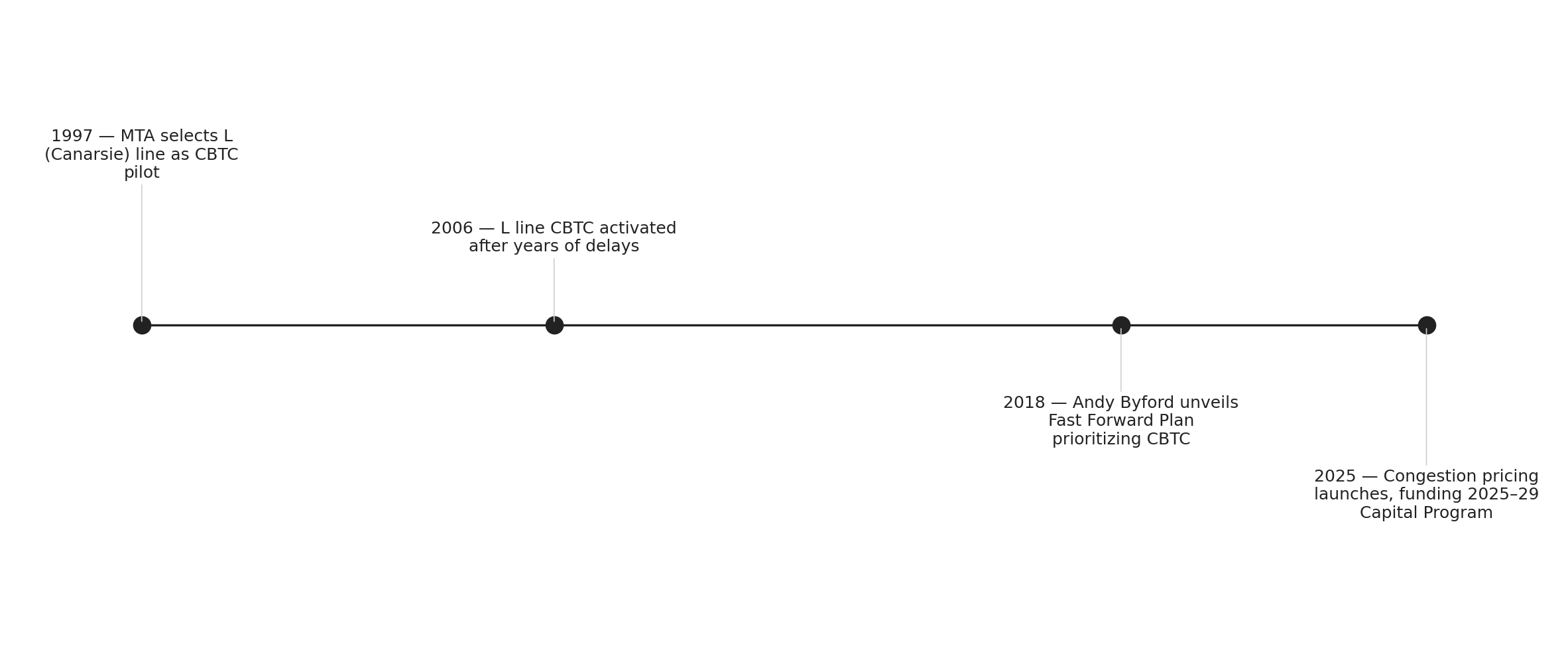
New York's CBTC effort stretches back to the late 1990s, when the agency chose the L line as a pilot. That project took until 2006 to activate. The 7 line followed and wasn't declared complete until 2018, years late and roughly $600 million over original estimates. At that pace, full system modernization would have taken four or five decades. The 2017 "Summer of Hell," when cascading breakdowns prompted a state of emergency declaration, forced a reckoning: then-NYC Transit President Andy Byford published the Fast Forward Plan in 2018, demanding an accelerated rollout on the busiest lines. Progress has still been slow. The Queens Boulevard CBTC project covering the E, F, M, and R has faced repeated delays.
Funding for the current push comes from the MTA's capital programs, including the proposed $68 billion 2025-2029 plan that depends partly on revenue from congestion pricing, the first such program in the country. Congestion pricing took effect in January 2025 after years of legal and political battles, including a pause by Governor Kathy Hochul in 2024 before she reversed course.
The MTA has posted the solicitation on its website. The agency and its contractor will need to install CBTC without shutting down one of the busiest commuter corridors in the country, a logistical challenge that has contributed to delays on past projects. No completion timeline has been publicly announced.