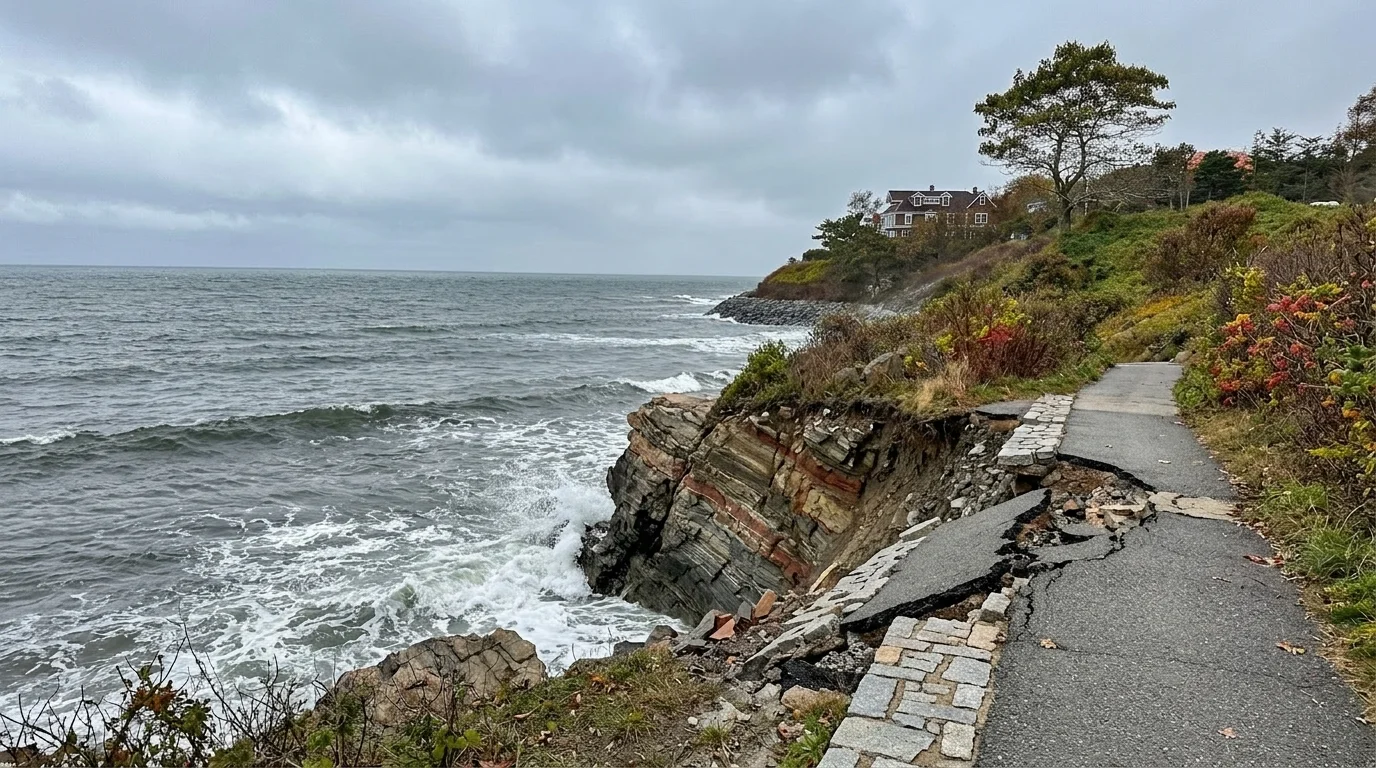
Newport, Rhode Island is making a second attempt to hire a planning team to map the future of the Cliff Walk, the 3.5-mile coastal trail that draws more than a million visitors a year and lost a 30-foot section to the ocean in 2022.
The city posted a rebid for the Cliff Walk Master Plan on Dec. 8, after an earlier solicitation failed to produce an award, a pattern that reflects just how tight the market for coastal resilience consultants has become as cities from Maine to Florida scramble for the same expertise.
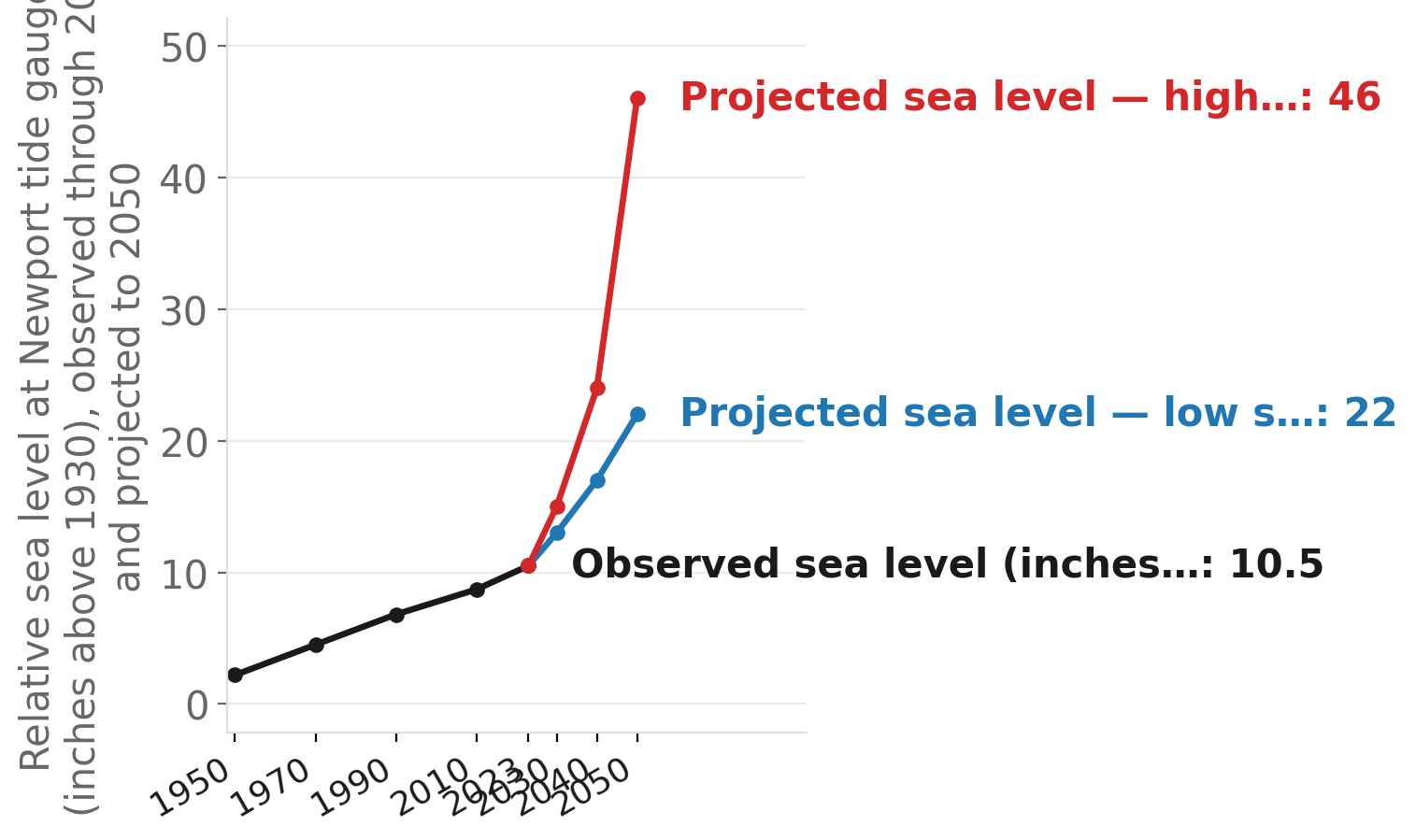
The March 2022 collapse near Narragansett Avenue was a turning point. The section of walkway that dropped into the Atlantic closed the trail for more than a year and ultimately cost roughly $5.5 million to repair, drawing on city, state and federal emergency funds. It was dramatic, but it was not a surprise: Newport's tide gauges show more than 10 inches of sea-level rise since 1930, and state projections call for another one to three feet by 2050. Stronger Nor'easters and hurricanes have accelerated the erosion already chewing away at the cliffs beneath the path.
Source: NationGraph.
For Newport, the stakes go well beyond one trail. The Cliff Walk is arguably the single most-visited free attraction in Rhode Island, and the tourism economy it anchors, including mansion tours, sailing events and waterfront hospitality, generates hundreds of millions of dollars in annual visitor spending for a city of about 25,000 year-round residents. The city sits entirely on Aquidneck Island, surrounded by water, and relies heavily on state and federal grants for capital projects because so much of its most valuable waterfront property is held by tax-exempt historic nonprofits.
Mayor Xaykham Khamsyvoravong, who took office in 2022 and has made climate resilience a central theme of his administration, has signaled that emergency patching after each storm is not a sustainable strategy. The master plan is meant to answer harder questions: which sections of the walk can be hardened, which may need to be rerouted, and what a viable long-term public access corridor even looks like on a coastline that is fundamentally changing.
Federal dollars from the Bipartisan Infrastructure Law and FEMA's resilience grant programs have made this kind of planning financially feasible for smaller cities that couldn't otherwise afford it. Whether Newport can attract qualified firms this time around will determine how quickly those answers arrive.