Around 40 live transit procurement actions crossed New York agency desks in October 2026, roughly double the normal monthly pace, as NYC DOT, the MTA, and a broad sweep of upstate county transit systems move to obligate federal grant dollars before the funding landscape shifts beneath them. The number is real, but it needs context: a parallel spike in raw database records to 152 reflects a bulk ingestion of archival RFPs with long-expired due dates, not a sixfold surge in actual procurement activity. The genuine signal is a statewide sprint, not a statistical anomaly.
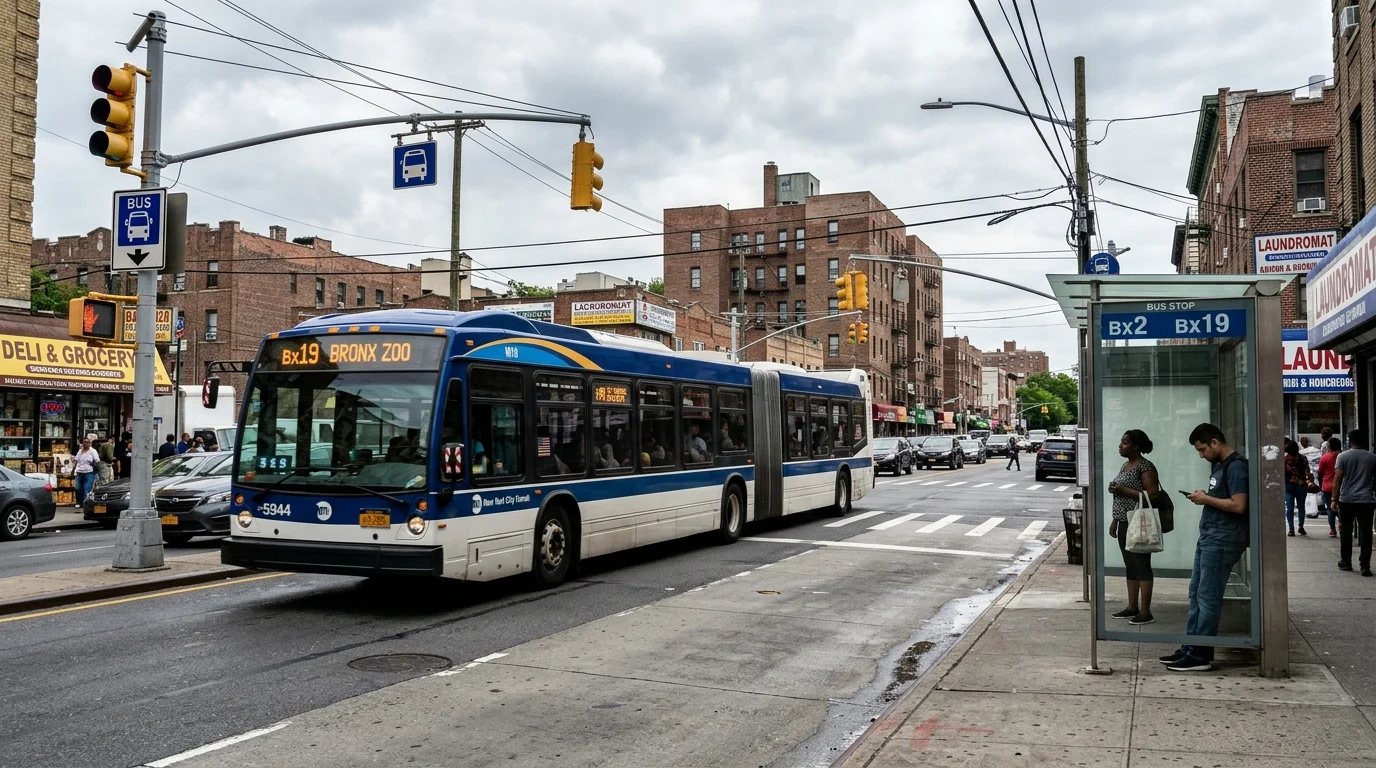
The policy igniting that sprint is 'Next Stop: Fast Buses, Better Service,' unveiled on July 9, 2026, by Mayor Zohran Mamdani and Governor Kathy Hochul. The plan targets 50 bus priority corridors and five rapid bus routes across Brooklyn, Queens, and the Bronx, with 2,500 new buses and 300 new shelters by 2028, all-door boarding by 2027, and 175 Transit Signal Priority corridors citywide. Next Stop is a policy mandate, not a grant program. It converts political commitments into specific deliverables, and those deliverables now have to be procured. NYC DOT's $5.3 million RFP to develop and maintain a citywide Transit Signal Priority system is a direct product of that mandate: a contract that would not exist without the July announcement directing the agency to execute.
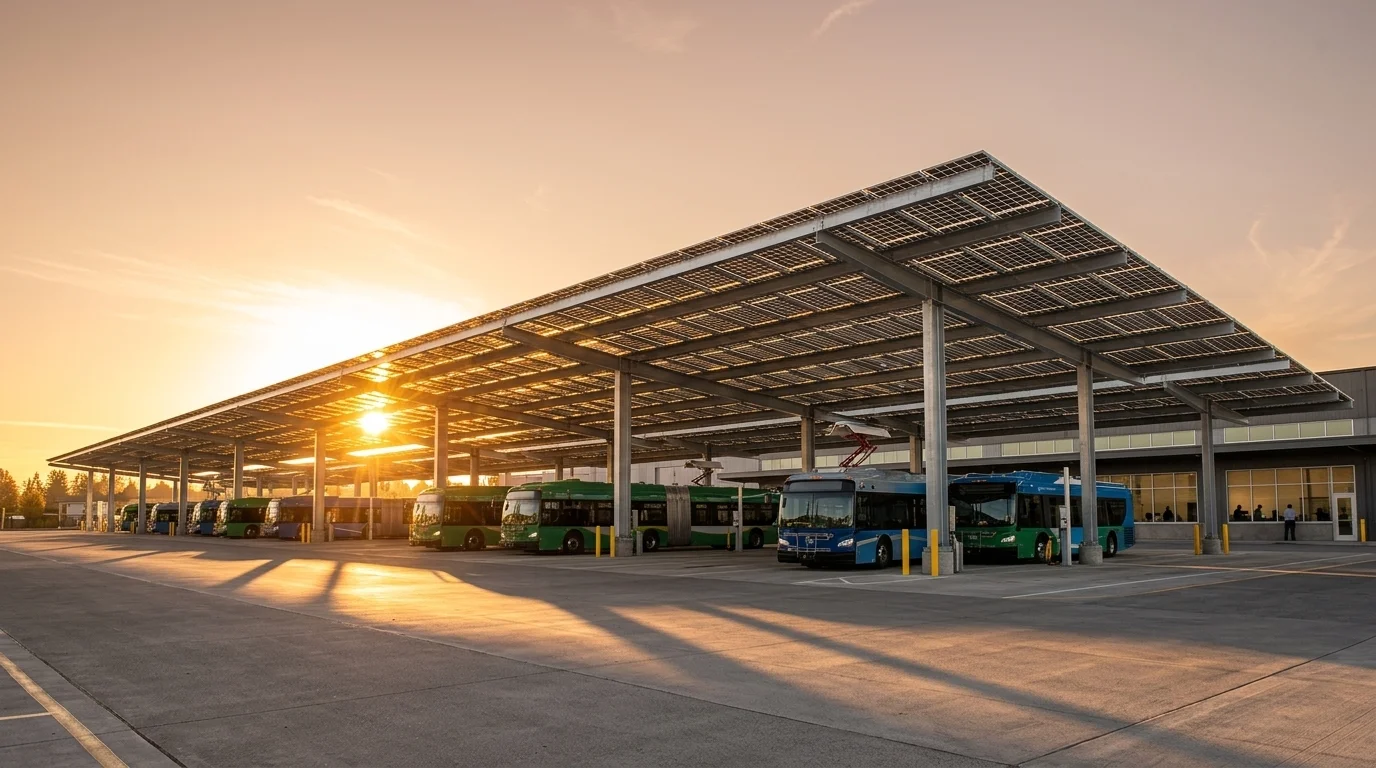
The federal money funding those procurements comes from two distinct streams. FTA Section 5307 Urbanized Area Formula Grants, funded at $14.6 billion nationally under the Consolidated Appropriations Act signed February 3, 2026, provide capital and operating support to urban transit systems including NYC DOT and dozens of county operators. The separate FTA Low or No Emission Grant Program funds zero-emission fleet replacement specifically. In the trailing 90 days, federal agencies obligated roughly $102.5 million in new FTA grants to New York institutions: NYC DOT received $24.3 million across formula and Low-No awards, Rockland County drew $13.7 million, Orange County $10.9 million, Ulster County $8.4 million, and Broome County $8.9 million in Low-No Emissions funding alone. These are not Next Stop dollars; they are federal formula allocations that Next Stop's procurement mandates are now putting to work.
Source: NationGraph.
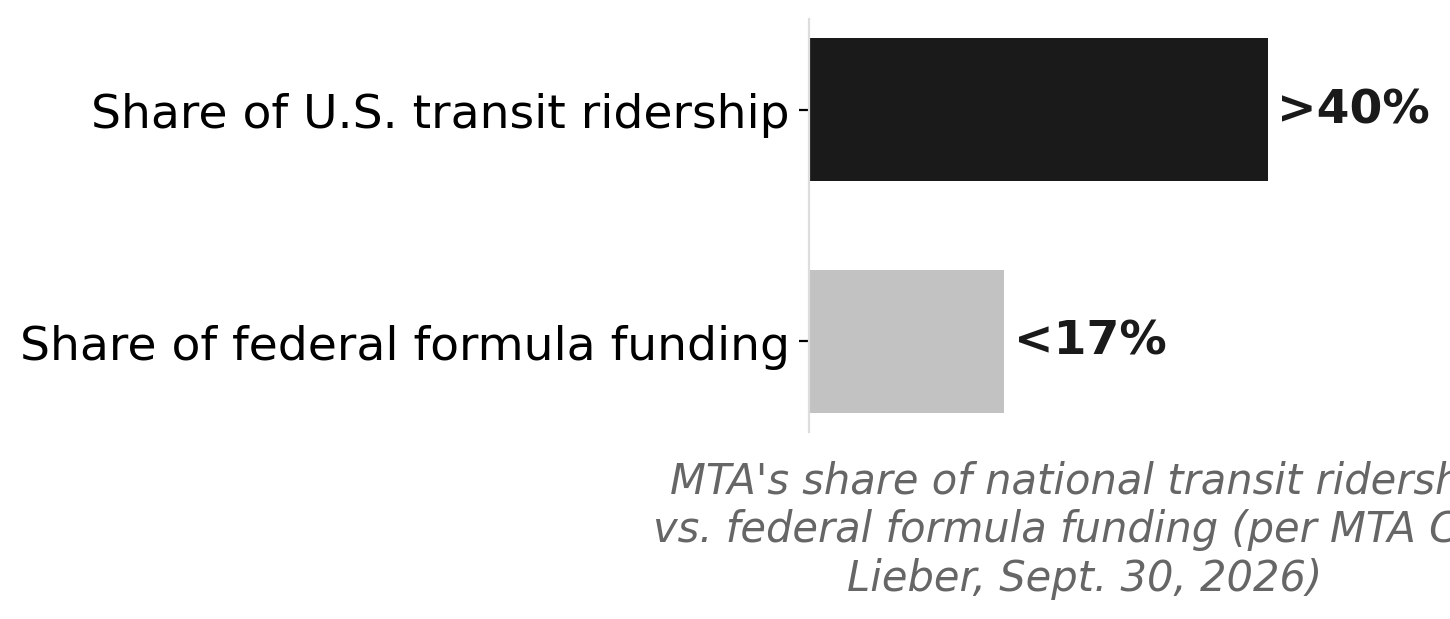
The urgency is sharpened by a specific threat on the federal side. At the MTA board meeting on September 30, 2026, MTA Chair and CEO Janno Lieber warned that the Republican-controlled Congress's proposed surface transportation bill would cut approximately $250 million per year in FTA formula funding from the agency. The MTA carries more than 40 percent of national transit ridership while receiving under 17 percent of federal formula dollars, a disparity Lieber has flagged repeatedly. The agency's $68 billion five-year capital plan assumed $14 billion in federal support. If Congress rewrites the formula before that plan is fully funded, the math breaks. Obligating FY2026 allocations now, while the Consolidated Appropriations Act baseline still holds, is a form of institutional hedging.
The procurement activity is statewide in ways that resist reduction to a single city narrative. Upstate, the Niagara Frontier Transportation Authority filed four RFPs in a single day. Ulster County issued separate RFPs for bus shelters and transit consulting services, both tied to the same FTA formula dollars flowing downstate. Broome County procured bus and transfer pass printing. The Hudson Valley launched an intercounty enhanced bus transit service procurement. PANYNJ sourced PATH lighting equipment. Each of these procurements reflects a local agency converting a federal allocation into a signed contract, partly because the political window to do so without disruption may be narrowing.
For riders, the most visible near-term changes will come in New York City, where the Next Stop plan's Transit Signal Priority expansion is the single intervention with the clearest speed impact. Bus speeds in the target corridors are projected to increase by 20 percent. Shelter construction and all-door boarding, both scheduled for rollout before 2028, will affect the daily experience of the more than two million daily bus riders in the city. Upstate, the federal grant activity is less visible but arguably more consequential for transit-dependent populations: in counties like Ulster, Broome, and Rockland, FTA formula funding is not a supplement to local transit budgets but the primary mechanism keeping service operational.
The next signal to watch is Congress. Lieber's September warning was a public pressure campaign as much as an accounting exercise, and the surface transportation reauthorization timeline will determine whether the agencies that are spending now locked in favorable terms or simply moved faster than necessary. A reauthorization vote before the end of the calendar year would clarify the formula picture. If the proposed cuts survive that process, the agencies that obligated FY2026 dollars this fall will have been right to move.