Federal solar grants to Delaware have reached $9.8 million in the last 90 days, a 596% jump from $1.4 million in the same window a year ago. The number looks like a one-time windfall. It is not.
The $9.8 million is a single FTA Transit Formula Grant awarded to the Delaware Department of Transportation on May 11, 2026, and embedded in its project list are named line items that explain the surge: Dover Bus Canopy Solar Panel construction, battery electric bus maintenance bay work, and the purchase of four 40-foot buses. Add a companion $8.7 million FTA Buses and Bus Facilities grant awarded five days earlier for bus replacement in New Castle and Sussex counties, then fold in two additional FTA awards totaling roughly $19.4 million from September 2025, and a clearer picture emerges. Delaware DOT has secured approximately $38 million in federal clean-transit funding in under nine months, through a single recipient: Delaware Transit Corporation, the agency that operates DART First State.
No prior quarter since 2022 had registered more than $2.8 million in solar-tagged federal grants to the state. The step-change is real, and it is concentrated.
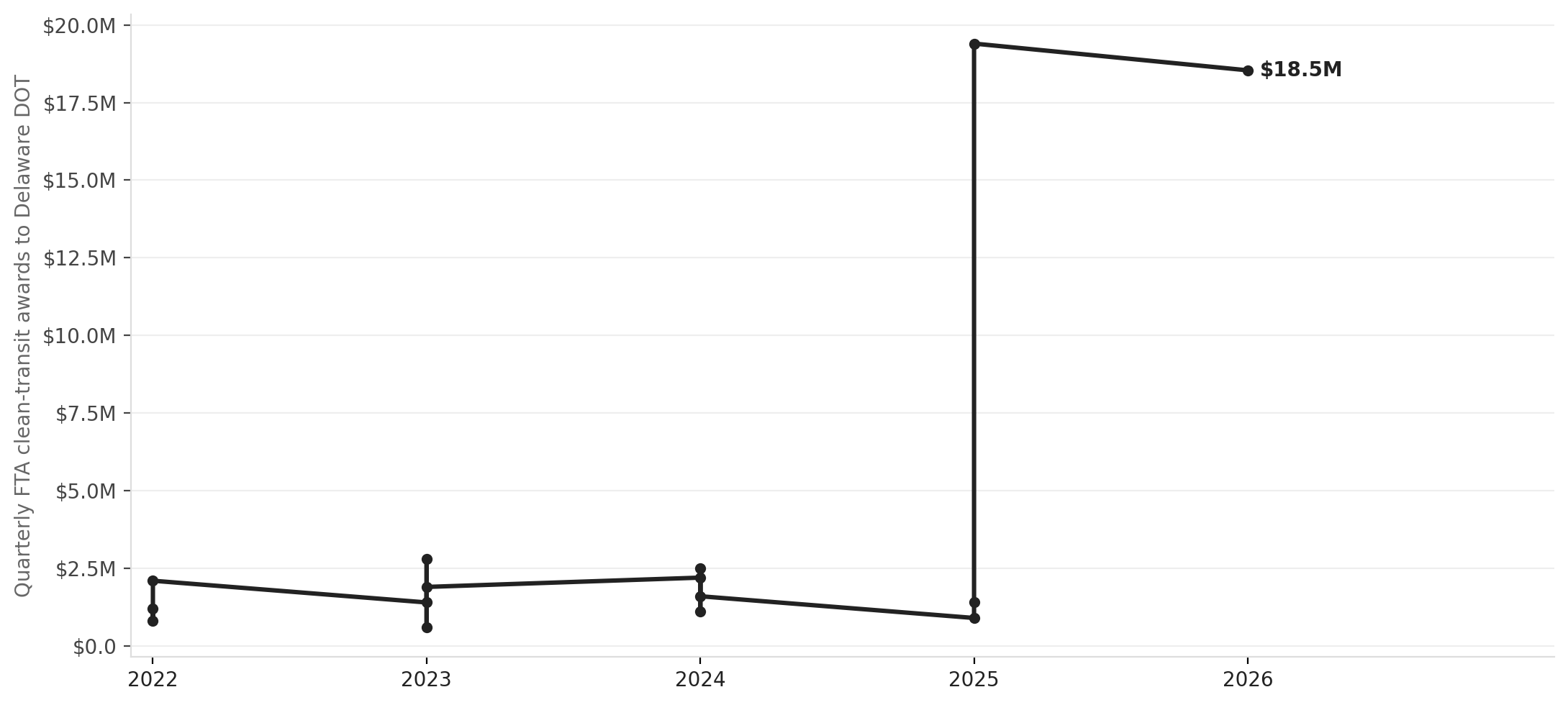
Source: NationGraph.
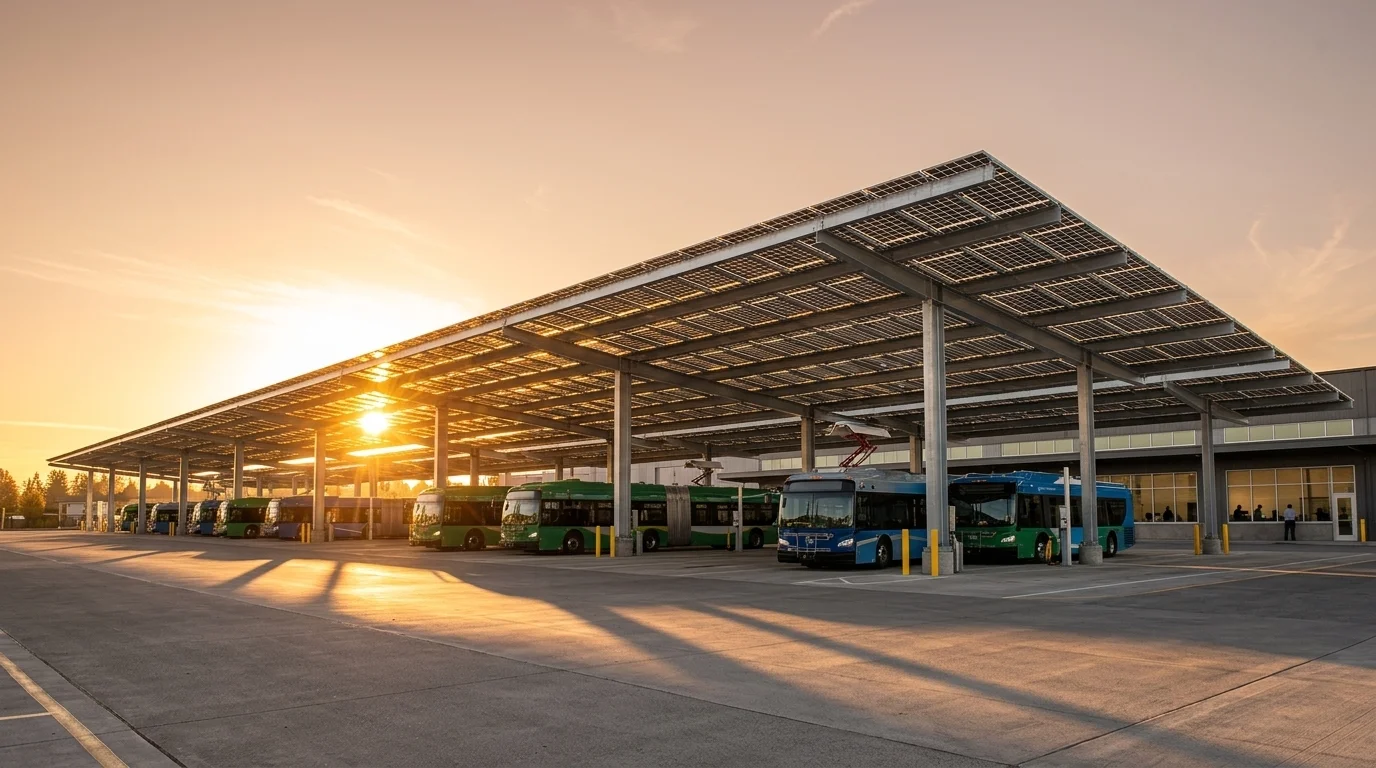
Delaware's size is part of what makes this legible. The second-smallest state by area has exactly one transit agency serving all three counties. When DART wins, every dollar shows up in the same place. That concentration also means the Dover Bus Canopy project, now in construction, carries unusual weight: 2,240 solar panels across 63,000 square feet, a 965-kilowatt array paired with two 1.1-megawatt-hour battery energy storage systems and a smart energy control center, projected to generate roughly 1,090,000 kilowatt-hours of clean energy per year. For a mid-sized bus maintenance facility, that is a substantial on-site generation and storage footprint.
The federal opening that made this possible arrived in January 2026, when the FTA published its FY 2025 Low or No Emission and Bus Competitive Program awards in the Federal Register, distributing $2.03 billion across 165 projects nationally. Delaware captured multiple awards in that cycle. The competition was national; the preparation was years in the making. DART received its first FTA solar grant, a $2.5 million award, back in 2020, and has been building its electric bus program since. The 2026 awards are the construction and scale-up phase of a strategy that predates the current federal funding environment by half a decade.
State policy has been running in parallel. Delaware's Renewable Energy Portfolio Standards Act, last amended by Senate Bill 265 signed in September 2024, mandates that utilities source 40% of their energy from renewables by 2035. DNREC's 2025 Climate Action Plan identifies transportation as the state's largest greenhouse gas source, accounting for roughly 30% of Delaware's total emissions as of 2021. DART's solar-plus-storage-plus-electric-fleet integration is a direct implementation vehicle for that plan, not a side project.
On the executive side, Governor Matt Meyer announced in June 2026 the acceptance of four community solar projects into the JobsFirst Permitting Accelerator, a signal that solar deployment has live political attention at the top of state government, independent of the transit awards.
For Delaware residents, particularly those in Kent County where the Dover facility sits, the practical consequence is a bus system that will increasingly power and maintain itself from on-site generation. The battery storage component matters here: Delaware's coastal exposure makes grid reliability a genuine concern, and a transit facility that can island itself during outages is a resilience asset, not just a carbon accounting entry.
The comparison that sharpens the picture is last year's baseline. The $1.4 million captured in the same 90-day window a year ago came from smaller, scattered solar-research grants to the University of Delaware and DNREC. There was no single anchor project, no stacked agency strategy, no construction-phase funding. The infrastructure being built now is categorically different from what those earlier grants were funding.
The next signal to watch is performance against the grant timelines. The May 2026 formula grant runs through June 2027; the companion bus-replacement grant runs through August 2027. Whether DART completes the Dover canopy construction, brings the battery systems online, and deploys the new electric buses within those windows will determine whether this stack of federal awards translates into the operational model it is designed to be. A state this small, with this much federal money concentrated in one agency, has limited room to absorb a slip.