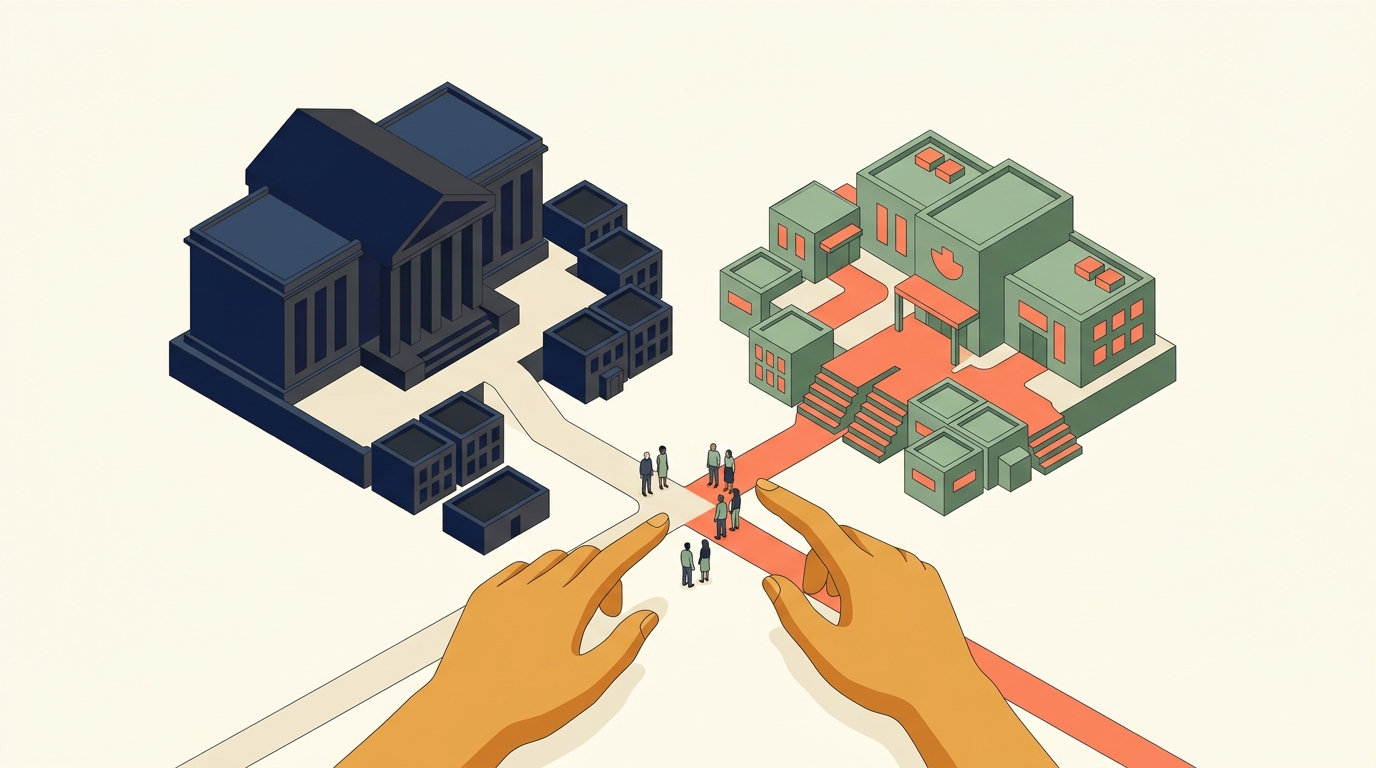
New York State is directing $111,219 in federal funds toward programs that intercept people with serious mental illness before they end up behind bars, steering them instead into community-based treatment and support.
The money flows through the federal Community Mental Health Services Block Grant, administered by SAMHSA and distributed to states for local mental health priorities. New York's Office of Mental Health receives one of the largest state allocations nationally, historically in the range of $40 to $50 million annually, making this subaward a small slice of a much larger stream of funding.
Small, but pointed. Nationwide, an estimated 2 million people with serious mental illness are booked into jails each year. Rikers Island, Cook County Jail in Chicago, and the Los Angeles County Jail are routinely cited as the country's largest de facto psychiatric facilities, a phenomenon that traces back decades to deinstitutionalization. When states discharged hundreds of thousands of patients from psychiatric hospitals starting in the 1960s, the community treatment infrastructure that was supposed to absorb them never fully materialized. Jails filled the gap.
New York felt that shift acutely. The state's psychiatric hospital census fell from roughly 93,000 in 1955 to under 5,000 by the 2000s. Today, the state operates about 20 psychiatric centers alongside a sprawling network of community providers, but demand has consistently outpaced capacity. Provider shortages, particularly of psychiatrists and clinical social workers, remain severe upstate and in rural counties.
Jail diversion programs try to break the cycle at various points: before police make an arrest, at booking, in court, or during reentry from incarceration. New York has invested in tools like Assisted Outpatient Treatment under Kendra's Law and mental health courts, but the availability of these programs varies widely across the state's 62 counties. Some counties have robust crisis infrastructure; others have almost none.
The political backdrop is charged. Governor Kathy Hochul has made mental health a signature issue, announcing a $1 billion multi-year plan in 2023 focused on expanding psychiatric beds, strengthening Kendra's Law, and building out community crisis services. High-profile incidents on New York City's subways, including the death of Jordan Neely in 2023, have intensified debate over how the state handles people with untreated mental illness in public spaces. Meanwhile, the planned closure of Rikers Island has made diversion a political and logistical imperative, with the original 2027 deadline facing growing skepticism.
Advocates have long argued that the underlying problem is scale. Programs like the one this funding supports are often sustained by modest, patchwork grants rather than the large, sustained investment they say is needed to meaningfully reduce the flow of people with mental illness into jails. Similar concerns about small-dollar mental health block grant allocations have surfaced in other states, including Wisconsin, which received $267,000 to modernize mental health services in a provider shortage-stricken state.
The subaward, which began October 1 with the start of the federal fiscal year, appears to continue an existing program rather than launch something new. What it does next depends on which county or regional program receives the funds, details the record does not specify.