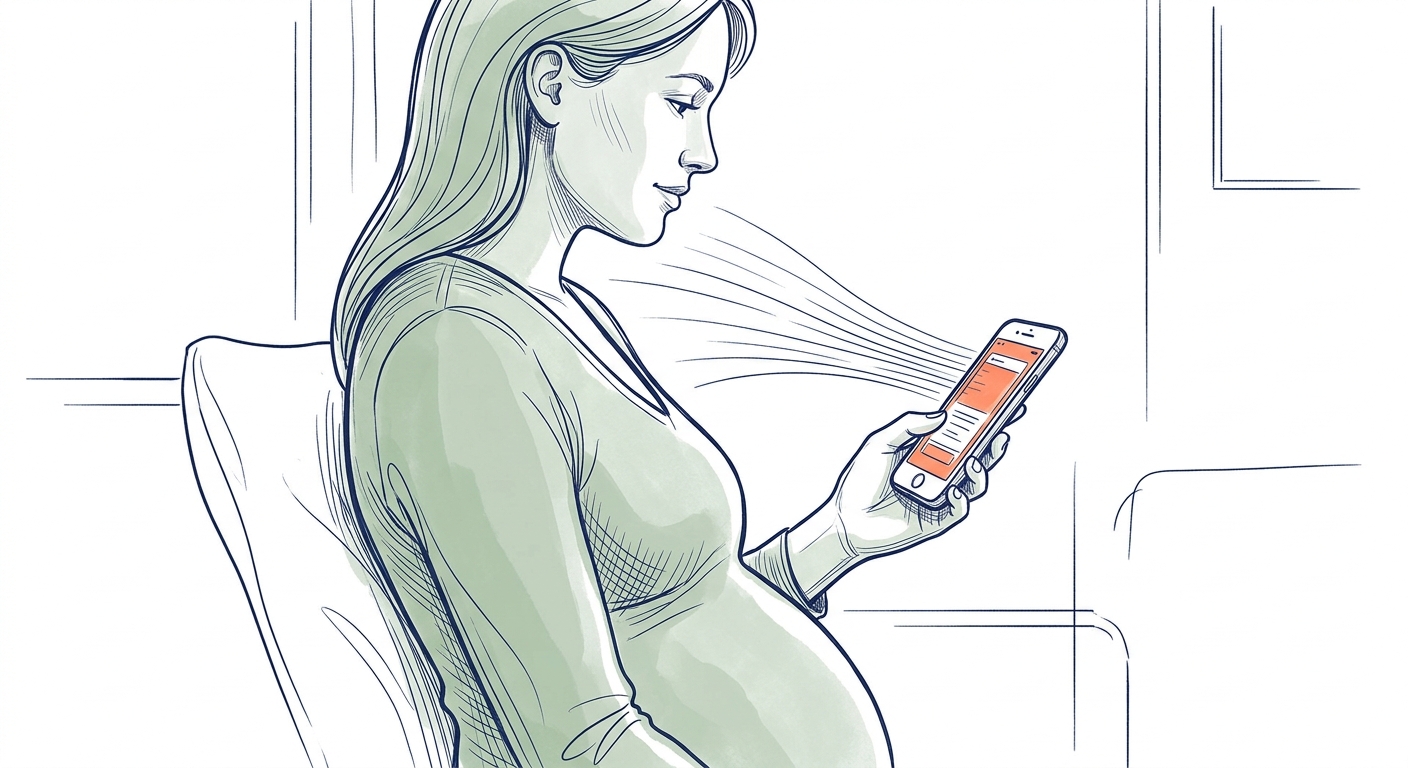
Michigan researchers are developing a smartphone-based tool to help pregnant women understand the risks of cannabis use, targeting a gap that has widened since the state legalized recreational marijuana in 2018 and normalized its use for millions of residents.
The project, backed by a $183,681 federal grant from the National Institute on Drug Abuse, centers on a straightforward but stubborn problem: most pregnant people who use cannabis don't believe it can harm their baby, and prenatal care providers have no standard way of screening for it or addressing it. That combination has left the issue largely unaddressed in clinical settings even as evidence of harm has grown.
Research links prenatal cannabis exposure to low birth weight, preterm birth, NICU admission, and gestational hypertension. But unlike alcohol or tobacco, there's no consistent screening protocol in pregnancy care, and clinicians in legalization states report particular discomfort raising the subject when use is legal and widely normalized.
The intervention being developed combines an electronic screening tool with tailored text messages, building on a model proven effective for alcohol and tobacco counseling during pregnancy. What makes this approach distinct is its emphasis on privacy: rather than requiring patients to disclose use in a face-to-face setting where they may fear legal or child welfare consequences, the digital format keeps the conversation more confidential. That matters especially in Michigan, where legal ambiguity around child welfare reporting creates a real barrier to honest disclosure.
Patients will help design the tool from the ground up. The research team is forming a patient advisory committee whose members will serve as co-investigators, shaping how the intervention looks and feels before it's tested. The study will first run an open trial to refine usability, then move to a pilot randomized controlled trial to test whether the approach is feasible at scale.
The stakes in Michigan are significant. The state sees roughly 105,000 to 110,000 births annually, and its cannabis market has grown into one of the largest in the country, with over $3 billion in annual sales by 2023 and more than 500 licensed retail locations keeping prices low and access easy. Those same market conditions make the perception problem harder to overcome: legal, cheap, and widely available cannabis doesn't feel like a risk to many users.
The problem also falls unevenly. Michigan's Black maternal mortality rate is among the worst in the country, and Detroit already faces high rates of preterm birth and low birth weight, the same outcomes tied to prenatal cannabis exposure. A tool that goes unasked and unanswered in prenatal visits is most costly where birth outcomes are already most precarious.
The grant is a K01 career development award, designed to support an early-career researcher in building toward a larger, fully-powered clinical trial. If the pilot succeeds, the goal is a broader study testing whether the intervention can measurably reduce cannabis use during pregnancy across a wider population.