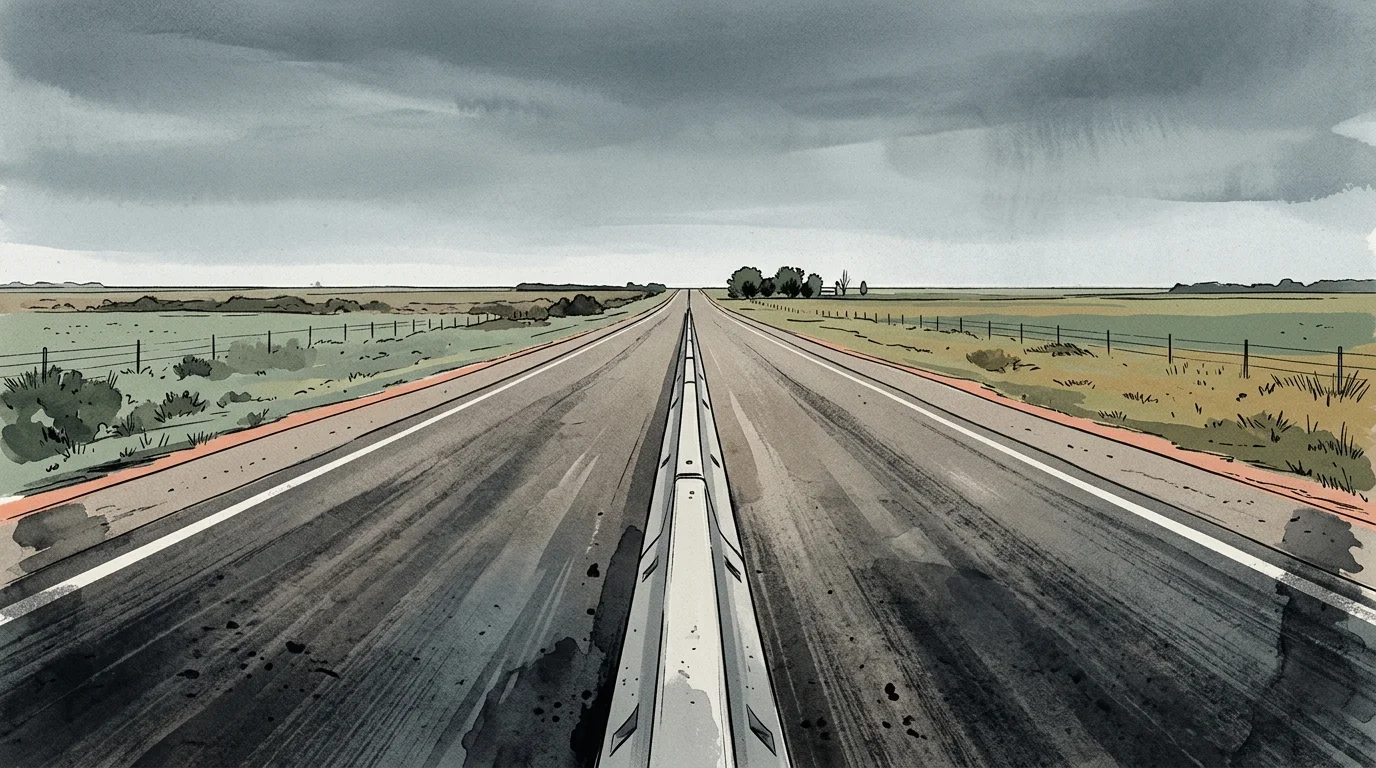
A rural stretch of State Highway 36 in south-central Texas is getting median barriers designed to stop the kind of head-on collisions that make two-lane highways among the deadliest roads in America. The $682,666 project, funded through the federal Highway Safety Improvement Program, targets a specific segment between FM 2429 and FM 949 in the Burleson and Austin County area, where crash records identified a concentrated pattern of vehicles crossing the center line with fatal results.
The stakes are stark. Head-on collisions represent roughly 10% of crashes nationally but account for more than 18% of fatal crashes, according to NHTSA data. On rural highways like SH 36, where speed limits run 60 to 75 mph, shoulders are limited, and there is no physical barrier separating opposing lanes of traffic, a single moment of inattention or overcorrection can become a fatal wreck.
Texas has not had a single day without a traffic death since November 7, 2000. The state recorded 4,283 traffic fatalities in 2023, more than any other state. Rural roads shoulder a disproportionate share of that toll: the Federal Highway Administration estimates rural highways account for roughly 44% of all U.S. traffic deaths despite carrying far less traffic than urban corridors.
The SH 36 project is the kind of surgical, data-driven intervention that the Highway Safety Improvement Program was built for. Rather than rebuilding a road from scratch, it installs a physical barrier at a location where crash history shows a specific, preventable problem. The federal government covers about 90% of the cost under HSIP, leaving Texas responsible for roughly $68,000.
Funding comes from the Bipartisan Infrastructure Law, which authorized approximately $15.6 billion nationally for HSIP between 2022 and 2026, a significant increase over prior funding levels. This award, dated April 2026, is among the final projects funded under that authorization cycle. Similar safety-focused federal investments have targeted dangerous corridors elsewhere in the country, including deadly intersections in New York's Rockland and Westchester Counties.
For the farming communities and through-traffic that rely on SH 36 daily, the median barriers represent a concrete change to a road that has long mixed local agricultural vehicles with faster highway traffic. Construction timelines have not been publicly announced, but the award signals the project is now moving toward implementation.