
Synthetic chemicals that have contaminated drinking water supplies across the country may be quietly fueling the nation's obesity and diabetes crises, and California researchers are now getting $1.26 million to find out how.
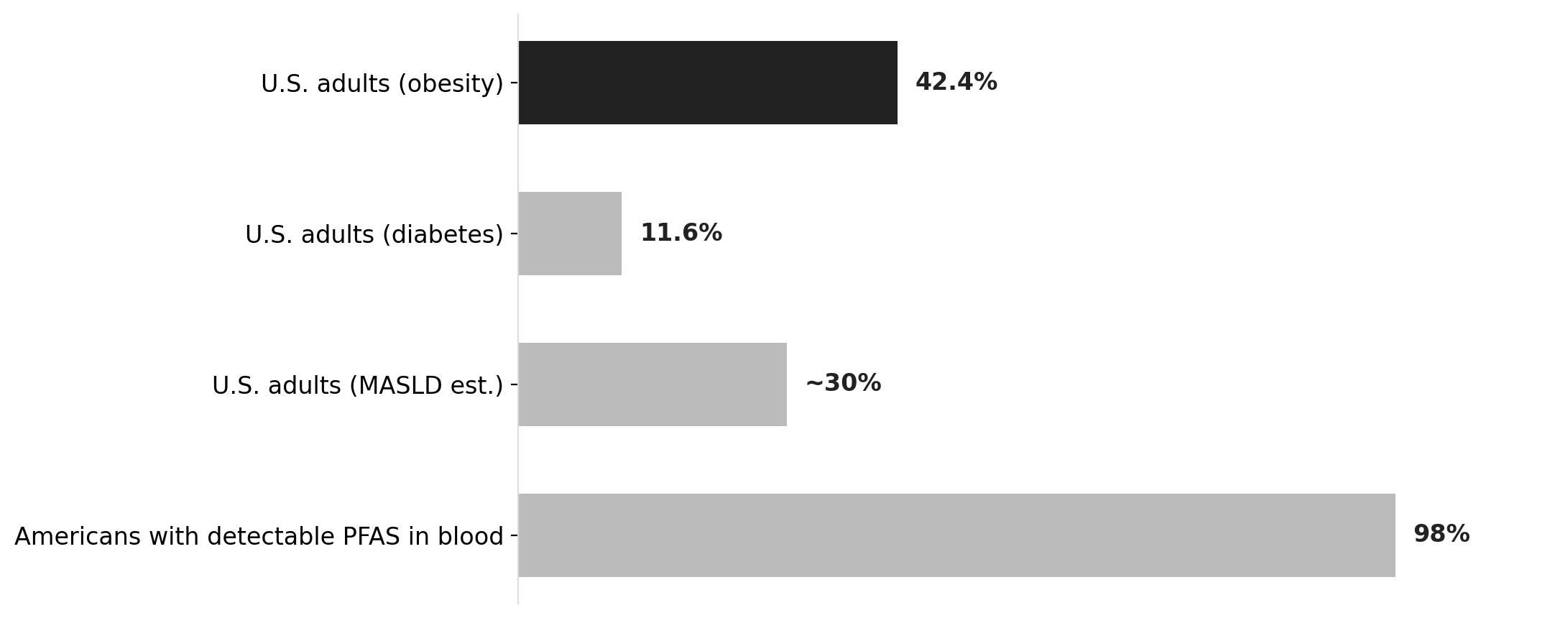
The federal grant from the National Institute of Environmental Health Sciences funds a multi-year research program focused on PFAS, the class of synthetic compounds found in nonstick cookware, food packaging, firefighting foam, and countless other products. PFAS don't break down in the environment or in the human body, which is why they've earned the nickname "forever chemicals" and why traces now show up in the blood of virtually every American.
Scientists have long suspected that PFAS disrupt the body's ability to regulate metabolism, potentially raising the risk of obesity, type 2 diabetes, and a liver condition called metabolic-associated steatotic liver disease. But the biological pathways connecting chemical exposure to those diseases remain poorly understood. That's the gap this research aims to close.
Source: NationGraph.
The project draws on data from more than 50,000 participants across 18 different population cohorts, giving researchers an unusually broad base to study how PFAS exposure plays out across different ages, ethnicities, and health backgrounds. Lab work will use three-dimensional liver tissue cultures and advanced genetic analysis to watch how the chemicals disrupt metabolic function at the cellular level.
A notable piece of the project focuses on translating findings into practical interventions, working directly with affected communities to develop prevention strategies tailored to their circumstances. The emphasis on diverse cohorts also reflects a broader push in environmental health research to ensure findings apply across racial and socioeconomic groups, not just the populations historically overrepresented in clinical studies. Similar federally funded investigations are examining PFAS from other angles, including Michigan research exploring a possible link between forever chemicals and lupus.
The research program is structured to run over several years, with findings expected to inform both clinical risk assessment and public health guidance. Whether those findings eventually shape drinking water regulations or treatment guidelines will depend on what the data show.