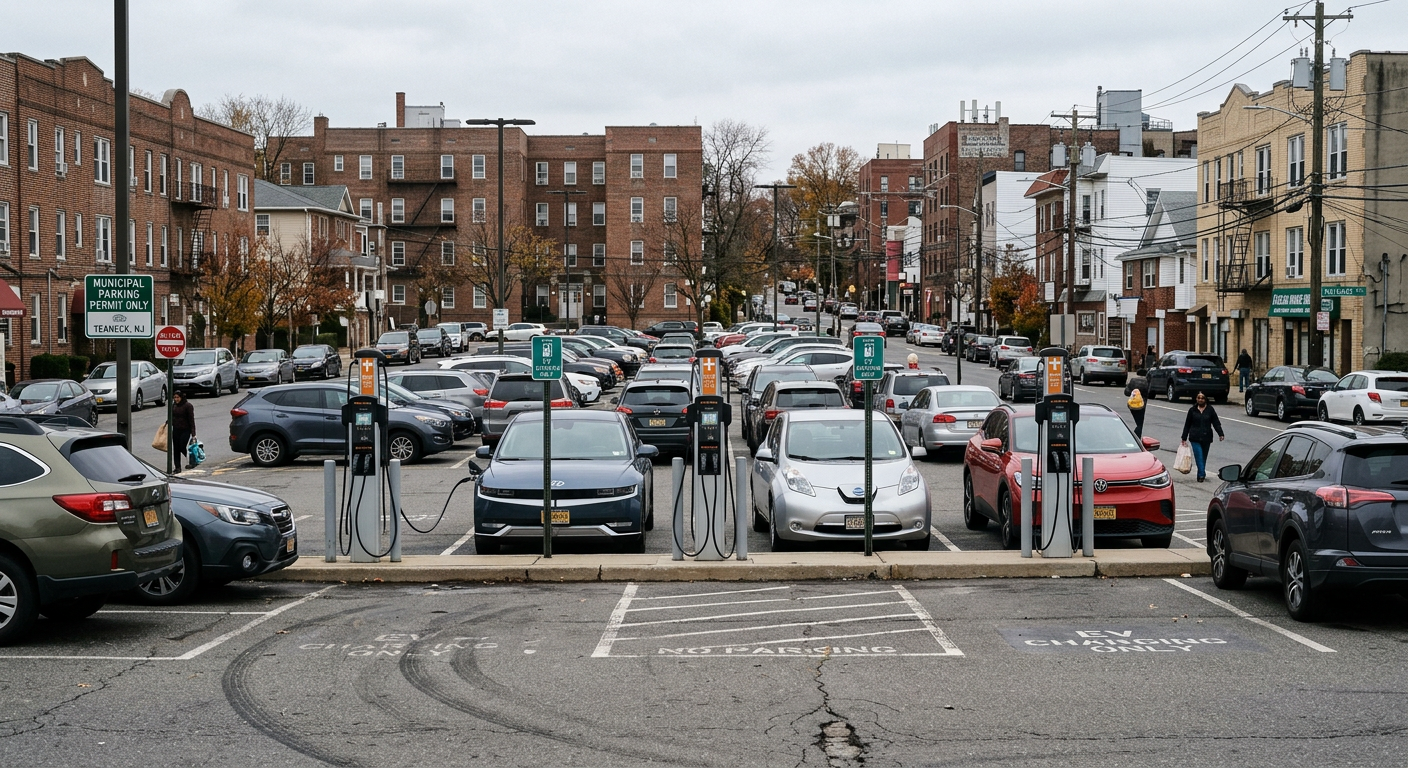
Teaneck, New Jersey, a densely packed suburb of 41,000 just across the George Washington Bridge from Manhattan, is looking for a private company to build out public electric vehicle charging stations on township property, aiming to meet rising demand without spending a dime of local tax revenue.
The township posted a solicitation for a concession-style arrangement in which a vendor would install, operate, and maintain the chargers at its own expense. In return, the company would collect charging fees from drivers and potentially share revenue with Teaneck. It's a model that has gained popularity among budget-constrained New Jersey municipalities, including Hoboken and Jersey City, which struck similar deals in recent years.
The appeal for Teaneck is straightforward. New Jersey caps annual property tax levy increases at 2%, leaving little room in municipal budgets for new infrastructure. A concession deal shifts the financial risk entirely to the vendor while giving residents and visitors access to public chargers they increasingly need.
That need is real and growing. New Jersey had roughly 180,000 registered electric vehicles as of early 2024, the third-highest per capita rate in the country. Governor Phil Murphy has set a target of 330,000 registered light-duty EVs by 2025, and the state has adopted rules requiring all new passenger vehicle sales to be zero-emission by 2035. Federal money is flowing too: the 2021 Bipartisan Infrastructure Law steered about $104 million to New Jersey over five years for EV charging buildout.
But much of that investment has focused on highway corridors first. Suburban communities like Teaneck, where Bergen County's nearly one million residents drive some of the highest EV adoption rates in the state, have seen less municipal-led deployment. The gap is especially felt by apartment dwellers who cannot install home chargers. Teaneck's housing stock includes a significant share of multi-unit buildings, and the township's population density tops 11,000 people per square mile.
Key details of the deal, including how many chargers will be installed, where they'll go, what charging speeds will be offered, and how long the contract will last, are not yet public. Those specifics will matter. Nationally, concerns about charger reliability persist: a 2024 study found roughly one in five public charging sessions end in failure. And concession contracts can lock municipalities into long-term arrangements that limit flexibility if technology or needs change.
Teaneck's procurement is open through its Building and Business division. The township has not announced a timeline for selecting a vendor or beginning installation.