Deerfield Beach, Florida is turning a successful street safety experiment into permanent infrastructure, using a $250,000 federal grant to lock in protections for pedestrians and cyclists on one of its busiest neighborhood roads.
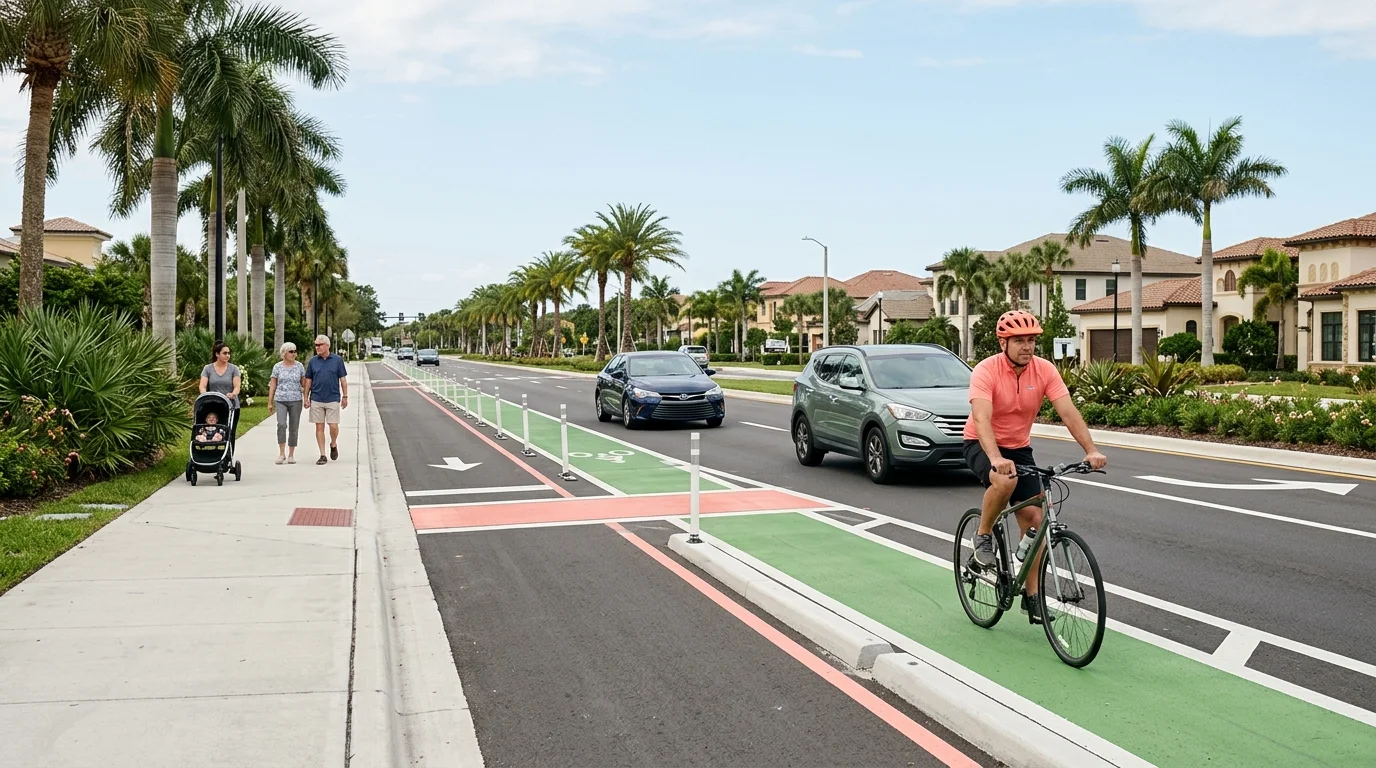
The project targets NE 3rd Avenue between NE 38th and 44th Streets, a roughly six-block stretch classified as a major collector road, the kind of road that funnels residential traffic onto larger arterials and has historically been designed for vehicle throughput with little thought for people walking or biking. In 2023, the city installed temporary safety features along the corridor: wider buffer space for pedestrians and cyclists, a road diet that narrowed vehicle lanes to slow traffic, a roundabout, and improved crosswalks. That pilot apparently proved its case. The city is now converting those temporary changes into permanent infrastructure.
The stakes are real. Florida consistently ranks as one of the deadliest states in the country for pedestrians, and the broader Miami-Fort Lauderdale metro area, which includes Deerfield Beach, has repeatedly appeared on national lists of the most dangerous places to walk in America. The region's road network was largely built for cars during the mid-20th century suburban boom, leaving neighborhoods like those along NE 3rd Avenue with roads that carry significant traffic but few safe options for residents on foot or on bikes.
Road diets, the approach used here, have a strong track record. Federal Highway Administration research has found they can reduce crashes by 19 to 47 percent while maintaining traffic flow, making them one of the more effective and relatively affordable tools available to cities.
The funding comes from the Safe Streets and Roads for All program, created by the 2021 Bipartisan Infrastructure Law in response to a surge in U.S. traffic deaths that reached a 16-year high of nearly 43,000 in 2021. Similar grants have funded safety redesigns elsewhere, including a pilot on one of Detroit's deadliest roads and roundabout construction in northwest Ohio.
Deerfield Beach's approach, testing cheap temporary changes first and then pursuing federal dollars to make the best ones permanent, is exactly the model SS4A was designed to encourage. Whether the construction timeline has been set publicly is not yet clear, but the grant was posted in April 2026, suggesting work could begin within the coming months.